## min read

Spravato vs Ketamine Infusions: Key Differences

|

October 16, 2026

Summarize with AI

Spravato vs Ketamine Infusions: Key Differences

Comparing Spravato vs ketamine infusion treatment means comparing two versions of the same idea: using ketamine's fast action on the brain's glutamate system to treat depression that standard antidepressants haven't relieved. The best comparison so far, a 2025 meta-analysis by Mayo Clinic researchers, found no statistically significant difference in how often the two lead to response or remission. What separates them is everything around the drug: FDA status, how it's given, how quickly it tends to work, what it costs, and who pays.

‍

So far, neither has been shown to be the better drug.

What Is Spravato (Esketamine)?

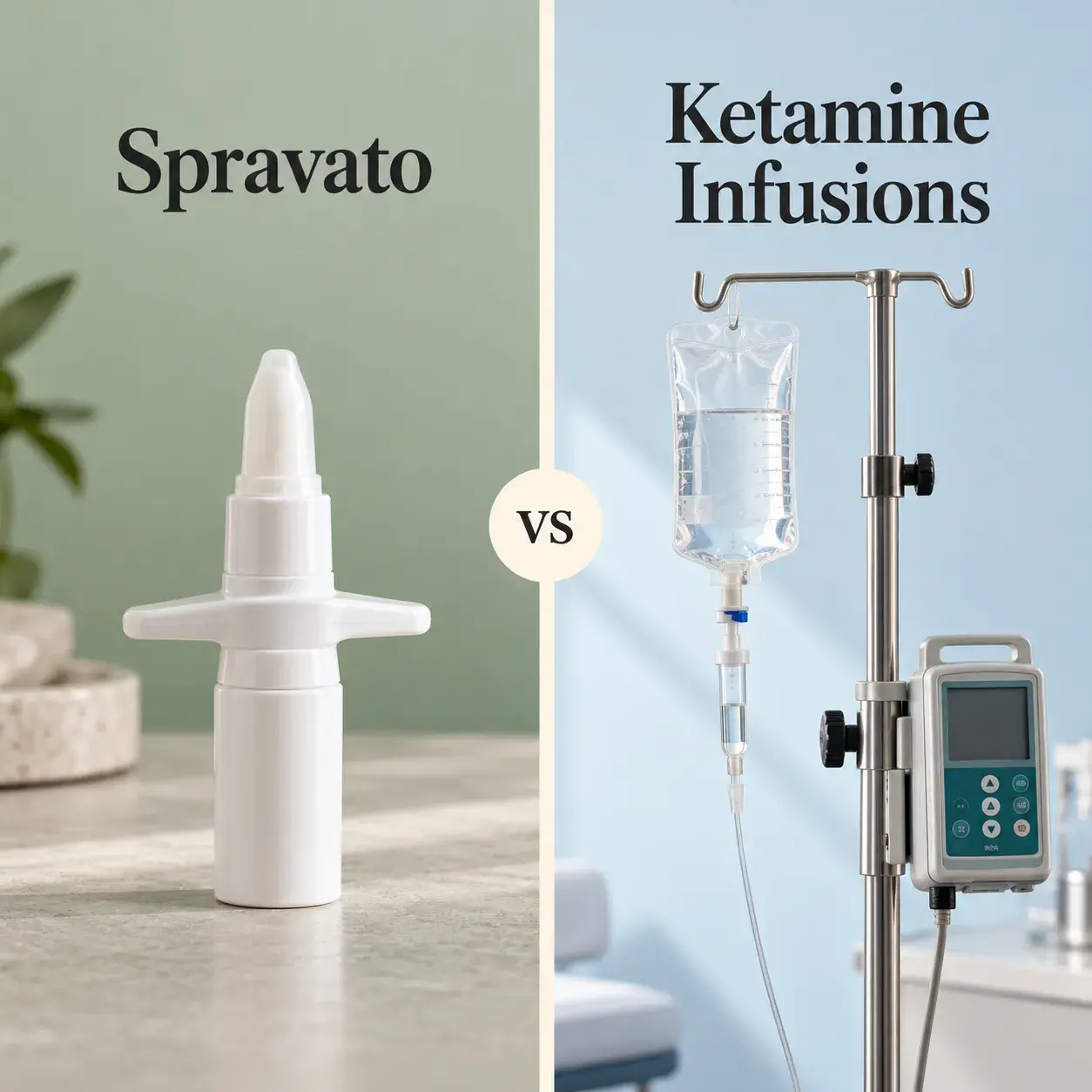
Esketamine vs ketamine comes down to chemistry. Standard ketamine is an equal mix of two mirror-image forms of the same molecule. Esketamine is one of those forms on its own, and Spravato is esketamine delivered as a nasal spray.

‍

The FDA first approved Spravato in 2019 for treatment-resistant depression, taken together with an oral antidepressant, as the Mayo Clinic review notes. A second approval, again paired with an oral antidepressant, covers depressive symptoms in adults with major depressive disorder who have acute suicidal thoughts or behavior. And the most recent change came in January 2025, when the FDA added standalone use for treatment-resistant depression, as the current prescribing information shows.

‍

Every dose happens in a certified healthcare setting under the Spravato REMS, an FDA-required safety program. Each device delivers 28 mg, and a session uses two or three devices (56 or 84 mg), with a five-minute wait after each one. You're then monitored for at least two hours, and you can't drive again until the next day, once you've had a restful night's sleep. The label sets the early schedule: twice a week for weeks one through four, once a week for weeks five through eight, then weekly or every two weeks, adjusted to the least frequent dosing that maintains the response.

What Is Ketamine Infusion Therapy?

A ketamine infusion uses standard ketamine, both mirror-image forms together, delivered through an IV line. Ketamine has been FDA-approved as an anesthetic since 1970, but for depression, IV ketamine "remains an off-label treatment," in the Mayo Clinic review's words. Off-label prescribing is legal and common in medicine. It also means there is no FDA-approved depression regimen, so dosing schedules and safety protocols are set by each clinic.

‍

The most studied dose is 0.5 mg per kilogram of body weight, infused over about 40 minutes with continuous heart and blood pressure monitoring. A first course typically runs two to three infusions a week for about three to six treatments, followed by maintenance sessions on a schedule that varies from clinic to clinic.

Spravato vs Ketamine Infusion: Side-by-Side Comparison

Характеристика Spravato (esketamine) IV ketamine infusion
What it contains Esketamine, one mirror-image form of ketamine Ketamine, both mirror-image forms
FDA status for depression Approved for treatment-resistant depression (2019 with an oral antidepressant; monotherapy added January 2025) and for major depressive disorder with acute suicidal thoughts Off-label; FDA-approved as an anesthetic
How it's given Nasal spray you use yourself, under supervision IV line placed by clinic staff
Typical dose 56 or 84 mg per session About 0.5 mg per kg of body weight
Time in the clinic Two or three devices, five minutes apart, then at least two hours of monitoring About 40 minutes of infusion, plus recovery time
Safety rules Federal REMS program; certified settings only Set by each clinic
Adjusting mid-session A dose can't be reduced once it's sprayed The infusion can be slowed or stopped
Early schedule Twice weekly for four weeks, then weekly Two to three times weekly, about three to six treatments
Insurance More consistently covered when criteria are met Often self-pay

Efficacy: What the Research Shows

The most complete head-to-head evidence is the 2025 Mayo Clinic meta-analysis in Therapeutic Advances in Psychopharmacology. The authors identified eight studies with 978 patients in total. Only one was a randomized trial, and it compared IV ketamine with an IV form of esketamine rather than the nasal spray, so the pooled comparison rests on observational studies of IV ketamine versus nasal esketamine.

‍

In those studies, the odds of response were 1.26 times higher with IV ketamine and the odds of remission 1.31 times higher, but neither difference was statistically significant. The authors concluded that the evidence suggests no significant difference in short-term efficacy, with a slight numerical trend favoring IV ketamine.

‍

Speed may be where the two differ. In one Mayo Clinic observational study included in the review, people reached remission after a median of two IV ketamine treatments, compared with seven nasal esketamine treatments. That's a real gap in lived experience. But it comes from observational data, where the people who choose or can access each treatment may differ in ways a study can't fully account for.

‍

So is Spravato better than ketamine infusions? On current evidence, neither has been shown to be. A randomized trial built to settle the question, called EQUIVALENCE, plans to assign 400 people to one treatment or the other for eight sessions over four weeks. Its protocol was published in 2026, and results are not yet available.

FDA Approval and Insurance Coverage

FDA approval changes who pays. Because Spravato has approved indications, insurers can write coverage criteria around it, and they typically require prior authorization and documentation of earlier antidepressant trials. Ketamine infusions for depression are off-label, so coverage is inconsistent, and many people pay out of pocket.

‍

The Spravato vs ketamine cost comparison has a twist. Economic modeling cited in the Mayo Clinic review found nasal esketamine unlikely to be cost-effective compared with IV ketamine from a health-system perspective. Yet an individual patient's out-of-pocket cost for Spravato may be lower, thanks to insurance coverage or manufacturer assistance. Published price estimates vary too widely by dose, frequency, and coverage to quote a single figure, so ask each provider and your insurer for the numbers that apply to you.

Side Effects and Safety Considerations

Because both drugs act on the same receptor, their side effects overlap. In Spravato's clinical trials, 48% to 61% of people developed sedation, and 61% to 84% experienced dissociative or perceptual changes, such as distortions of time or space, according to the prescribing information. Dizziness, nausea, vertigo, anxiety, and a temporary rise in blood pressure are also common, which is why blood pressure is rechecked about 40 minutes after dosing. IV ketamine produces the same family of effects, concentrated during and shortly after the infusion.

‍

Direct safety comparisons are limited. In one retrospective analysis included in the Mayo Clinic review, a rise in blood pressure during treatment occurred in 45% of IV ketamine patients versus 9.2% of nasal esketamine patients, and dissociative effects were also more frequent with IV ketamine, though they were described as transient. That is one retrospective study. It doesn't establish either drug as safer overall.

‍

Both drugs carry a potential for misuse, which shapes who is a candidate, and each has its own exclusions. Spravato, for example, isn't used in people with aneurysmal blood vessel disease, an arteriovenous malformation, or a history of bleeding in the brain.

What Influences the Choice Between Them

There isn't a universal right answer. A psychiatrist weighing the two usually considers:

‍

  • Coverage and cost. Whether insurance will cover Spravato in your situation, and whether infusions are affordable out of pocket.
  • How quickly relief is needed. Early data suggest infusions may reach remission in fewer sessions, which matters more when symptoms are severe.
  • Medical history. Blood pressure, vascular conditions, and any history of substance misuse.
  • Route. Some people would rather avoid an IV line. Others prefer an infusion that can be slowed or stopped.
  • Logistics. Spravato means at least two hours in the clinic and no driving until the next day, twice a week at first. Infusions take about 40 minutes, plus recovery time that varies by clinic.
  • Continuity. Whether you're already established with a psychiatrist or clinic that offers one of them.

‍

The choice belongs in a conversation with a psychiatrist who knows your treatment history, not in a ranking of favorites.

Making the Decision With a Psychiatrist

Spravato and ketamine infusions are tools for treatment-resistant depression, not a complete plan. They work alongside medication, therapy, and ongoing psychiatric care, and they sit among other options, including TMS therapy for depression that hasn't responded to medication. When depression brings thoughts of suicide, care for suicidal thoughts comes first.

‍

We don't offer Spravato at Amae. Our psychiatrists treat depression that hasn't responded to medication through our integrated care model, with therapy, medication management, and TMS, which we provide in Los Altos, San Mateo, and Los Angeles. Whether the question is Spravato vs ketamine infusion or something else entirely, talk through your options with an Amae psychiatrist, including ones we don't provide ourselves. For anyone in crisis right now, 988 is a call or text away.

Frequently Asked Questions

Is Spravato more effective than ketamine infusions?

Not on current evidence. A 2025 meta-analysis found no statistically significant difference in response or remission between IV ketamine and nasal esketamine, only a slight numerical trend favoring IV ketamine. Most of that evidence is observational, and a large randomized head-to-head trial is still underway.

Which works faster, Spravato or ketamine infusions?

IV ketamine may reach remission in fewer sessions. In one observational study, the median was two IV infusions versus seven nasal esketamine treatments. Because that finding comes from observational data rather than a randomized trial, treat it as preliminary.

Is Spravato safer than ketamine infusions?

Neither has been established as safer overall. The two share a similar side-effect profile because they act on the same receptor. One retrospective comparison found more blood pressure spikes and dissociation with IV ketamine, but a single study can't settle the question, and individual risk depends on your medical history.

Why is Spravato covered by insurance but ketamine infusions often aren't?

Spravato has FDA approval for treatment-resistant depression, which gives insurers defined criteria for covering it, usually with prior authorization. IV ketamine for depression is off-label, so coverage is inconsistent and infusions are often self-pay.

Can I switch between Spravato and ketamine infusions?

That's a clinical decision to make with a psychiatrist, based on how you've responded, the side effects you've had, your goals, and your coverage. It isn't something to change on your own.

How many sessions does each treatment typically require?

Spravato starts at twice a week for four weeks, then weekly, then weekly or every two weeks based on response. Ketamine infusions often begin with three to six sessions given two to three times a week, followed by maintenance on a schedule that varies by clinic.

‍

Citations

  1. Elmosalamy A, Tarikogullari I, Patarroyo-Rodriguez L, et al. Intravenous ketamine versus esketamine for depression: a systematic review and meta-analysis. Therapeutic Advances in Psychopharmacology. 2025. https://pmc.ncbi.nlm.nih.gov/articles/PMC12615959/ (Tier 1)
  2. U.S. Food and Drug Administration. SPRAVATO (esketamine) nasal spray prescribing information, revised January 2025. https://www.accessdata.fda.gov/drugsatfda_docs/label/2025/211243s016lbl.pdf (Tier 2)
  3. Wilkinson ST, Prashad S, Dalthorp R, et al. Non-inferiority, comparative effectiveness study of intravenous ketamine v. intranasal esketamine for treatment-resistant depression: the EQUIVALENCE trial protocol. Contemporary Clinical Trials. 2026;164:108273. https://pubmed.ncbi.nlm.nih.gov/41780747/ (Tier 1, trial protocol)
  4. 988 Suicide and Crisis Lifeline. https://988lifeline.org (Tier 2)

‍

Reccomended for you

# min read

TMS vs Medication: Comparing Depression Treatments

By

Sonia Garcia

|

September 23, 2026

Most people comparing TMS vs medication for depression arrive at the question the same way: the antidepressants have not brought enough relief. If that is you, it helps to know that both are evidence-based, FDA-cleared treatments, and they work in completely different ways. Medication adjusts brain chemistry from the inside. TMS stimulates the brain directly with magnetic pulses. Neither is universally better. The right choice depends on your treatment history, the severity of your symptoms, how you tolerate side effects, and your own preferences, especially once you are dealing with treatment-resistant depression or trying to figure out what to do when antidepressants don't work. This article compares the two fairly, not to push one over the other.

How Antidepressants Work

Antidepressants change the availability of certain brain chemicals, mainly serotonin and norepinephrine, that influence mood. The most common are SSRIs (selective serotonin reuptake inhibitors) and SNRIs (serotonin-norepinephrine reuptake inhibitors). Both are considered first-line treatment, meaning they are usually where a clinician starts.

‍

They are taken daily as a pill at home, and they work gradually. Most people need several weeks before the full effect shows, which is one of the harder parts of starting an antidepressant: you often have to wait to know whether it is working. Finding the right medication and dose regularly takes some trial and adjustment, and a first medication that does not help does not mean none will. There are many options within each class, so a clinician can switch or fine-tune based on how a person responds. Older tricyclic antidepressants (TCAs) also work but tend to cause harsher side effects, so they are usually reserved for later steps rather than first-line use. The main appeal of medication is convenience and evidence: it is taken at home, it is inexpensive, and it has decades of research behind it.

How TMS Works

Transcranial magnetic stimulation (TMS) is a non-invasive treatment that uses focused magnetic pulses, similar in strength to an MRI, to stimulate the mood-regulating areas of the brain that tend to be underactive in depression, mainly the left dorsolateral prefrontal cortex. It is FDA-cleared for major depressive disorder in adults, and also for OCD (NIMH, Brain Stimulation Therapies).

‍

TMS is not electroconvulsive therapy (ECT). There is no anesthesia and no sedation, and the patient stays fully awake through each session, then drives home and returns to normal activity. During a session, a coil rests against the scalp and delivers pulses in short cycles, which most people feel as a tapping sensation. A typical course runs about five days a week for several weeks, with each session lasting under an hour, and the benefit tends to build gradually across the course rather than after any single visit.

‍

As a non-drug option, TMS is one of the main alternatives to antidepressants for people whose medication has stopped short. It usually works best as part of a broader treatment plan, coordinated with therapy and, in many cases, ongoing medication, rather than as a replacement for all other care.

TMS vs Medication: Side-by-Side Comparison

The two treatments differ on almost every practical dimension, from how they are delivered to how quickly they work and what they ask of you day to day. The table below lays the key differences side by side, and the sections that follow unpack the two that matter most to people making this decision: side effects and success rates.

Factor Antidepressants TMS
How it works Adjusts brain chemistry (daily medication) Magnetic pulses stimulate mood-regulating brain areas
Schedule Daily pill, at home In-clinic sessions, about 5 days a week for several weeks
Onset Several weeks Often within a few weeks of the course
Common side effects Weight change, sexual dysfunction, fatigue, sleep changes Mild scalp discomfort or headache, usually fades after the first week
Effect on memory or cognition Varies by medication No known negative effect on memory or cognition
Best positioned for First-line, mild to moderate depression When medication has not worked or side effects are intolerable

Side Effects Compared

Antidepressant side effects vary by class. SSRIs commonly cause weight gain and sexual dysfunction, though some effects ease after the first few weeks. SNRIs have a similar profile that is often milder. TCAs tend to be harsher, which is why they are rarely a first choice. These are systemic effects, because the medication acts throughout the body.

‍

TMS side effects are usually mild and short-lived: scalp discomfort, headache, or lightheadedness that typically passes soon after a session and lessens over the first week. The most serious risk, seizure, is very rare. Because TMS is non-invasive and targeted rather than systemic, it avoids the weight, sexual, and sleep side effects associated with medication, and it does not affect memory or cognition the way some people fear based on older brain treatments like ECT.

‍

It is not side-effect-free, though, and its main practical downside is different in kind. Instead of a daily side effect, TMS asks for a time commitment: traveling to a clinic most weekdays for several weeks. For someone with a demanding schedule or limited transportation, that logistical cost is real and worth weighing against the appeal of avoiding medication side effects. Neither profile is automatically easier to live with; they are simply different, and which one fits depends on the person.

Success Rates: What the Research Shows

Both treatments help many people, and neither helps everyone. Reading the numbers honestly matters more than cheerleading for either one. Two terms come up often: response means a meaningful reduction in symptoms, usually cutting them roughly in half, while remission means symptoms largely resolve. Remission is the higher bar and the real goal.

‍

For medication, the landmark STAR*D study found that roughly a third of patients reached remission on their first SSRI (Trivedi et al., American Journal of Psychiatry, 2006). That is a genuinely useful result for many people. But it also means most did not remit on the first try, and STAR*D showed that with each additional medication tried after a failure, the odds of remission tend to drop while side-effect burden tends to rise. That diminishing return is exactly the situation that leads people to look at other options.

‍

For TMS, a large real-world registry of more than 5,000 patients found that most experienced measurable improvement, with response rates ranging from about 58% to 83% and remission from about 28% to 62%, depending on how outcomes were measured (Sackeim et al., Journal of Affective Disorders, 2020). The wide ranges are worth noting: they reflect different rating scales and patient groups, and many of those patients were also taking medication, so the numbers describe TMS in real-world use rather than in isolation.

‍

For treatment-resistant depression specifically, a 2024 randomized trial compared TMS with switching or augmenting medication in 89 people who had not responded to at least two antidepressants, with both groups also receiving psychotherapy. The TMS group had significantly higher response and remission rates than the medication group (Dalhuisen et al., American Journal of Psychiatry, 2024). It is one of the clearest head-to-head comparisons available, though individual results always vary, and these figures describe groups, not guarantees for any one person.

When Antidepressants Don't Work: Where TMS Fits

About a third of people with major depressive disorder do not respond adequately to first-line treatment, a pattern clinicians call treatment-resistant depression. It is not a sign of personal failure or a rare edge case; it is common, and it has its own growing set of treatment options. When two or more medications have failed, or when side effects are intolerable, TMS becomes a well-supported next step, and the 2024 trial above is part of why it is increasingly positioned early in the treatment-resistant pathway rather than as a last resort.

‍

TMS is not the only option at this stage. Spravato (esketamine), a nasal spray derived from ketamine, is FDA-approved for treatment-resistant depression when used together with an oral antidepressant. It is given in a certified clinic under medical supervision, with monitoring after each dose, because of its dissociative effects. Combining TMS with an antidepressant is another route, and research suggests the combination can improve outcomes over medication alone. The larger point is that once first-line medication falls short, the path forward branches into several evidence-based options, and those branches are not mutually exclusive. A person might use medication and TMS together, or move from one approach to another as their psychiatrist learns what their brain responds to.

Who Is Each Treatment For?

Medication is often the right starting point for someone who is:

‍

  • Early in treatment for depression
  • Managing mild to moderate symptoms
  • Looking to avoid in-clinic visits
  • Someone who has responded well to an antidepressant before

‍

TMS is generally considered for someone who:

‍

  • Has tried multiple antidepressants without adequate relief
  • Cannot tolerate medication side effects
  • Prefers a non-drug approach
  • Has treatment-resistant depression

‍

Many people use both at different points, and some use them together. Where a person lands is a clinical decision, not a solo consumer choice, and it belongs with a psychiatrist who knows the full history.

Making the Decision With a Psychiatrist

TMS, medication, Spravato, and therapy are not competing products. They are tools a psychiatrist combines and adjusts based on diagnosis, history, and how a person responds over time. Comparing TMS and medication on paper is useful, but the decision is rarely either-or, and it is rarely one-and-done. It usually looks more like a sequence: start somewhere reasonable, measure the response, and adjust. The most reliable way to navigate that sequence, and to change course when needed, is a thorough evaluation within an integrated care setting, where the clinician managing your medication is the same one weighing whether TMS or another option fits.

‍

That is how care works at Amae Health. Our psychiatry-led teams evaluate the whole picture and coordinate treatment across medication, therapy, and procedures like TMS, which we offer at our Los Angeles clinic. You can explore our full range of treatments or, for severe depression that needs more structure, our Partial Hospitalization Program. Our resources for patients and families explain how integrated care works, and you can contact our team to ask about an evaluation.

Frequently Asked Questions

Is TMS better than medication for depression? Neither is universally better. Medication is first-line and works well for many people. For treatment-resistant depression, where two or more medications have failed, TMS often outperforms a medication switch. The right choice depends on history, severity, and side-effect tolerance.

‍

Can you do TMS and take antidepressants at the same time? Yes. TMS can be combined with antidepressants, and research suggests the combination can improve outcomes compared with medication alone. This should be coordinated by a psychiatrist.

‍

What are the side effects of TMS vs medication? TMS side effects are usually mild and short-lived, mainly scalp discomfort or headache that fades after the first week. Medication side effects vary but can include weight change, sexual dysfunction, and fatigue. Because it is non-invasive, TMS avoids the systemic side effects of medication.

‍

Does TMS work when antidepressants don't? Often, yes. TMS is specifically supported for treatment-resistant depression. A 2024 randomized trial found higher response and remission rates with TMS than with switching medications after failed trials. Individual results vary.

‍

How long does TMS treatment take? A typical course is sessions about five days a week for several weeks, each lasting under an hour. Antidepressants, by contrast, are taken daily and may take several weeks to show their full effect.

‍

What if neither TMS nor medication works? Other options exist, including Spravato (esketamine) used with an oral antidepressant, combination approaches, and structured programs like IOP or PHP for severe depression. A psychiatrist can help identify next steps. Depression is hard, and support is available: if you are struggling, call or text the 988 Suicide and Crisis Lifeline at 988, anytime.

‍

Citations

  1. Trivedi MH, Rush AJ, Wisniewski SR, et al. "Evaluation of Outcomes With Citalopram for Depression Using Measurement-Based Care in STAR*D." American Journal of Psychiatry, 2006. psychiatryonline.org. Tier 1 (peer-reviewed).
  2. Sackeim HA, Aaronson ST, Carpenter LL, et al. "Clinical outcomes in a large registry of patients with major depressive disorder treated with transcranial magnetic stimulation." Journal of Affective Disorders, 2020. sciencedirect.com. Tier 1 (peer-reviewed).
  3. Dalhuisen I, van Oostrom I, Spijker J, et al. "rTMS as a Next Step in Antidepressant Nonresponders: A Randomized Comparison With Current Antidepressant Treatment Approaches." American Journal of Psychiatry, 2024. PubMed 39108161. Tier 1 (peer-reviewed RCT).
  4. National Institute of Mental Health, "Brain Stimulation Therapies." nimh.nih.gov. Tier 2 (U.S. government).

‍

Further reading (external resources): NIMH, Depression; Mayo Clinic, Transcranial Magnetic Stimulation.

‍

# min read

Your Guide to Finding the Best Psychiatrist in Los Angeles

By

Sonia Garcia

|

March 28, 2025

Finding the right psychiatrist in Los Angeles can feel overwhelming. The city offers countless mental health professionals, but choosing the right one for your needs requires careful consideration. Many people struggle with finding quality health care, especially when it comes to mental wellness. This comprehensive guide will help you find a qualified psychiatrist who matches your specific requirements and understands your needs.

Start with Trusted Referrals 👥

Starting your search through trusted referrals can significantly increase your chances of finding the right psychiatrist. Personal recommendations often provide valuable insights you won't find through online searches alone. The experience of others who have gone through similar mental health challenges can be invaluable in your search.

Consult Your Primary Care Physician for Recommendations

Your primary care doctor can be an excellent source for psychiatric referrals. They understand your medical history and have professional networks that can connect you with the best psychiatrist. Their medical expertise helps ensure you receive appropriate health care guidance.

Primary care physicians can recommend specialists who:

  • Have experience treating your specific mental health conditions and understand complex medical interactions
  • Work well with other healthcare providers to ensure coordinated care and comprehensive treatment plans
  • Accept your insurance and maintain a strong professional reputation in the Los Angeles medical community
  • Demonstrate consistent success with similar patients and stay updated with current treatment methods
  • Provide emergency support systems and have established protocols for urgent care situations

Seek Suggestions from Friends and Family

While mental health can be a sensitive topic, discussing it with trusted friends and family members can lead to valuable recommendations. Many people in Los Angeles have experience with mental health care, and their insights can help you make informed decisions about your care provider.

Their experiences can help you:

  • Learn about psychiatrists who have helped others with similar challenges and treatment approaches
  • Understand what to expect during the treatment process and the typical timeline for improvement
  • Feel more confident about seeking mental health support and breaking down stigma barriers
  • Get honest feedback about different practitioners' approaches and communication styles
  • Learn about practical aspects like office environment, staff friendliness, and scheduling flexibility

Verify Credentials and Experience 🎓

Your mental health care quality depends heavily on your psychiatrist's qualifications. Los Angeles attracts many mental health professionals, but their credentials and experience vary significantly. Reviewing credentials ensures you receive care from a qualified good psychiatrist.

Check Certifications and Licenses

Before scheduling an appointment, verify your potential psychiatrist's professional credentials thoroughly. This step is crucial for ensuring you receive quality health care from a properly qualified professional.

Conduct these essential checks:

  • Confirm their medical license through the Medical Board of California and verify current standing
  • Look for board certification from the American Board of Psychiatry and Neurology and subspecialty certifications
  • Check for any disciplinary actions or complaints filed against them through state medical boards
  • Verify their educational background and training institutions' accreditation status
  • Research their participation in continuing education programs and professional development
  • Confirm their hospital affiliations and privileges at reputable medical centers

Review Years of Practice and Areas of Expertise

Experience matters in psychiatric care. The best psychiatrist for you will have relevant experience with your specific conditions. Consider these detailed factors when evaluating a psychiatrist's background:

  • Their total years of clinical practice and progression in the field
  • Specific experience with your condition and similar case histories
  • Additional specialized training or certifications in relevant treatment methods
  • Published research or involvement in clinical studies related to your concerns
  • Leadership roles in professional organizations or medical facilities
  • Teaching positions at medical schools or training programs
  • Experience with diverse patient populations and cultural competency

At Amae Health, our psychiatrists bring extensive experience in various mental health specialties. They regularly participate in continuing education to stay current with the latest treatment approaches and research developments.

Explore Specialized Treatment Options 🧠

Modern psychiatric care offers various treatment options beyond traditional therapy and medication. Understanding these options can help you choose a provider that offers the most appropriate mental health care for your needs. The field of psychiatry continues to evolve with new treatment methods and approaches.

Innovative Therapies: TMS and Esketamine

Advanced treatment options can be particularly helpful for treatment-resistant conditions. A qualified psychiatrist should be able to explain these options thoroughly:

  • Transcranial Magnetic Stimulation (TMS) offers a non-invasive approach to treating depression with minimal side effects
  • Esketamine therapy provides rapid relief for severe depression when other treatments haven't worked
  • Combined therapy approaches may offer better outcomes for complex conditions and co-occurring disorders
  • Alternative treatment methods can complement traditional psychiatric care for comprehensive healing
  • Neurofeedback and biofeedback techniques for anxiety and attention disorders
  • Integration of mindfulness-based approaches with conventional treatments
  • Genetic testing to guide medication selection and dosing strategies

Specialized Care for LGBTQ+ Mental Health

Quality health care should address the unique challenges faced by different communities. The best psychiatrist for LGBTQ+ individuals will understand specific needs and challenges:

  • LGBTQ+-affirming therapy approaches that validate identity and experiences
  • Cultural competency in mental health treatment across diverse populations
  • Understanding community-specific stressors and minority stress impacts
  • Support for identity-related mental health concerns and transition care
  • Knowledge of LGBTQ+ healthcare resources and community support systems
  • Experience with family dynamics and coming out processes
  • Advocacy for LGBTQ+ mental health needs within the healthcare system

Read Patient Reviews and Testimonials ⭐

Patient feedback can provide valuable insights into a psychiatrist's practice style and effectiveness. While individual experiences vary, review patterns often reveal important information about the quality of mental health care provided.

Utilize Online Platforms for Patient Feedback

Look for reviews on reliable platforms that verify reviewer authenticity:

  • Healthgrades and their detailed rating system
  • Psychology Today's professional profiles and patient feedback
  • Medical board websites for official records and reviews
  • Professional association directories with peer reviews
  • Local mental health organization recommendations
  • Community health forums and support groups
  • Social media professional pages and discussions

Look for Consistent Positive Experiences

When reading reviews about a good psychiatrist, pay attention to patterns regarding:

  • Communication style and accessibility during and between sessions
  • Wait times and scheduling efficiency for both new and existing patients
  • Treatment effectiveness and progress monitoring methods
  • Staff professionalism and office environment quality
  • Medication management approaches and monitoring
  • Crisis handling and emergency availability
  • Insurance and billing practices transparency

Compare Costs and Insurance Coverage 💳

Understanding the financial aspects of psychiatric care helps prevent unexpected expenses and ensures sustainable long-term treatment. Good health care should be both effective and financially manageable.

Understand Average Session Costs in Los Angeles

Psychiatric care costs in Los Angeles typically range across various services and providers:

  • Initial consultations: $300-600 for comprehensive evaluation
  • Follow-up sessions: $150-400 depending on duration and complexity
  • Medication management visits: $150-300 for routine check-ups
  • Specialized treatment programs: Varies by type and duration of care
  • Group therapy sessions: $50-150 per session
  • Telepsychiatry appointments: Often similar to in-person rates
  • Emergency or after-hours services: May incur additional fees

Confirm Insurance Acceptance and Out-of-Pocket Expenses

Before beginning treatment with any psychiatrist, clarify these financial aspects:

  • Which insurance plans does the psychiatrist accept, and at what coverage levels
  • Your insurance plan's mental health coverage and annual limits
  • Required copayments or deductibles for different types of services
  • Payment plans or sliding scale options for financial hardship
  • Policies regarding missed appointments or late cancellations
  • Coverage for specialized treatments or innovative therapies
  • Options for submitting out-of-network claims

Assess Communication Style and Comfort 🤝

The success of psychiatric treatment often depends on the relationship between patient and provider. Finding a good psychiatrist whose communication style matches your needs is crucial for long-term mental health success. This therapeutic alliance forms the foundation of effective treatment.

Evaluate the Psychiatrist's Approach During Initial Consultation

During your first meeting with a potential psychiatrist, consider these important factors:

  • How well they listen to your concerns without interrupting or rushing
  • Their ability to explain complex concepts clearly and in terms you understand
  • Their openness to questions and willingness to provide detailed explanations
  • Their approach to treatment planning and goal-setting
  • Cultural sensitivity and awareness of diverse perspectives
  • Body language and non-verbal communication cues
  • Use of empathy and validation in responses
  • Ability to maintain professional boundaries while showing genuine care
  • Willingness to collaborate on treatment decisions
  • Clarity in explaining diagnosis and treatment recommendations

Consider Their Ability to Address Your Concerns

Look for the best psychiatrist who demonstrates these essential qualities:

  • Takes time to understand your specific situation and history thoroughly
  • Explains treatment options thoroughly, including benefits and potential risks
  • Respects your input in treatment decisions and personal preferences
  • Maintains professional boundaries while showing appropriate empathy
  • Provides clear expectations about treatment timeline and goals
  • Demonstrates flexibility in adjusting treatment approaches when needed
  • Shows awareness of the latest research and treatment options
  • Considers your lifestyle, culture, and personal values in treatment planning

Consider Whole-Person Integrated Care at Amae Health 🏥

Integrated care approaches often provide better outcomes for mental health treatment. Amae Health's comprehensive care model addresses multiple aspects of mental wellness, ensuring that patients receive complete healthcare support.

Comprehensive Services: Psychiatric Care, Primary Care, and Social Support

Our integrated approach includes numerous components working together:

  • Coordinated care between mental health and medical providers for optimal outcomes
  • Regular treatment plan reviews and adjustments based on progress
  • Access to multiple specialists under one roof for convenient care
  • Support for lifestyle modifications that impact mental health
  • Nutritional counseling and physical wellness programs
  • Stress management and resilience-building techniques
  • Social work services and community resource connections
  • Family education and support programs
  • Group therapy options for peer support
  • Crisis intervention services when needed

Personalized Treatment Plans Tailored to Individual Needs

At Amae Health, we recognize that each patient requires a unique approach from their psychiatrist. Our treatment plans consider multiple factors:

  • Individual symptoms and challenges specific to each person
  • Personal goals and preferences for treatment outcomes
  • Lifestyle factors and constraints that may impact treatment
  • Support system availability and involvement
  • Cultural and spiritual beliefs that influence healing
  • Previous treatment experiences and outcomes
  • Current life stressors and coping mechanisms
  • Work and family obligations
  • Financial considerations and insurance coverage
  • Transportation and accessibility needs

Compassionate Team Committed to Lasting Recovery

Our dedicated professionals focus on creating sustainable improvements in mental health:

  • Building trust-based therapeutic relationships that support long-term healing
  • Providing consistent, high-quality care with regular progress monitoring
  • Supporting long-term recovery goals through staged intervention plans
  • Maintaining open communication with patients and support systems
  • Offering crisis support and emergency planning
  • Celebrating progress and milestones in recovery
  • Providing resources for ongoing self-care and maintenance
  • Supporting transitions between levels of care as needed

Locate a Psychiatrist Near You 📍

The location and accessibility of your good psychiatrist can significantly impact your ability to maintain consistent treatment. Consider both physical and virtual access options when choosing a provider.

Search for Conveniently Located Clinics

Consider these detailed factors when choosing a location for your health care:

  • Distance from home or work and typical travel time
  • Parking availability and cost in the area
  • Public transportation access and reliability
  • Neighborhood safety and comfort level
  • Accessibility features for those with physical limitations
  • Proximity to other medical providers or pharmacies
  • Available amenities in the surrounding area
  • Evening and weekend availability
  • Emergency access protocols
  • Building security and privacy measures

Check Availability for In-Person or Virtual Appointments

Modern psychiatric care offers flexible appointment options to meet diverse needs:

  • Traditional in-office visits with appropriate safety protocols
  • Telepsychiatry sessions using secure platforms
  • Evening or weekend availability for working professionals
  • Emergency appointment access procedures
  • Hybrid care options combining in-person and virtual visits
  • Group session scheduling options
  • Family session coordination
  • Crisis intervention availability
  • Medication check-in flexibility
  • Follow-up care scheduling

When to Seek Immediate Help 📞

Understanding when to seek emergency mental health care can be life-saving. Recognizing these situations helps ensure timely intervention from a qualified psychiatrist.

Recognizing Signs That Require Urgent Care

Watch for these critical warning signs:

  • Thoughts of self-harm or suicide, including making specific plans
  • Severe panic attacks or anxiety that interfere with basic functioning
  • Dangerous changes in behavior or sudden personality shifts
  • Loss of touch with reality or severe confusion
  • Inability to care for basic needs
  • Extreme mood swings or aggressive behavior
  • Substance use crises
  • Trauma exposure requiring immediate support
  • Severe medication side effects
  • Acute psychotic symptoms

Emergency Resources: 988 Suicide Prevention Lifeline

Keep these emergency resources readily available for immediate health care access:

  • 988 Suicide and Crisis Lifeline - available 24/7
  • Local emergency psychiatric services and crisis teams
  • Crisis text lines for those who prefer written communication
  • Emergency room locations with psychiatric capabilities
  • Mobile crisis unit contact information
  • Local police department mental health response teams
  • Community mental health center emergency services
  • Domestic violence hotlines and shelters
  • Substance abuse crisis resources
  • Family support services for mental health emergencies

Remember, seeking help is a sign of strength, not weakness. Whether you choose Amae Health or another provider in Los Angeles, taking the first step toward mental health care is crucial. Our experienced team at Amae Health understands the importance of finding the right fit for your psychiatric care needs. Use this comprehensive guide to find a qualified psychiatrist to help you achieve better mental health and overall well-being.

‍

# min read

Managing Uncontrolled Emotional Outbursts: A Comprehensive Guide

By

Sonia Garcia

|

March 21, 2025

Understanding Emotional Outbursts

We all experience intense emotions. However, for some people, managing these feelings can be particularly challenging. Emotional outbursts can happen to anyone, regardless of age or background. Recent studies show that approximately 1 in 4 adults struggle with emotional regulation issues.

Understanding these challenges is the first step toward better emotional health. The brain's emotional processing system is complex and unique to each person. Research from Stanford University indicates that emotional regulation skills can be developed and strengthened over time.

What Are Uncontrolled Emotional Outbursts?

Random emotional outbursts are sudden, intense expressions of emotion that feel difficult to control. These reactions often seem disproportionate to the triggering situation. A 2023 study by the American Psychological Association found that 32% of adults experience regular difficulties managing their emotions.

The intensity of an outburst of emotions can vary significantly. Some people might experience mild manifestations. Others might face more intense reactions. Understanding your pattern is crucial for management.

Common signs of an outburst of emotions include:

  • Sudden crying or laughing
  • Intense anger or frustration
  • Physical responses like trembling
  • Difficulty thinking clearly
  • Feeling overwhelmed
  • Racing thoughts
  • Increased heart rate
  • Muscle tension
  • Sweating

Psychological and Physiological Causes of Emotional Outbursts

Mental outbursts often have complex origins rooted in both mind and body. The amygdala, our brain's emotional center, can sometimes become overactive. It leads to stronger emotional responses.

Recent neurological studies have revealed fascinating insights. The brain's emotional processing centers can become more sensitive due to various factors. Stress hormones like cortisol play a significant role in this process. Several conditions can contribute to emotional dysregulation:

  • Anxiety disorders: make people more reactive to stress, often triggering sudden emotional outbursts.
  • PTSD: causes intense reactions when memories of past trauma surface unexpectedly.
  • ADHD: affects emotional control, leading to quick and impulsive outbursts of emotions.
  • Bipolar disorder: experiences intense mood swings that can trigger mental outbursts.
  • Depression often creates periods of emotional numbness followed by intense emotional release.
  • Borderline Personality Disorder: makes it difficult to maintain stable emotional responses.
  • Autism Spectrum Disorders: affects how people process emotions, sometimes leading to overwhelming feelings.
  • Hormonal imbalances directly impact mood stability and emotional control.

The connection between physical health and emotional regulation is significant. Poor sleep, nutrition, or exercise habits can intensify emotional outbursts. Understanding this mind-body connection helps in developing effective management strategies.

Common Triggers of Emotional Outbursts

Understanding what triggers emotional outbursts is crucial for managing them effectively. Research from Harvard Medical School suggests that identifying triggers can reduce outburst frequency by 60%.

Environmental factors often play a crucial role. Bright lights, loud noises, or crowded spaces might trigger some people. Others might react to more subtle environmental changes.

Common triggers include:

  • Work-related stress
  • Relationship conflicts
  • Physical exhaustion
  • Financial pressures
  • Health concerns
  • Sensory overload
  • Time pressure
  • Interpersonal conflicts
  • Unexpected changes
  • Past trauma reminders

The Role of Childhood Trauma and Developmental Factors

Early life experiences significantly shape our emotional responses. Studies show that 70% of adults with frequent random emotional outbursts experienced some form of childhood trauma.

The impact of early experiences extends into adult life in various ways. Children who don't learn healthy emotional regulation strategies often struggle as adults. The good news is that these patterns can be changed with proper support and practice.

Attachment styles formed in childhood influence adult emotional responses. Secure attachment typically leads to better emotional regulation. However, healing and growth are possible regardless of early experiences.

The Impact on Personal and Professional Life

Frequent mental outbursts can affect multiple areas of life. A recent workplace study revealed that 45% of professionals believe emotional regulation impacts their career progress.

In professional settings, emotional regulation challenges can affect team dynamics. They might lead to miscommunication or conflict. However, many successful professionals have learned to manage these challenges effectively.

Long-term effects may include:

  • Strained relationships
  • Decreased work performance
  • Lower self-esteem
  • Social isolation
  • Health problems
  • Career limitations
  • Financial stress
  • Relationship difficulties
  • Legal problems
  • Substance abuse risks

Techniques for Managing Emotional Outbursts

Immediate Response Strategies

When you feel an outburst of emotions building, try these proven techniques:

  • Deep Breathing: The 4-7-8 method helps calm your nervous system quickly. Inhale for four counts, hold for seven, then exhale for eight.
  • Grounding Exercises: Focus on five things you can see, four you can touch, three you can hear. This technique brings your mind back to the present moment.
  • Time-Out: Remove yourself from the triggering situation immediately. Find a quiet space where you can process your emotions safely.
  • Progressive Muscle Relaxation: Tense each muscle group for five seconds, then release. Start with your toes and work up to your face.
  • Visualization Techniques: Picture a calm, peaceful place in detail. Focus on the colors, sounds, and feelings of this safe space.
  • Counting Backwards: Start from 100 and count down by sevens. It redirects your mind from emotional intensity to problem-solving.
  • Physical Movement: Take a brief walk or stretch your body. Simple movements can help release emotional tension naturally.

Research shows these techniques work best when practiced regularly. The key is to start using them before emotions become overwhelming.

Long-Term Emotional Regulation Strategies

Building emotional resilience takes time and practice. Research shows that consistent practice of these techniques can reduce emotional outbursts by 40%:

  • Daily mindfulness meditation
  • Regular exercise
  • Adequate sleep
  • Stress management
  • Emotional awareness journaling
  • Social support networks
  • Healthy lifestyle choices
  • Regular self-reflection
  • Boundary setting
  • Stress-reduction activities

Professional Treatment Options

Professional help can make a significant difference. Studies indicate that 80% of people see improvement with proper treatment.

Modern therapy approaches combine traditional and innovative techniques. Virtual therapy options have made treatment more accessible. Group therapy can provide additional support and learning opportunities.

Effective therapy options include:

  • Cognitive Behavioral Therapy (CBT): CBT focuses on changing negative thought patterns and behaviors. It teaches you how to respond to triggers of emotional outbursts in healthier ways.
  • Dialectical Behavior Therapy (DBT): DBT is perfect for people struggling with intense emotions. It helps you learn mindfulness and new ways to handle mental outbursts.
  • EMDR for trauma-related outbursts: EMDR helps people process difficult memories through eye movements. It can reduce the intensity of random emotional outbursts linked to past trauma.
  • Schema Therapy: This therapy looks at patterns from your early life. It helps you find new ways to handle emotions and needs without emotional outbursts.
  • Psychodynamic Therapy: This method explores how your past affects your present emotions. It helps you understand why you experience outbursts of emotions.
  • Group Therapy: You meet with others who face similar challenges. You can learn from their experiences and share your own journey with emotional outbursts.
  • Family Therapy: Your family learns how to support you during difficult times. Everyone works together to create a more understanding home environment.

Medication Management

In some cases, medication may help manage random emotional outbursts. Always consult with a qualified healthcare provider about treatment options.

The decision to use medication should be carefully considered. Different medications work differently for each person. Regular monitoring and adjustment are often necessary.

Common medications include:

  • Mood stabilizers: These medications help balance extreme emotional highs and lows. They work by regulating brain chemicals that control emotional outbursts and are often prescribed for bipolar disorder.
  • Anti-anxiety medications: These drugs reduce feelings of anxiety and panic that can trigger outbursts of emotions. They help calm the nervous system and provide relief from overwhelming thoughts.
  • Antidepressants: These medications regulate serotonin and other brain chemicals to improve mood stability. They can help reduce the frequency of mental outbursts by treating underlying depression.
  • Beta-blockers: These medications reduce physical symptoms of anxiety like rapid heartbeat and trembling. They help control the body's fight-or-flight response during stressful situations.
  • Antipsychotics (in specific cases): These medications help manage severe emotional outbursts related to certain conditions. They work by balancing brain chemicals and are typically used when other treatments are ineffective.

Supporting a Loved One

When supporting someone experiencing emotional outbursts, understanding and consistency are crucial. Your calm presence can help them feel safe and understood. Staying calm during someone's outburst of emotions takes practice. Focus on your breathing and maintain a gentle tone of voice. Never raise your voice or show signs of frustration. Listen to their concerns without offering immediate solutions or judgments. Sometimes, people just need someone to hear their struggles.

Setting healthy boundaries protects both you and your loved one. Be clear about what support you can offer. Professional help can make a significant difference in managing random emotional outbursts. Gently suggest therapy or counseling when the moment feels right. Learning about their specific triggers helps prevent future mental outbursts. Pay attention to patterns and situations that cause distress. Create a calm environment when possible.

Remember to take care of yourself while supporting others. You can't pour from an empty cup. Schedule regular self-care activities and maintain your support network. Show consistent support through both difficult and good times. Small gestures of care matter just as much as big ones. Your reliable presence helps build trust and security. Creating a balance between support and self-care leads to better outcomes for everyone involved.

Conclusion

Managing emotional outbursts is a journey that requires patience and commitment. With the right support and tools, significant improvement is possible. Studies show that 85% of people seeking help learn to manage their emotions better.

Success in managing emotions often comes gradually. Small improvements lead to significant changes over time. Each person's journey is unique and worthy of respect and support.

Remember, seeking help isn't a sign of weakness – it's a step toward better emotional health. If you're struggling with emotional regulation, consider reaching out to mental health professionals who specialize in this area.

At Amae Health, we understand the challenges of managing emotional responses. Our integrated care approach combines clinical expertise with compassionate support to help you thrive. Let's work together to develop strategies that work for you.