An Industry-Defining Approach to Treating SMI for Individuals 18+
Our innovative clinical model merges intensive case management with whole-person care, fostering lifelong partnerships with our patients. We provide the care, education, and community support needed for long-term recovery from complex mental health conditions, including schizophrenia, bipolar disorder, refractory depression, trauma, and more. Through peer mentorship and comprehensive care, we guide our patients toward long-term stability, transforming lives along the way.

Conditions that we specialize in
Schizophrenia
Schizophrenia is a mental health condition that is characterized by disruptions in thought processes, perceptions, emotions, and behaviors. Some of the symptoms may include hallucinations (seeing or hearing things that aren’t there), delusions (false beliefs not based in reality), disorganized thinking, reduced ability to experience pleasure, and difficulty with daily functioning or maintaining relationships.
Schizoaffective Disorder
Schizoaffective disorder is a mental health condition that is characterized by a combination of schizophrenic symptoms and a mood disorder, such as bipolar disorder or depression. Some of the symptoms may include hallucinations, delusions, disorganized thinking and speech, changes in behavior and mood, and difficulty functioning in daily life.
First-Episode Psychosis
First-episode psychosis, also known as early-onset psychosis or first-break psychosis, is a term that refers to the first time that an individual experiences symptoms of a psychotic disorder. Some of the symptoms may include hallucinations, delusions, disorganized thinking and speech, changes in behavior and mood, and difficulty functioning in daily life.
Suicidal Thoughts & Attempts
Suicidal thoughts and attempts refer to an individual’s thoughts of wanting to die and their attempts to take their own life. Some of the externally observable symptoms may include talking about wanting to die, expressing feelings of hopelessness or worthlessness, withdrawing from social activities and relationships, and giving away personal belongings.
Major Depressive Disorder
Major Depressive Disorder is diagnosed when an individual has a persistently low or depressed mood, anhedonia or decreased interest in pleasurable activities, feelings of guilt or worthlessness, lack of energy, poor concentration, appetite changes, psychomotor retardation or agitation, sleep disturbances, or suicidal thoughts.
Bipolar Disorder
Bipolar disorder is a mental health condition that is characterized by extreme changes in mood, energy, and activity levels. Some of the symptoms may include periods of intense elation or happiness (known as mania), periods of deep depression, changes in sleep patterns, increased risk-taking behavior, and difficulty concentrating.
Borderline Personality Disorder
Borderline personality disorder is a mental health condition that is characterized by a pervasive pattern of instability in an individual’s moods, behavior, and self-image. Some of the symptoms may include intense and unstable relationships with others, extreme emotional reactions, impulsivity, and self-destructive behavior.
Co-occurring Substance Use Disorder
Co-occurring substance use disorder refers to the presence of both a substance use disorder and another mental health disorder in an individual. Some of the symptoms may include changes in behavior, such as using drugs or alcohol in dangerous situations or in larger amounts than intended, changes in mood, such as irritability or depression, and changes in physical appearance, such as weight loss or poor hygiene.
Personalized Care Powered by a Multidisciplinary Team
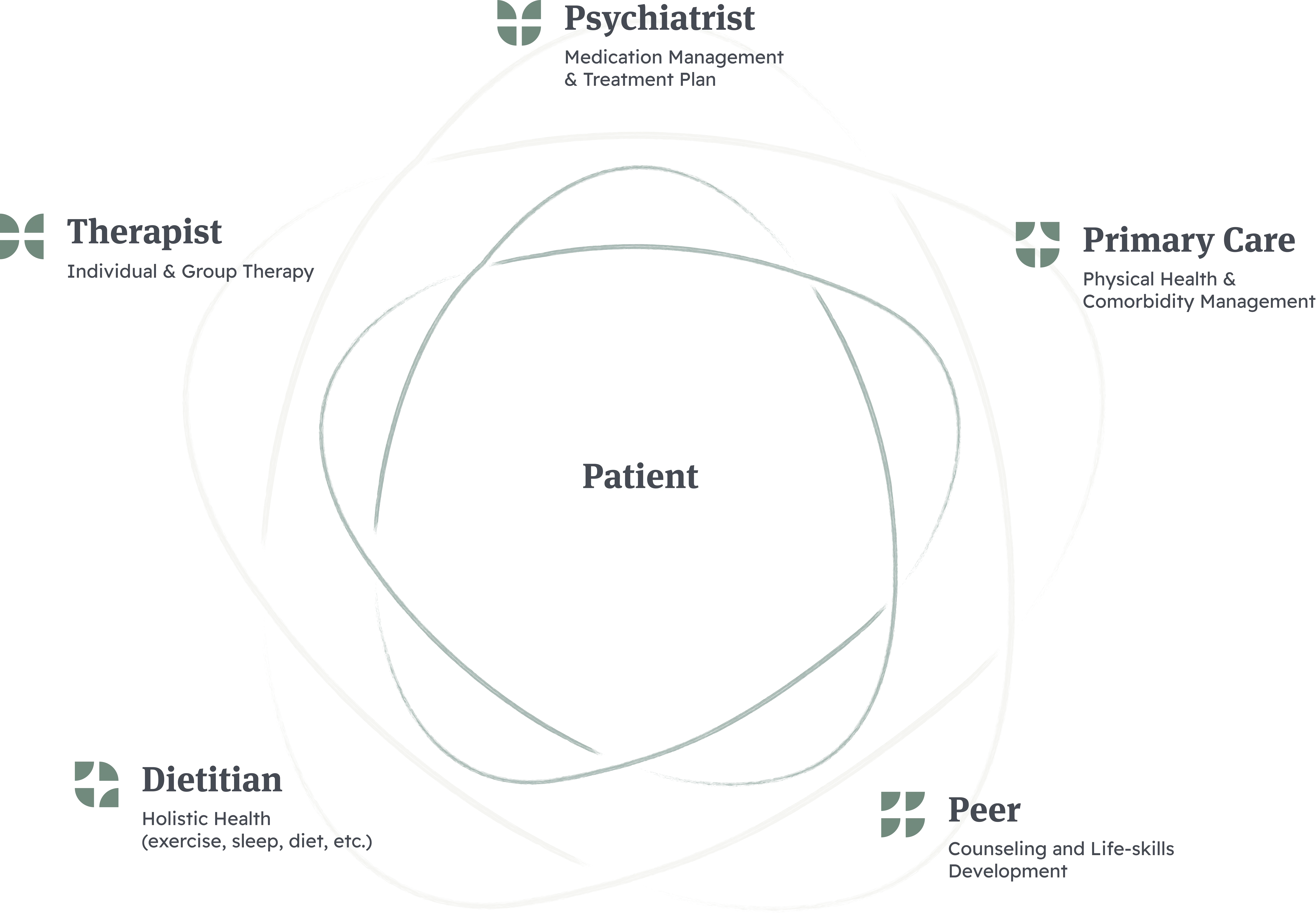
At the heart of our integrated clinics are care teams that include expert psychiatrists, therapists, primary care physicians, dietitians, health coaches, peer mentors, and clinical care coordinators. The Amae team works collaboratively to meet each patient where they are, tailoring treatment to address their unique needs and foster meaningful progress.