## min read

Does TMS Therapy Work? Evidence and Success Rates

|

October 7, 2026

Summarize with AI

Does TMS Therapy Work? Evidence and Success Rates

Does TMS therapy work? For many people whose depression has not responded to antidepressants, yes, and the research shows how many. The FDA cleared transcranial magnetic stimulation (TMS) for major depressive disorder in 2008 on the strength of sham-controlled trials, and more than a decade of real-world outcome data has followed. What the evidence does not support is an unqualified "TMS works." Outcomes vary from person to person, the numbers depend on how you define success, and the people who benefit most share a recognizable profile.

‍

Start with the definitions, because every statistic below depends on them.

What "Works" Means: Response vs. Remission

Depression research measures success on rating scales, and two thresholds matter.

‍

Response means a meaningful reduction in symptoms, usually defined as a 50% or greater drop in the score on a standard depression scale. Someone who responds feels noticeably better but may still have symptoms.

‍

Remission means the score falls below the scale's cutoff for depression. Symptoms are largely gone. Remission is the goal of treatment, and it is the harder bar to clear.

‍

Two more details shape every TMS success rate you will read. The scale matters: clinician-rated scales and patient questionnaires produce different numbers for the same group of people. And the population matters. TMS is studied almost entirely in people whose depression has already failed to respond to medication, so its rates should be compared with other treatments for that same group, not with a first antidepressant.

What the Clinical Evidence Shows

One of the key trials confirming TMS's effect was a randomized, sham-controlled study led by Mark George and published in Archives of General Psychiatry in 2010. It enrolled 199 adults with major depression who were not taking antidepressants, with 190 included in the analysis. During the blinded phase, 14.1% of people receiving active TMS reached remission, compared with 5.1% receiving sham stimulation. The odds of remission were 4.2 times higher with real treatment, and the number needed to treat was 12.

‍

Those figures look modest next to many TMS marketing pages. The blinded phase was short, the remission bar strict, and a sham-controlled design exists to prove an effect is real, not to show the best a treatment can do in practice. On that goal, it succeeded.

‍

Real-world outcomes come from a different kind of study. In 2012, Linda Carpenter and colleagues published a multisite observational study in Depression and Anxiety covering 307 outpatients treated at 42 clinical TMS practices across the United States. These patients had already tried an average of 2.5 antidepressants at adequate dose and duration without satisfactory improvement. By the end of treatment, 58% had responded and 37.1% were in remission on the clinician-rated scale. On the PHQ-9, a self-report questionnaire, 56.4% responded and 28.7% reached remission.

‍

Our own framing for patients is deliberately conservative: roughly half of people respond and roughly one in three reach remission, and those figures describe people who had not benefited from four or more antidepressants. So how effective is TMS for depression? For depression that has resisted medication, it helps about half of the people who complete a standard course, and it clears depression for about a third.

‍

One clarification about higher numbers you may have seen. Remission rates of 70% or 80% come from newer accelerated protocols, many sessions per day over about a week guided by brain imaging, in small early trials. The FDA has cleared a rapid-acting form of TMS, as the National Institute of Mental Health notes, but we do not offer accelerated protocols, and the figures in this article describe the standard daily course our clinics provide.

TMS Compared to Other Depression Treatments

Antidepressant medication remains first-line, and TMS is typically considered after it. Compared with switching to yet another medication, TMS acts on the brain directly rather than through the bloodstream, which is why it does not cause weight gain, sexual side effects, or sedation.

‍

Electroconvulsive therapy (ECT) produces larger and faster symptom reduction in head-to-head research, but it requires general anesthesia and can affect memory around the time of treatment, so it is reserved for severe or urgent situations. Esketamine (Spravato) and ketamine can act within days rather than weeks, with a different monitoring burden and a different side-effect profile. None of these is universally better. They suit different clinical pictures, and we compare each pairing in depth in dedicated articles.

Who Is Most Likely to Benefit

The evidence points to a consistent profile of the person who does well with TMS. It matches the eligibility criteria we use, which also track what insurers require for authorization:

‍

  • A confirmed diagnosis of major depressive disorder. TMS is cleared for MDD, not for every kind of low mood, and getting the diagnosis right comes first. If you are unsure how your diagnosis fits, our guide to major depressive disorder vs. persistent depressive disorder explains the distinction.
  • Multiple antidepressants from different classes that did not bring adequate improvement.
  • Psychotherapy that was tried and did not bring enough relief.
  • No medical contraindications. TMS uses a strong magnetic field, so we screen for a history of seizures or epilepsy, metal in the head outside the mouth, implanted devices such as pacemakers, and a history of stroke, neurosurgery, or brain injury. Pregnancy calls for individualized planning with your obstetric and psychiatric team. Ordinary dental fillings are not a problem.
  • The ability to commit to a daily session schedule for several weeks.

‍

Notice what is not on the list: how many years you have spent on medication. More than half of the Carpenter study's patients responded after multiple failed medication trials.

How Long It Takes to See Results

TMS is cumulative. A single session produces nothing you would notice; the benefit builds as repeated stimulation changes activity in the mood circuits being targeted. At our clinics, a full course of TMS means 20 to 30 weekday sessions over roughly four to six weeks.

‍

When improvement shows up varies. Some people notice sleep, energy, or concentration shifting in the second or third week, often before their mood lifts. Others feel little change until the final stretch of the course. Both patterns are normal, and neither predicts the final outcome well, which is why progress is judged with symptom rating scales rather than a mid-course impression. The most common mistake is writing TMS off after a handful of sessions.

What Happens If TMS Doesn't Work?

It is a fair question to ask before you start, and the answer is not "you are out of options."

‍

If symptom scores have not moved by the later part of the course, a psychiatrist reassesses rather than simply stopping. The treatment plan can be adjusted, including the stimulation parameters or the length of the course. Medication can be changed or added, since TMS and medication are often combined. Psychotherapy can be intensified. And other options for treatment-resistant depression remain on the table, including esketamine and, for severe or urgent depression, ECT.

‍

Partial response is its own category: a 30% drop in symptoms is not a treatment failure, and it often shapes what comes next. People who responded well to a first course can also be treated again if depression returns.

‍

What happens if TMS doesn't work is, in the end, what happens at every stage of treating difficult depression: the plan changes, and the person stays in care. If you are having thoughts of suicide at any point, call or text 988 to reach the Suicide and Crisis Lifeline.

What TMS Does Not Do

TMS is a specific tool, and its limits are as well defined as its strengths.

‍

It does not work for everyone. About half of people with medication-resistant depression respond, which means about half do not.

‍

It is not a first-line treatment. In practice, and in insurers' criteria, TMS comes after antidepressant trials, not instead of them.

‍

It is not a general-purpose brain treatment. The FDA clearances are specific: major depressive disorder since 2008 and obsessive-compulsive disorder since 2018, plus a small number of narrowly defined uses. Anxiety disorders and PTSD are being studied, but those uses are not cleared. At our clinics we currently provide TMS for major depressive disorder.

‍

It is not a cure. Remission is a realistic goal, but depression can return, and TMS belongs inside ongoing care rather than serving as a one-time fix.

What to Expect During a Course of Treatment

The practical side is simpler than most people expect.

‍

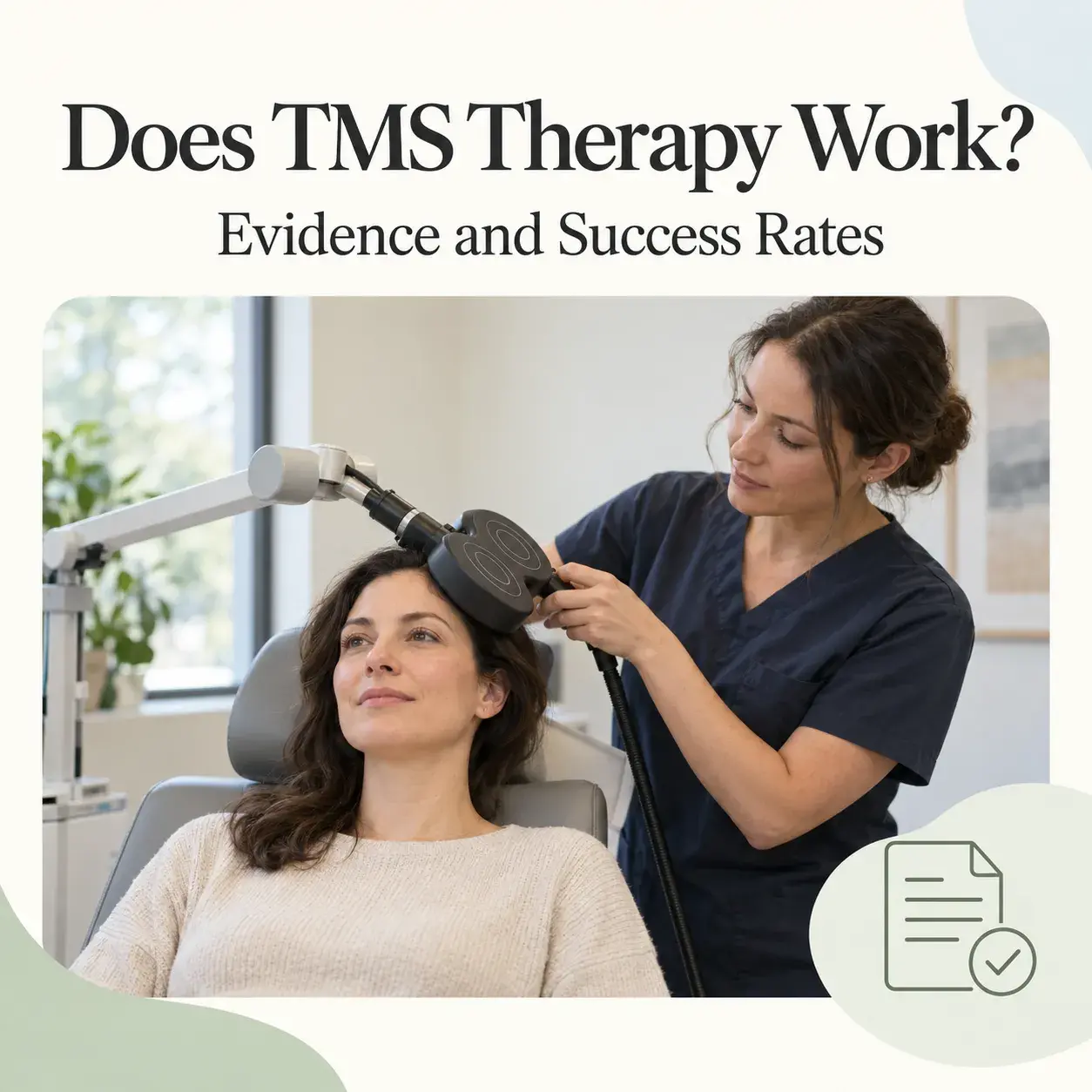
Treatment begins with a screening visit of 30 to 60 minutes to confirm the diagnosis, review your treatment history, and check for contraindications. Sessions then run Monday through Friday, 30 to 40 minutes each. You sit in a chair, awake, while a magnetic coil rests against your scalp and delivers pulses in short trains. It feels like tapping. With no anesthesia or sedation, you drive yourself home and go straight back to your day.

‍

Side effects are mostly local and mostly early: scalp discomfort at the coil site and headache, both of which typically clear within the first week. Because nothing enters your bloodstream, TMS does not cause the weight gain, sexual dysfunction, stomach upset, dry mouth, or sedation that antidepressants can. The one serious risk, seizure, is exceedingly rare, and the screening process exists to keep it that way.

Talking to a Psychiatrist About Whether TMS Is Right for You

Population statistics tell you what TMS does for people like you. They cannot tell you what it will do for you. That question gets answered in an evaluation, where a psychiatrist reviews your diagnosis, medication history, health, and goals, and tells you plainly whether TMS is a reasonable next step.

‍

At Amae, TMS is one part of an integrated care model in which psychiatry, therapy, primary care, and peer support come from the same team, so a course of TMS fits into your broader care rather than running alongside it. We provide it in Los Angeles, Los Altos, and San Mateo, all commercial insurance plans are accepted alongside cash pay, and prior authorization is handled by our intake team. To find out where you stand, schedule an evaluation with an Amae psychiatrist.

Frequently Asked Questions

What percentage of people does TMS work for?

In a major multisite real-world study, 58% of patients responded and 37% reached remission on clinician ratings after a standard course. Those patients had already tried an average of 2.5 antidepressants without adequate relief, so the numbers describe treatment-resistant depression, not depression in general. Our own conservative framing is that about half respond and about one in three reach remission.

How soon does TMS start working?

Gradually, over the course rather than after a single session. Some people notice changes in sleep, energy, or focus within the first two or three weeks, while others see improvement only near the end of the four-to-six-week course. Neither pattern reliably predicts the final result.

Does TMS work for everyone?

No. Like every treatment for depression, TMS produces a range of outcomes, and roughly half of people with medication-resistant depression do not respond. That is why a psychiatrist tracks symptoms during the course and adjusts the plan if progress stalls.

Is TMS FDA-approved or still experimental?

TMS is FDA-cleared, not experimental. Clearance for major depressive disorder came in 2008 and for obsessive-compulsive disorder in 2018, both on the basis of controlled clinical trials. Uses such as anxiety disorders and PTSD are still at the research stage and are not cleared.

What happens if TMS doesn't work for me?

A psychiatrist reassesses and lays out next steps. Those can include adjusting the treatment plan, combining TMS with medication changes or psychotherapy, or considering other treatment-resistant depression options such as esketamine or ECT. Not responding to TMS does not mean nothing else will work.

How long do the effects of TMS last?

It varies. Improvement often lasts well beyond the end of the course, some people need a maintenance plan or a repeat course, and the timing differs from person to person. Durability deserves its own discussion, and it is one to have with your psychiatrist as you approach the end of a course.

‍

Citations

  1. George MS, Lisanby SH, Avery D, et al. Daily left prefrontal transcranial magnetic stimulation therapy for major depressive disorder: a sham-controlled randomized trial. Archives of General Psychiatry. 2010. https://pubmed.ncbi.nlm.nih.gov/20439832/ (Tier 1)
  2. Carpenter LL, Janicak PG, Aaronson ST, et al. Transcranial magnetic stimulation (TMS) for major depression: a multisite, naturalistic, observational study of acute treatment outcomes in clinical practice. Depression and Anxiety. 2012. https://pubmed.ncbi.nlm.nih.gov/22689344/ (Tier 1)
  3. Micallef-Trigona B. Comparing the effects of repetitive transcranial magnetic stimulation and electroconvulsive therapy in the treatment of depression: a systematic review and meta-analysis. Depression Research and Treatment. 2014. https://pubmed.ncbi.nlm.nih.gov/25143831/ (Tier 1)
  4. National Institute of Mental Health. Brain Stimulation Therapies. https://www.nimh.nih.gov/health/topics/brain-stimulation-therapies/brain-stimulation-therapies (Tier 2)
  5. 988 Suicide and Crisis Lifeline. https://988lifeline.org (Tier 2)

‍

Reccomended for you

# min read

TMS vs Medication: Comparing Depression Treatments

By

Sonia Garcia

|

September 23, 2026

Most people comparing TMS vs medication for depression arrive at the question the same way: the antidepressants have not brought enough relief. If that is you, it helps to know that both are evidence-based, FDA-cleared treatments, and they work in completely different ways. Medication adjusts brain chemistry from the inside. TMS stimulates the brain directly with magnetic pulses. Neither is universally better. The right choice depends on your treatment history, the severity of your symptoms, how you tolerate side effects, and your own preferences, especially once you are dealing with treatment-resistant depression or trying to figure out what to do when antidepressants don't work. This article compares the two fairly, not to push one over the other.

How Antidepressants Work

Antidepressants change the availability of certain brain chemicals, mainly serotonin and norepinephrine, that influence mood. The most common are SSRIs (selective serotonin reuptake inhibitors) and SNRIs (serotonin-norepinephrine reuptake inhibitors). Both are considered first-line treatment, meaning they are usually where a clinician starts.

‍

They are taken daily as a pill at home, and they work gradually. Most people need several weeks before the full effect shows, which is one of the harder parts of starting an antidepressant: you often have to wait to know whether it is working. Finding the right medication and dose regularly takes some trial and adjustment, and a first medication that does not help does not mean none will. There are many options within each class, so a clinician can switch or fine-tune based on how a person responds. Older tricyclic antidepressants (TCAs) also work but tend to cause harsher side effects, so they are usually reserved for later steps rather than first-line use. The main appeal of medication is convenience and evidence: it is taken at home, it is inexpensive, and it has decades of research behind it.

How TMS Works

Transcranial magnetic stimulation (TMS) is a non-invasive treatment that uses focused magnetic pulses, similar in strength to an MRI, to stimulate the mood-regulating areas of the brain that tend to be underactive in depression, mainly the left dorsolateral prefrontal cortex. It is FDA-cleared for major depressive disorder in adults, and also for OCD (NIMH, Brain Stimulation Therapies).

‍

TMS is not electroconvulsive therapy (ECT). There is no anesthesia and no sedation, and the patient stays fully awake through each session, then drives home and returns to normal activity. During a session, a coil rests against the scalp and delivers pulses in short cycles, which most people feel as a tapping sensation. A typical course runs about five days a week for several weeks, with each session lasting under an hour, and the benefit tends to build gradually across the course rather than after any single visit.

‍

As a non-drug option, TMS is one of the main alternatives to antidepressants for people whose medication has stopped short. It usually works best as part of a broader treatment plan, coordinated with therapy and, in many cases, ongoing medication, rather than as a replacement for all other care.

TMS vs Medication: Side-by-Side Comparison

The two treatments differ on almost every practical dimension, from how they are delivered to how quickly they work and what they ask of you day to day. The table below lays the key differences side by side, and the sections that follow unpack the two that matter most to people making this decision: side effects and success rates.

Factor Antidepressants TMS
How it works Adjusts brain chemistry (daily medication) Magnetic pulses stimulate mood-regulating brain areas
Schedule Daily pill, at home In-clinic sessions, about 5 days a week for several weeks
Onset Several weeks Often within a few weeks of the course
Common side effects Weight change, sexual dysfunction, fatigue, sleep changes Mild scalp discomfort or headache, usually fades after the first week
Effect on memory or cognition Varies by medication No known negative effect on memory or cognition
Best positioned for First-line, mild to moderate depression When medication has not worked or side effects are intolerable

Side Effects Compared

Antidepressant side effects vary by class. SSRIs commonly cause weight gain and sexual dysfunction, though some effects ease after the first few weeks. SNRIs have a similar profile that is often milder. TCAs tend to be harsher, which is why they are rarely a first choice. These are systemic effects, because the medication acts throughout the body.

‍

TMS side effects are usually mild and short-lived: scalp discomfort, headache, or lightheadedness that typically passes soon after a session and lessens over the first week. The most serious risk, seizure, is very rare. Because TMS is non-invasive and targeted rather than systemic, it avoids the weight, sexual, and sleep side effects associated with medication, and it does not affect memory or cognition the way some people fear based on older brain treatments like ECT.

‍

It is not side-effect-free, though, and its main practical downside is different in kind. Instead of a daily side effect, TMS asks for a time commitment: traveling to a clinic most weekdays for several weeks. For someone with a demanding schedule or limited transportation, that logistical cost is real and worth weighing against the appeal of avoiding medication side effects. Neither profile is automatically easier to live with; they are simply different, and which one fits depends on the person.

Success Rates: What the Research Shows

Both treatments help many people, and neither helps everyone. Reading the numbers honestly matters more than cheerleading for either one. Two terms come up often: response means a meaningful reduction in symptoms, usually cutting them roughly in half, while remission means symptoms largely resolve. Remission is the higher bar and the real goal.

‍

For medication, the landmark STAR*D study found that roughly a third of patients reached remission on their first SSRI (Trivedi et al., American Journal of Psychiatry, 2006). That is a genuinely useful result for many people. But it also means most did not remit on the first try, and STAR*D showed that with each additional medication tried after a failure, the odds of remission tend to drop while side-effect burden tends to rise. That diminishing return is exactly the situation that leads people to look at other options.

‍

For TMS, a large real-world registry of more than 5,000 patients found that most experienced measurable improvement, with response rates ranging from about 58% to 83% and remission from about 28% to 62%, depending on how outcomes were measured (Sackeim et al., Journal of Affective Disorders, 2020). The wide ranges are worth noting: they reflect different rating scales and patient groups, and many of those patients were also taking medication, so the numbers describe TMS in real-world use rather than in isolation.

‍

For treatment-resistant depression specifically, a 2024 randomized trial compared TMS with switching or augmenting medication in 89 people who had not responded to at least two antidepressants, with both groups also receiving psychotherapy. The TMS group had significantly higher response and remission rates than the medication group (Dalhuisen et al., American Journal of Psychiatry, 2024). It is one of the clearest head-to-head comparisons available, though individual results always vary, and these figures describe groups, not guarantees for any one person.

When Antidepressants Don't Work: Where TMS Fits

About a third of people with major depressive disorder do not respond adequately to first-line treatment, a pattern clinicians call treatment-resistant depression. It is not a sign of personal failure or a rare edge case; it is common, and it has its own growing set of treatment options. When two or more medications have failed, or when side effects are intolerable, TMS becomes a well-supported next step, and the 2024 trial above is part of why it is increasingly positioned early in the treatment-resistant pathway rather than as a last resort.

‍

TMS is not the only option at this stage. Spravato (esketamine), a nasal spray derived from ketamine, is FDA-approved for treatment-resistant depression when used together with an oral antidepressant. It is given in a certified clinic under medical supervision, with monitoring after each dose, because of its dissociative effects. Combining TMS with an antidepressant is another route, and research suggests the combination can improve outcomes over medication alone. The larger point is that once first-line medication falls short, the path forward branches into several evidence-based options, and those branches are not mutually exclusive. A person might use medication and TMS together, or move from one approach to another as their psychiatrist learns what their brain responds to.

Who Is Each Treatment For?

Medication is often the right starting point for someone who is:

‍

  • Early in treatment for depression
  • Managing mild to moderate symptoms
  • Looking to avoid in-clinic visits
  • Someone who has responded well to an antidepressant before

‍

TMS is generally considered for someone who:

‍

  • Has tried multiple antidepressants without adequate relief
  • Cannot tolerate medication side effects
  • Prefers a non-drug approach
  • Has treatment-resistant depression

‍

Many people use both at different points, and some use them together. Where a person lands is a clinical decision, not a solo consumer choice, and it belongs with a psychiatrist who knows the full history.

Making the Decision With a Psychiatrist

TMS, medication, Spravato, and therapy are not competing products. They are tools a psychiatrist combines and adjusts based on diagnosis, history, and how a person responds over time. Comparing TMS and medication on paper is useful, but the decision is rarely either-or, and it is rarely one-and-done. It usually looks more like a sequence: start somewhere reasonable, measure the response, and adjust. The most reliable way to navigate that sequence, and to change course when needed, is a thorough evaluation within an integrated care setting, where the clinician managing your medication is the same one weighing whether TMS or another option fits.

‍

That is how care works at Amae Health. Our psychiatry-led teams evaluate the whole picture and coordinate treatment across medication, therapy, and procedures like TMS, which we offer at our Los Angeles clinic. You can explore our full range of treatments or, for severe depression that needs more structure, our Partial Hospitalization Program. Our resources for patients and families explain how integrated care works, and you can contact our team to ask about an evaluation.

Frequently Asked Questions

Is TMS better than medication for depression? Neither is universally better. Medication is first-line and works well for many people. For treatment-resistant depression, where two or more medications have failed, TMS often outperforms a medication switch. The right choice depends on history, severity, and side-effect tolerance.

‍

Can you do TMS and take antidepressants at the same time? Yes. TMS can be combined with antidepressants, and research suggests the combination can improve outcomes compared with medication alone. This should be coordinated by a psychiatrist.

‍

What are the side effects of TMS vs medication? TMS side effects are usually mild and short-lived, mainly scalp discomfort or headache that fades after the first week. Medication side effects vary but can include weight change, sexual dysfunction, and fatigue. Because it is non-invasive, TMS avoids the systemic side effects of medication.

‍

Does TMS work when antidepressants don't? Often, yes. TMS is specifically supported for treatment-resistant depression. A 2024 randomized trial found higher response and remission rates with TMS than with switching medications after failed trials. Individual results vary.

‍

How long does TMS treatment take? A typical course is sessions about five days a week for several weeks, each lasting under an hour. Antidepressants, by contrast, are taken daily and may take several weeks to show their full effect.

‍

What if neither TMS nor medication works? Other options exist, including Spravato (esketamine) used with an oral antidepressant, combination approaches, and structured programs like IOP or PHP for severe depression. A psychiatrist can help identify next steps. Depression is hard, and support is available: if you are struggling, call or text the 988 Suicide and Crisis Lifeline at 988, anytime.

‍

Citations

  1. Trivedi MH, Rush AJ, Wisniewski SR, et al. "Evaluation of Outcomes With Citalopram for Depression Using Measurement-Based Care in STAR*D." American Journal of Psychiatry, 2006. psychiatryonline.org. Tier 1 (peer-reviewed).
  2. Sackeim HA, Aaronson ST, Carpenter LL, et al. "Clinical outcomes in a large registry of patients with major depressive disorder treated with transcranial magnetic stimulation." Journal of Affective Disorders, 2020. sciencedirect.com. Tier 1 (peer-reviewed).
  3. Dalhuisen I, van Oostrom I, Spijker J, et al. "rTMS as a Next Step in Antidepressant Nonresponders: A Randomized Comparison With Current Antidepressant Treatment Approaches." American Journal of Psychiatry, 2024. PubMed 39108161. Tier 1 (peer-reviewed RCT).
  4. National Institute of Mental Health, "Brain Stimulation Therapies." nimh.nih.gov. Tier 2 (U.S. government).

‍

Further reading (external resources): NIMH, Depression; Mayo Clinic, Transcranial Magnetic Stimulation.

‍

# min read

Understanding High-Functioning ADHD in Women

By

Sonia Garcia

|

May 15, 2025

High-functioning ADHD in women is often misunderstood, masked by coping strategies and societal expectations to appear organized and composed. A study published in BMC Psychiatry suggests that the gap in ADHD diagnoses between males and females is largely due to under-recognition and referral bias, with females often showing subtler symptoms. Unlike traditional ADHD, which is more visibly disruptive, high-functioning ADHD manifests through procrastination, emotional overwhelm, and struggles with focus.

Women with ADHD may excel professionally and academically, but this success often comes at a cost — hidden exhaustion, burnout, and self-doubt. Their tendency to internalize symptoms makes diagnosis challenging, leading to misdiagnoses such as anxiety or depression. Understanding these unique manifestations is essential for providing the right support and treatment. This article explores the symptoms, challenges, and strategies for managing high-functioning ADHD in women.

What is High-Functioning ADHD?

High-functioning ADHD refers to a presentation of attention-deficit/hyperactivity disorder where symptoms are less obvious or more effectively masked, particularly by women who often develop advanced coping mechanisms. Unlike traditional ADHD, which is characterized by visibly disruptive behaviors and severe impairments, high-functioning ADHD allows individuals to maintain a semblance of control in daily life. However, this comes at a cost.

Women with ADHD may excel academically or professionally, but they often do so by exerting tremendous effort to counteract symptoms such as inattentiveness, impulsivity, and time management issues. This hidden struggle can lead to chronic stress, burnout, and mental health challenges like anxiety and depression. Because the symptoms appear less severe, high-functioning ADHD frequently goes undiagnosed, especially in women who are culturally conditioned to internalize difficulties and maintain outward composure.

Recognizing the unique manifestations of high-functioning ADHD is crucial for proper diagnosis and support, helping those affected to access appropriate treatment and improve their quality of life.

Symptoms of High-Functioning ADHD in Women

Inattentiveness & Distractibility

Women with high-functioning ADHD often struggle with maintaining focus, especially during tasks that require prolonged attention or lack immediate rewards. These ADHD symptoms frequently manifest as minds wandering, making it difficult to complete assignments or follow through on conversations. This inattentiveness can manifest as forgetting details, losing track of tasks, or zoning out during meetings. Despite being capable and intelligent, these women often expend significant mental energy to appear attentive and organized.

Common signs of inattentiveness include:

  • Frequently losing personal items (keys, phone, etc.)
  • Difficulty following multi-step instructions
  • Getting sidetracked easily during conversations or tasks

Impulsivity Manifestations

Impulsivity in women with ADHD might not always present as overtly risky behavior. Instead, it can appear as interrupting conversations, making snap decisions without fully thinking them through, or struggling to resist distractions like online shopping or social media. In professional settings, this impulsivity can lead to speaking out of turn or overcommitting to tasks, while in personal relationships, it might cause difficulty with boundaries or emotional outbursts.

Examples of impulsivity manifestations:

  • Buying items spontaneously without planning
  • Changing plans or decisions abruptly
  • Difficulty waiting for one’s turn during conversations

Emotional Regulation Difficulties

High-functioning ADHD in women is often accompanied by challenges in managing emotions. Heightened sensitivity and a tendency to feel emotions intensely can lead to sudden mood swings, irritability, or feelings of being overwhelmed. This heightened emotional response is sometimes mistaken for mood disorders, making it harder to diagnose ADHD accurately. Emotional dysregulation can impact relationships and contribute to chronic stress.

Key challenges with emotional regulation:

  • Overreacting to minor frustrations
  • Difficulty calming down after an upset
  • Internalizing criticism deeply

Organizational & Time Management Challenges

Women with high-functioning ADHD frequently battle with staying organized and managing time effectively. Procrastination, difficulty prioritizing tasks, and a tendency to underestimate how long activities will take are common challenges. This can result in missed deadlines, cluttered workspaces, and a constant sense of falling behind, despite considerable effort to stay on top of responsibilities.

Other challenges with organization and time management:

  • Constantly starting but not finishing tasks
  • Frequently misplacing important documents
  • Feeling overwhelmed by complex projects

Differences in ADHD Symptoms Between Genders

ADHD symptoms can manifest quite differently in males and females, leading to widespread misconceptions and often causing ADHD in women to go unnoticed. While males typically exhibit more visible signs of hyperactivity and impulsivity, females are more likely to internalize their symptoms, presenting as inattentiveness, anxiety, or perfectionism. Recognizing these differences is crucial for accurate diagnosis and effective treatment.

The table below highlights some of the key differences in how ADHD symptoms present in males versus females:

Symptom Females Males
Hyperactivity Internal restlessness; often appears distracted or daydreamy, masking the need to move or fidget. Overt physical hyperactivity, fidgeting, and running around.
Impulsivity Emotional impulsivity, like sudden outbursts, oversharing, or impulsive spending as a form of coping. Impulsive actions, such as interrupting conversations or engaging in risky behaviors without considering consequences.
Inattentiveness Difficulty focusing on tasks, often masked by over-preparation or perfectionism to compensate. Visible forgetfulness, difficulty following instructions, and frequent mistakes in school or work.
Emotional Regulation Tendency to internalize emotions, leading to chronic anxiety, self-blame, and perfectionist tendencies. Outward expressions of irritability, frustration, or impatience, often perceived as aggressive.

Why Do Women with High-Functioning ADHD Go Unnoticed?

A systematic review published in BMC Psychiatry highlighted that many women with ADHD remain undiagnosed well into adulthood due to a lack of awareness and diagnostic biases. Plus, social conditioning teaches many women to appear organized, attentive, and emotionally stable, even when they are struggling internally. As a result, they may excel academically or professionally at the cost of significant mental and emotional exhaustion.

Additionally, the diagnostic criteria for ADHD were historically based on male presentations of the disorder, which tend to be more externally disruptive. Women, however, are more likely to experience internalized symptoms such as inattentiveness, low self-esteem, and anxiety. This mismatch between symptoms and diagnostic criteria leads to many women being misdiagnosed with anxiety or depression instead of ADHD. Recognizing these patterns is essential for improving diagnosis rates and access to treatment for women with high-functioning ADHD.

The Impact of High-Functioning ADHD on Daily Life

Professional Life

Women with ADHD often face unique challenges in the workplace. While they may excel in their roles, maintaining focus and managing time efficiently can be a constant struggle. Procrastination, difficulty prioritizing tasks, and impulsive decision-making can lead to missed deadlines and burnout. 

Additionally, the pressure to appear competent and composed can result in overworking and perfectionism, which exacerbates stress. Seeking accommodations like flexible deadlines, noise-canceling headphones, or utilizing project management tools can significantly improve productivity and reduce overwhelm.

Personal Relationships

High-functioning ADHD can also impact personal relationships, making it difficult for women to balance social obligations and emotional needs. Forgetfulness, distraction, and challenges with emotional regulation can cause misunderstandings with partners, friends, and family members. Women with ADHD may also struggle with maintaining consistent communication or remembering important dates, which can lead to feelings of guilt or inadequacy. 

Despite these challenges, many women with ADHD use their empathy and creativity to form deep and meaningful connections. Being open about their struggles and setting clear expectations with loved ones can help in building stronger, more supportive relationships.

Physical Health & Lifestyle Habits

High-functioning ADHD in women can also influence physical health and lifestyle habits, often making it challenging to maintain a balanced routine. Women with ADHD may struggle with regular exercise due to difficulties with planning and motivation, leading to a more sedentary lifestyle. 

Additionally, impulsivity can contribute to irregular eating patterns, such as binge eating or skipping meals. Sleep disturbances are also common, with many women experiencing difficulty falling asleep or maintaining a consistent sleep schedule.

Mental Health Implications

The continuous effort to mask symptoms and maintain a facade of normalcy can take a toll on mental health. ADHD in women makes them more prone to anxiety, depression, and low self-esteem due to feelings of inadequacy and chronic stress. The fear of being perceived as lazy or incompetent can further fuel perfectionism and self-criticism, creating a vicious cycle. 

Without proper diagnosis and support, these mental health struggles can intensify over time, leading to burnout and a diminished quality of life. Addressing these underlying mental health challenges with therapy, support groups, and self-compassion practices is essential for improving overall well-being and quality of life.

Coping Strategies & Management for Women with ADHD

Managing high-functioning ADHD requires a combination of self-awareness, structure, and support. While the challenges can be significant, adopting effective coping strategies can help adult women manage symptoms and improve their quality of life. Here are some practical tips:

  • Create a Routine: Establishing a daily schedule can help reduce forgetfulness and improve time management.
  • Use Visual Reminders: Sticky notes, to-do lists, and smartphone alarms can aid memory and keep tasks on track.
  • Prioritize Self-Care: Regular exercise, adequate sleep, and mindfulness practices can help manage stress and improve focus.
  • Break Tasks into Smaller Steps: Tackling large projects in manageable parts prevents being overwhelmed and procrastinating.
  • Leverage Technology: Apps for task management, reminders, and focus can provide structure and accountability.
  • Seek Professional Support: Therapy and coaching tailored to ADHD can offer strategies for emotional regulation and productivity.

Experimenting with different approaches can help women find what works best for them, ensuring that ADHD symptoms are managed effectively.

You’re Not Alone: Get Help for Your ADHD

Living with high-functioning ADHD can be exhausting, especially when symptoms go unnoticed or are misunderstood. Many women struggle in silence, masking their challenges and battling chronic stress and burnout. Understanding that you’re not alone in this experience is the first step towards finding effective support.

At Amae Health, we provide comprehensive psychiatric care for individuals facing complex mental health challenges which may include ADHD. If ADHD symptoms are impacting your daily life, our expert team can help assess your needs and develop a personalized approach to improve focus, emotional regulation, and overall well-being. 

If you’re ready to take the first step towards better managing your ADHD symptoms, reach out to Amae Health for a consultation today. You don’t have to navigate this journey alone.

‍

# min read

Crippling Anxiety: What It Is, Why It Happens & What Can Help

By

Sonia Garcia

|

February 19, 2026

You wake up and your heart is already racing. Before you even open your eyes, your chest feels tight. The simple thought of checking your email triggers a wave of panic, leaving you trapped in a loop of worst-case scenarios you cannot shut off. It feels as though your body is constantly braced for a disaster that never arrives.

This is crippling anxiety.

Far beyond feeling stressed or nervous, crippling anxiety creates a state so severe that it paralyzes your routine and makes everyday tasks feel like insurmountable mountains. When you live with this, tension becomes a permanent resident in your body. Physical symptoms like a racing heart, nausea, or dizziness arrive without warning, and no matter how hard you try, you cannot simply turn off the fear.

If this sounds familiar, you are not alone. Understanding what is crippling anxiety, why it happens, and which treatments actually provide relief is the first step toward reclaiming your life. Recognizing the difference between daily stress and a paralyzing condition is where healing begins.

What Is Crippling Anxiety?

Crippling anxiety isn't an official diagnosis you'll find in the DSM-5. Instead, it's a term people use to describe anxiety that's so severe it interferes with their ability to function. It goes beyond occasional worry or nervousness - it's persistent, overwhelming, and disruptive.

Here's how it shows up in everyday life:

  • You avoid situations that trigger panic, even when they're necessary - like work meetings, social gatherings, or medical appointments.
  • Your body reacts intensely to small stressors, making it hard to distinguish real threats from imagined ones.
  • Daily tasks feel overwhelming, from answering phone calls to grocery shopping.
  • You can't focus or complete responsibilities because anxiety hijacks your attention and energy.

When people ask what is crippling anxiety, they're often describing anxiety that doesn't just make life uncomfortable - it makes life feel unmanageable.

How Crippling Anxiety Differs From Everyday Stress

Everyone experiences stress. But crippling anxiety operates on a completely different level. Here's how they compare:

Feature Everyday Stress Crippling Anxiety
Trigger Specific event (deadline, conflict) Often vague or absent
Duration Temporary, resolves after stressor passes Persistent, lingers without clear cause
Intensity Manageable discomfort Overwhelming, paralyzing fear
Physical symptoms Mild tension, occasional restlessness Severe: racing heart, shortness of breath, nausea, dizziness
Impact on function Might reduce productivity temporarily Prevents working, socializing, or handling daily tasks
Control Can redirect focus or take action Feels uncontrollable and intrusive

Everyday stress motivates you to solve problems. Crippling anxiety stops you in your tracks.

Signs of Crippling Anxiety

Crippling anxiety presents through a combination of emotional, cognitive, and physical symptoms. Here are the most common signs:

  • Persistent, intrusive thoughts that loop without resolution.
  • Racing heart or chest tightness, even when resting.
  • Shortness of breath or feeling like you can't get enough air.
  • Nausea, stomach pain, or digestive issues.
  • Dizziness, lightheadedness, or feeling disconnected from your body.
  • Muscle tension, especially in the shoulders, neck, and jaw.
  • Extreme fatigue despite doing very little.
  • Difficulty sleeping or waking up multiple times during the night.
  • Constant sense of dread or feeling like something bad is about to happen.
  • Irritability or emotional outbursts that feel out of character.
  • Avoidance behaviors - canceling plans, calling in sick, isolating yourself.
  • Difficulty concentrating or making decisions, even simple ones.

These symptoms don't just come and go - they build over time, creating a cycle where anxiety about your anxiety makes everything worse.

What Causes Crippling Anxiety?

There's no single cause of crippling anxiety. It typically develops from a combination of factors:

  • Genetics: Anxiety disorders often run in families, suggesting a biological predisposition.
  • Brain chemistry: Imbalances in neurotransmitters like serotonin, dopamine, and GABA affect mood regulation.
  • Chronic stress: Prolonged exposure to stressors keeps your nervous system in overdrive.
  • Trauma or adverse experiences: Past trauma, abuse, or significant losses can rewire your threat detection system.
  • Major life changes: Events like moving, job loss, relationship changes, or health diagnoses can trigger intense anxiety.

Understanding these contributors helps you recognize that crippling anxiety isn't a personal failure. It's a complex response involving biology, environment, and experience.

Anxiety Disorders Linked to Crippling Anxiety

Crippling anxiety often overlaps with specific anxiety disorders:

  • Generalized Anxiety Disorder (GAD): Excessive, uncontrollable worry about multiple areas of life that persists for months.
  • Panic Disorder: Recurrent, unexpected panic attacks with intense physical symptoms and fear of future attacks.
  • Social Anxiety Disorder: Intense fear of judgment or embarrassment in social situations that leads to avoidance.
  • Agoraphobia: Fear of places or situations where escape feels difficult, often resulting in severe avoidance.

These conditions share one thing: they significantly disrupt daily functioning, relationships, and quality of life.

How to Know If Your Anxiety Is Becoming Crippling

Not all anxiety crosses into "crippling" territory. Here's how to tell if yours has:

  • Duration and persistence: Your anxiety lasts most days for weeks or months, not just during stressful periods.
  • Loss of control: You can't calm yourself down using strategies that used to work.
  • Disproportionate reactions: Small triggers provoke intense fear or physical symptoms.
  • Avoidance interferes with life: You're skipping work, canceling plans, or avoiding necessary activities because of anxiety.

If several of these apply, your anxiety has likely moved beyond manageable stress into something that needs more structured support.

How to Manage Crippling Anxiety

The good news? Even severe anxiety responds to the right combination of strategies and support. Here's what actually helps.

Practice Grounding and Breathing Techniques

When crippling anxiety hijacks your nervous system, grounding techniques interrupt the panic cycle and bring you back to the present moment.

Try these:

  • 5-4-3-2-1 grounding: Name 5 things you see, 4 you touch, 3 you hear, 2 you smell, 1 you taste.
  • Belly breathing: Breathe in slowly for 4 counts, hold for 4, exhale for 6.
  • Cold water reset: Splash cold water on your face or hold ice cubes to activate your body's calming response.

These tools work by engaging your parasympathetic nervous system, which counteracts the fight-or-flight response driving your anxiety.

Reduce Anxiety-Fueling Triggers

Small changes in your daily habits can lower your baseline anxiety level:

  • Cut back on caffeine: It amplifies heart rate and nervousness, mimicking anxiety symptoms.
  • Limit social media and news consumption: Constant exposure to negativity keeps your nervous system activated.
  • Improve sleep hygiene: Go to bed and wake up at consistent times; avoid screens before sleep.

These adjustments won't cure crippling anxiety, but they help prevent small stressors from escalating into full-blown panic.

Move Your Body Regularly

Exercise is one of the most effective biological regulators of anxiety. Physical activity increases endorphins and serotonin, both of which improve mood and reduce stress. Even small movements count - walking, stretching, dancing in your living room. You don't need intense workouts to see benefits.

Practice Acceptance Instead of Fighting Symptoms

Paradoxically, trying to suppress or fight anxiety often makes it worse. Acceptance-based approaches teach you to observe anxious thoughts and physical sensations without reacting to them.

For example, instead of panicking when your heart races, you might think: "My heart is racing. This is uncomfortable, but it's not dangerous. It will pass." This shift reduces the internal struggle that intensifies crippling anxiety.

Find Professional Support

Severe or persistent crippling anxiety often requires structured, evidence-based treatment. Self-help strategies are valuable, but they work best alongside professional care.

A licensed therapist can teach you Cognitive Behavioral Therapy (CBT), Exposure Therapy, or Acceptance and Commitment Therapy (ACT) - all proven effective for anxiety disorders. A psychiatrist can evaluate whether medication might help regulate brain chemistry while you build coping skills.

You don't have to do this alone. Professional support can make the difference between managing symptoms and truly recovering your quality of life.

How Amae Health Helps You Navigate Crippling Anxiety

At Amae Health, we specialize in trauma-informed, compassionate care for people experiencing severe anxiety. We understand that what is crippling anxiety isn't just a clinical question - it's deeply personal. It's about feeling trapped, exhausted, and desperate for relief.

Our team offers personalized treatment plans that combine therapy, medication management when appropriate, and holistic support tailored to your specific symptoms and experiences. We don't believe in one-size-fits-all approaches. Instead, we work with you to understand what's driving your anxiety and create a path forward that feels manageable and hopeful.

Crippling anxiety can make you feel isolated, broken, or like you'll never feel normal again. But anxiety - even severe anxiety - is treatable. With the right combination of grounding techniques, lifestyle adjustments, and professional support, you can move from barely functioning to truly living.

The first step is recognizing that what you're experiencing has a name, a cause, and most importantly, a solution. You deserve support. You deserve relief. And help is available whenever you're ready.

You don't have to live in constant fear. Reach out today to begin your journey toward calm, clarity, and confidence. Contact Amae Health here.