## min read

ADHD in Women vs. Men: Gender Differences & Treatment

|

January 28, 2026

Summarize with AI

ADHD in Women vs. Men: Gender Differences & Treatment

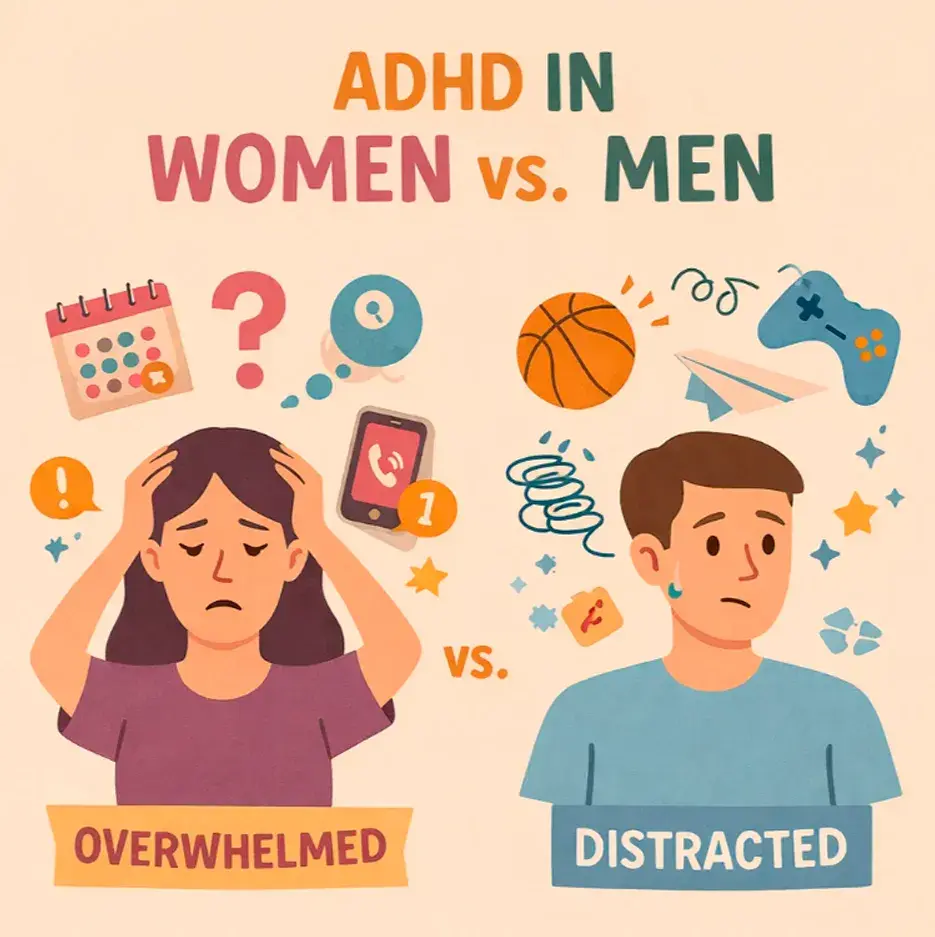
In a single classroom, two students navigate the same diagnosis, yet they look worlds apart. One boy spins in his chair, shouting out answers and pulling the room’s attention toward him. Across the aisle, a girl stares quietly out the window, her homework forgotten and her mind miles away.

We already know which student will be sent to the counselor first.

Because symptoms are often quieter in girls, boys are diagnosed two to three times more often. In reality, ADHD affects both sexes with nearly equal frequency. This gap reveals a hidden crisis in modern medicine: when we only look for the loudest symptoms, millions of women are left without the support they deserve.

At Amae Health, we specialize in identifying and treating ADHD in women and men by focusing on these subtle distinctions. We understand that an accurate diagnosis requires looking past stereotypes to see how symptoms actually manifest in daily life.

Understanding the nuances of ADHD in women vs. men is about more than just a label. It is the key to selecting the most effective treatment and finally providing the clarity that so many have been waiting for.

Understanding ADHD: Types and Core Symptoms

The Three Types of ADHD

Attention deficit hyperactivity disorder includes three main types, each of which can occur in any person regardless of gender:

  • Hyperactive-impulsive type. It is characterized by a constant need to move, an inability to sit still, and impulsive actions that often occur without considering the consequences.
  • Inattentive type. Previously known simply as attention deficit disorder, this type of ADHD manifests itself through difficulty concentrating, forgetfulness, and difficulty organizing daily activities.
  • Combined type. This type combines symptoms from both of the previous categories and is the most common form of the disorder.

It is essential to understand that anyone can have any ADHD, but male ADHD is more likely to manifest itself through hyperactive-impulsive symptoms that are easily noticeable to others. At the same time, women and girls are more likely to exhibit the inattentive type, whose symptoms are less obvious and often go unnoticed by teachers, parents, and even doctors.

How ADHD Affects Daily Life

ADHD seriously affects all areas of a person's life, creating difficulties at work or school, in personal relationships, and with self-esteem. In the workplace, individuals with this disorder may struggle to meet deadlines, organize tasks, and maintain attention during prolonged meetings.

In relationships, female ADHD can manifest itself through forgetfulness about essential dates, difficulty with household chores, or emotional instability, which creates tension in the family.

Academic performance also suffers, but in different ways for men and women. Boys with ADHD are more likely to receive behavioral remarks and be referred to specialists. Girls, on the other hand, may underachieve for years, with their problems being attributed to laziness or lack of motivation. Self-esteem declines in all individuals, but women often blame themselves for their inability to meet social expectations of organization and order.

ADHD Symptoms by Gender: Key Differences

Male ADHD Symptoms and Presentation

Male ADHD usually manifests itself through external, obvious behavioral symptoms that disrupt order in the classroom or at home. Boys with ADHD often cannot sit still, fidget constantly, get up without permission, and may even run or climb in inappropriate situations.

Impulsivity is expressed through shouting answers, inability to wait for their turn, and frequent interruptions of others during conversations.

Aggressive behavior and outbursts of anger are also more common in male ADHD, especially when the child or adult is frustrated. Boys are more likely to lose things, forget to complete tasks, and engage in risky behavior, including:

  • Reckless driving in adolescence and adulthood
  • Alcohol and drug abuse as a form of self-medication
  • Involvement in fights or other confrontational situations
  • Disregard for safety rules in various situations

These external, destructive symptoms of male ADHD attract the attention of adults and lead to earlier diagnosis, but also create negative attitudes toward the child from teachers and peers.

Female ADHD Symptoms and Presentation

Female ADHD manifests itself in a completely different way, through internal, less noticeable symptoms that often go unnoticed by those around them.

Girls and women with ADHD are more likely to "have their heads in the clouds," immersed in dreams or their thoughts. Their workspaces and personal belongings may be disorganized, but they do not disrupt others or create noise.

Perfectionism becomes an attempt to compensate for internal chaos — women with ADHD may spend excessive amounts of time completing tasks, redoing them over and over again. Emotional sensitivity manifests itself through strong reactions to criticism, frequent mood swings, and a tendency toward anxiety or depression. Social behavior is also different — instead of aggression, women with ADHD are more likely to:

  • Avoid social situations for fear of doing something wrong
  • Feel a constant sense of inadequacy and guilt
  • Procrastinate for fear of not being able to do a task perfectly
  • Have difficulty making decisions even in simple situations

These internal manifestations of female ADHD are often interpreted as personality traits rather than symptoms of a medical condition, leading to significant delays in diagnosis.

Why Male ADHD is Diagnosed More Often

Historical Bias in ADHD Research

The study of ADHD began with observations of hyperactive boys in the 1960s and 1970s. This laid the groundwork for diagnostic criteria that focus on male manifestations of the disorder. Researchers focused on external, destructive symptoms that interfered with the learning process and required immediate intervention.

For many years, ADHD in women and men was not studied as separate phenomena, which led to the creation of diagnostic tools that better identify male-type symptoms. Even modern assessment scales and tests are primarily based on behavioral manifestations that are more characteristic of boys and men.

Questions such as "Does the child often run or climb in inappropriate situations?" or "Does the child interfere with other children during play?" better describe male behavior patterns. At the same time, female symptoms remain outside the scope of standard diagnostics.

Societal Expectations and Gender Norms

Societal expectations play a huge role in how ADHD symptoms are perceived in different genders. Boys' disruptive behavior quickly attracts the attention of teachers, who refer them to the school psychologist or recommend that their parents seek professional help.

Quiet, dreamy girls often do not cause problems in the classroom, so their symptoms are frequently ignored or attributed to personality traits.

Social stereotypes also influence the perception of male ADHD and female ADHD. Girls are expected to be more organized, obedient, and capable of multitasking. Therefore, when they do not meet these expectations, those around them often consider it laziness or a lack of upbringing. Boys, on the other hand, are "forgiven" for some chaos and impulsiveness as standard male traits, but when these behaviors become excessive, they immediately cause concern.

The Impact of Hormones and Biology

Hormonal differences between men and women significantly influence the onset and course of ADHD throughout life. Estrogen, the primary female sex hormone, plays a vital role in regulating dopamine and norepinephrine, neurotransmitters that are disrupted in ADHD. Fluctuations in estrogen levels during the menstrual cycle can lead to worsening symptoms of female ADHD on certain days of the month.

Pregnancy and the postpartum period present unique challenges for women with ADHD. During pregnancy, many medications used to treat ADHD are contraindicated, and hormonal changes can either improve or worsen symptoms. Menopause is often accompanied by a sharp decline in concentration and memory in women who have never suspected they had ADHD.

Testosterone in men, on the other hand, may have a protective effect, helping to maintain more stable dopamine levels. However, male ADHD can also change with age — many men report that hyperactivity decreases into adulthood, but attention and organization problems remain.

Diagnosis and Treatment at Amae Health

At Amae Health, we have developed a specialized approach to ADHD diagnosis that takes into account the differences in symptom presentation between men and women. Our team of experts understands that ADHD in women vs. men requires different assessment methods and diagnostic tools. We use extensive questionnaires that include questions about internal symptoms, emotional regulation, and social functioning. This allows us to identify female ADHD even in cases where symptoms have been missed previously.

Treatment at Amae Health is tailored to gender differences. For women, we consider the impact of the menstrual cycle on medication effectiveness and can adjust dosages during different phases of the cycle. Psychotherapeutic approaches also vary — men often benefit from strategies for managing impulsivity and aggression, while women tend to respond better to techniques for addressing perfectionism, anxiety, and self-esteem.

If you suspect that you or someone close to you has ADHD, contact the specialists at Amae Health. Our experience in identifying female ADHD has already helped hundreds of women receive the correct diagnosis and effective treatment, radically changing their quality of life. Don't let gender stereotypes deprive you of the opportunity to get the help you need — sign up for a consultation today.

Reccomended for you

# min read

The Difference Between Learning Disabilities and ADHD

By

Sonia Garcia

|

April 18, 2025

Picture a classroom where two students are struggling with their reading assignment. Michael reads slowly, mixing up letters despite his best efforts to focus. Meanwhile, Olivia reads fluently but can't sit long enough to finish a page. Michael has a learning disability called dyslexia, while Olivia has ADHD. Though both students face challenges, their underlying difficulties are quite different. Understanding these differences is crucial for parents, teachers, and healthcare providers. This guide explores how these conditions differ and, most importantly, how to support each unique situation.

What Are Learning Disabilities (LD) and ADHD?

Defining Learning Disabilities (LD)

A learning disability affects how the brain processes information. Think of it as a unique wiring system in the brain. People with learning disabilities often have average or above-average intelligence. Their challenges lie in specific areas of learning.

Common types of learning disorders include:

  • Dyslexia: Words seem to jump around on the page. Reading becomes challenging even when other academic areas remain strong. Students might reverse letters or struggle with phonetic sounds. Simple reading tasks can require significant mental effort.
  • Dyscalculia: Math feels like solving a puzzle in another language. Basic calculations become complex challenges. Students might struggle to understand number sequences or mathematical patterns. Time-telling and money management often present unique difficulties.
  • Dysgraphia: Writing becomes a physical challenge. Letters refuse to form correctly on paper. Students experience hand fatigue during writing tasks. Spacing between words and letter formation requires extra concentration.
  • Auditory Processing Disorder: Spoken information gets mixed up between hearing and understanding. Following verbal instructions becomes particularly challenging. Background noise can severely impact comprehension of spoken words.
  • Visual Processing Disorder: The eyes work perfectly, but the brain mixes visual information. It affects reading speed and understanding of written material. Visual organization and spatial awareness present significant challenges.

Understanding ADHD

ADHD creates unique processing challenges in the brain. It affects how people manage daily tasks and activities. The brain struggles with focus and impulse control throughout various situations. It impacts school, work, and social interactions.

Executive functions work differently in people with ADHD. Simple tasks might feel overwhelming. Many everyday activities require extra mental effort. It makes daily routines more challenging than they appear.

Three distinct types of learning disorders present different challenges:

  • The Inattentive Type: Focus drifts easily during tasks, like a radio station that keeps losing signal. Details often get overlooked, even in familiar activities. Starting and finishing projects requires extra effort, making simple assignments feel like complex puzzles. Getting through daily tasks becomes a constant challenge.
  • The Hyperactive-Impulsive Type: Staying still feels like holding back a strong wind. Actions happen before thoughts are complete, similar to pressing 'send' before finishing an email. Speaking out of turn occurs frequently, making conversations challenging. Energy levels stay consistently high throughout the day.
  • The Combined Type: This type mixes attention difficulties with hyperactive behaviors. Tasks remain incomplete while energy levels stay high. Daily activities require extra support and understanding. Managing both symptoms creates unique challenges in all situations.

Everyone experiences symptoms differently depending on their environment and daily schedule. Some find mornings most challenging. Others struggle more during quiet afternoon activities. Understanding these patterns helps create better support strategies.

Key Differences Between Learning Disabilities and ADHD

Focus on Specific vs. Global Skills

Learning disabilities target specific academic skills. Meanwhile, ADHD affects overall attention and behavior management. This fundamental difference shapes how each condition impacts daily life. The impact varies significantly:

Area of Impact Learning Disabilities (LD) ADHD
Academic Skills Struggles with specific subjects while excelling in others Performance varies across all subjects based on interest and focus
Reading Ability May have specific reading difficulties (dyslexia) Can read well but loses focus during reading tasks
Math Skills Might struggle specifically with calculations (dyscalculia) Can understand math but makes careless errors due to inattention
Writing Tasks May have trouble forming letters or expressing ideas in writing Writing is rushed, disorganized, or left incomplete
Attention Span Generally able to focus but struggles with specific tasks Difficulty maintaining attention across all activities
Organization Usually capable of keeping materials and spaces organized Consistently struggles with organization in all areas
Task Completion Completes tasks but may take longer in specific areas Starts many tasks but has trouble finishing them
Social Skills Social abilities typically unaffected by the disability May struggle with turn-taking and reading social cues
Memory Specific memory challenges related to disability area General difficulties with working memory and recall
Following Instructions Can follow directions but may need help in specific areas Trouble remembering and following multi-step instructions
Test Performance Consistent difficulties in specific subject areas Variable performance depending on attention level
Project Planning Generally able to plan and execute projects Struggles with project planning and time management

Impact on Executive Functions

Executive functions play a crucial role in daily activities. These brain-based skills affect how people manage tasks and behaviors.

People with learning disabilities usually maintain strong executive function skills. They can:

  • Plan activities effectively
  • Organize materials systematically
  • Manage time appropriately
  • Control impulses successfully
  • Complete tasks once started
  • Switch between activities smoothly

Those with ADHD often struggle with executive function skills. They experience challenges with:

  • Creating and following plans
  • Keeping materials organized
  • Managing time effectively
  • Controlling immediate reactions
  • Completing started tasks
  • Transitioning between activities

How Are They Diagnosed?

Diagnostic Criteria for LD

Learning disability diagnosis requires comprehensive evaluation. The process includes multiple steps and assessments. Key components of LD diagnosis:

  • Standardized achievement testing
  • Cognitive ability assessment
  • Educational history review
  • Classroom performance observation
  • Work sample analysis
  • Specific skill evaluation
  • Parent and teacher input

ADHD Diagnosis

ADHD diagnosis follows a different path. It focuses on behavioral patterns across various settings. Essential elements of ADHD diagnosis:

  • Behavioral observation
  • Parent and teacher ratings
  • Medical examination results
  • Developmental history review
  • Multiple setting evaluations
  • Executive function assessment
  • Symptom duration analysis

Challenges in Diagnosis

Several factors can complicate accurate diagnosis:

  • Overlapping symptoms between conditions
  • Varying presentations in different environments
  • Age-related symptom changes
  • Environmental influence on behavior
  • Cultural considerations in assessment
  • Access to qualified professionals

Treatment and Support for LD and ADHD

Managing Learning Disabilities

Effective support for learning disabilities requires targeted intervention strategies. Key support elements include:

  • Specialized instruction methods
  • Assistive technology tools
  • Educational accommodations
  • Remedial skill building
  • Progress monitoring systems
  • Parent-teacher collaboration

Strategies for ADHD

ADHD management requires a comprehensive approach. Different strategies address various aspects of the condition. Essential management components:

  • Behavioral modification techniques
  • Environmental adaptations
  • Organizational systems
  • Time management tools
  • Activity scheduling
  • Routine establishment

Support for Co-occurring Conditions

Many individuals experience both conditions simultaneously. It requires carefully coordinated support approaches. Combined support strategies include:

  • Integrated treatment planning
  • Multi-specialist coordination
  • Regular progress assessment
  • Flexible intervention methods
  • Family education programs
  • School-home communication systems

Why Understanding the Difference Matters

Tailoring Interventions

Understanding differences between conditions leads to more effective support. Proper identification helps create targeted assistance plans. Important considerations include:

  • Specific skill development needs
  • Individual learning preferences
  • Environmental modification requirements
  • Support service selection
  • Progress measurement methods
  • Accommodation appropriateness

Supporting Children and Families

Proper understanding enables better support from all involved parties. This knowledge helps create effective support networks. Support network components include:

  • Parent education resources
  • Teacher training programs
  • Healthcare provider coordination
  • Therapeutic service access
  • Community support systems

Conclusion: Empowering Success Through Understanding

Understanding the differences between learning disabilities and ADHD enables better support. This knowledge helps create effective intervention strategies. Success becomes possible through appropriate understanding and targeted assistance.

Key takeaway points include:

  • Distinct nature of each condition
  • Importance of accurate diagnosis
  • Value of targeted interventions
  • Need for ongoing support
  • Significance of proper understanding
  • Potential for successful outcomes

Individuals with these conditions can achieve significant success with proper support and understanding. Recognition of differences leads to more effective assistance strategies. This understanding helps create pathways to achievement and growth.

Personalized Support at Amae Health

At Amae Health, we recognize the unique challenges individuals face when living with learning disabilities or ADHD. Our team of compassionate clinicians and mental health experts is dedicated to providing personalized, evidence-based care that addresses each person’s specific needs. Whether you're seeking clarity through diagnosis or ongoing support for cognitive, emotional, or behavioral health, Amae Health offers a safe and supportive environment where healing and growth can begin.

# min read

Understanding High-Functioning ADHD in Women

By

Sonia Garcia

|

May 15, 2025

High-functioning ADHD in women is often misunderstood, masked by coping strategies and societal expectations to appear organized and composed. A study published in BMC Psychiatry suggests that the gap in ADHD diagnoses between males and females is largely due to under-recognition and referral bias, with females often showing subtler symptoms. Unlike traditional ADHD, which is more visibly disruptive, high-functioning ADHD manifests through procrastination, emotional overwhelm, and struggles with focus.

Women with ADHD may excel professionally and academically, but this success often comes at a cost — hidden exhaustion, burnout, and self-doubt. Their tendency to internalize symptoms makes diagnosis challenging, leading to misdiagnoses such as anxiety or depression. Understanding these unique manifestations is essential for providing the right support and treatment. This article explores the symptoms, challenges, and strategies for managing high-functioning ADHD in women.

What is High-Functioning ADHD?

High-functioning ADHD refers to a presentation of attention-deficit/hyperactivity disorder where symptoms are less obvious or more effectively masked, particularly by women who often develop advanced coping mechanisms. Unlike traditional ADHD, which is characterized by visibly disruptive behaviors and severe impairments, high-functioning ADHD allows individuals to maintain a semblance of control in daily life. However, this comes at a cost.

Women with ADHD may excel academically or professionally, but they often do so by exerting tremendous effort to counteract symptoms such as inattentiveness, impulsivity, and time management issues. This hidden struggle can lead to chronic stress, burnout, and mental health challenges like anxiety and depression. Because the symptoms appear less severe, high-functioning ADHD frequently goes undiagnosed, especially in women who are culturally conditioned to internalize difficulties and maintain outward composure.

Recognizing the unique manifestations of high-functioning ADHD is crucial for proper diagnosis and support, helping those affected to access appropriate treatment and improve their quality of life.

Symptoms of High-Functioning ADHD in Women

Inattentiveness & Distractibility

Women with high-functioning ADHD often struggle with maintaining focus, especially during tasks that require prolonged attention or lack immediate rewards. These ADHD symptoms frequently manifest as minds wandering, making it difficult to complete assignments or follow through on conversations. This inattentiveness can manifest as forgetting details, losing track of tasks, or zoning out during meetings. Despite being capable and intelligent, these women often expend significant mental energy to appear attentive and organized.

Common signs of inattentiveness include:

  • Frequently losing personal items (keys, phone, etc.)
  • Difficulty following multi-step instructions
  • Getting sidetracked easily during conversations or tasks

Impulsivity Manifestations

Impulsivity in women with ADHD might not always present as overtly risky behavior. Instead, it can appear as interrupting conversations, making snap decisions without fully thinking them through, or struggling to resist distractions like online shopping or social media. In professional settings, this impulsivity can lead to speaking out of turn or overcommitting to tasks, while in personal relationships, it might cause difficulty with boundaries or emotional outbursts.

Examples of impulsivity manifestations:

  • Buying items spontaneously without planning
  • Changing plans or decisions abruptly
  • Difficulty waiting for one’s turn during conversations

Emotional Regulation Difficulties

High-functioning ADHD in women is often accompanied by challenges in managing emotions. Heightened sensitivity and a tendency to feel emotions intensely can lead to sudden mood swings, irritability, or feelings of being overwhelmed. This heightened emotional response is sometimes mistaken for mood disorders, making it harder to diagnose ADHD accurately. Emotional dysregulation can impact relationships and contribute to chronic stress.

Key challenges with emotional regulation:

  • Overreacting to minor frustrations
  • Difficulty calming down after an upset
  • Internalizing criticism deeply

Organizational & Time Management Challenges

Women with high-functioning ADHD frequently battle with staying organized and managing time effectively. Procrastination, difficulty prioritizing tasks, and a tendency to underestimate how long activities will take are common challenges. This can result in missed deadlines, cluttered workspaces, and a constant sense of falling behind, despite considerable effort to stay on top of responsibilities.

Other challenges with organization and time management:

  • Constantly starting but not finishing tasks
  • Frequently misplacing important documents
  • Feeling overwhelmed by complex projects

Differences in ADHD Symptoms Between Genders

ADHD symptoms can manifest quite differently in males and females, leading to widespread misconceptions and often causing ADHD in women to go unnoticed. While males typically exhibit more visible signs of hyperactivity and impulsivity, females are more likely to internalize their symptoms, presenting as inattentiveness, anxiety, or perfectionism. Recognizing these differences is crucial for accurate diagnosis and effective treatment.

The table below highlights some of the key differences in how ADHD symptoms present in males versus females:

Symptom Females Males
Hyperactivity Internal restlessness; often appears distracted or daydreamy, masking the need to move or fidget. Overt physical hyperactivity, fidgeting, and running around.
Impulsivity Emotional impulsivity, like sudden outbursts, oversharing, or impulsive spending as a form of coping. Impulsive actions, such as interrupting conversations or engaging in risky behaviors without considering consequences.
Inattentiveness Difficulty focusing on tasks, often masked by over-preparation or perfectionism to compensate. Visible forgetfulness, difficulty following instructions, and frequent mistakes in school or work.
Emotional Regulation Tendency to internalize emotions, leading to chronic anxiety, self-blame, and perfectionist tendencies. Outward expressions of irritability, frustration, or impatience, often perceived as aggressive.

Why Do Women with High-Functioning ADHD Go Unnoticed?

A systematic review published in BMC Psychiatry highlighted that many women with ADHD remain undiagnosed well into adulthood due to a lack of awareness and diagnostic biases. Plus, social conditioning teaches many women to appear organized, attentive, and emotionally stable, even when they are struggling internally. As a result, they may excel academically or professionally at the cost of significant mental and emotional exhaustion.

Additionally, the diagnostic criteria for ADHD were historically based on male presentations of the disorder, which tend to be more externally disruptive. Women, however, are more likely to experience internalized symptoms such as inattentiveness, low self-esteem, and anxiety. This mismatch between symptoms and diagnostic criteria leads to many women being misdiagnosed with anxiety or depression instead of ADHD. Recognizing these patterns is essential for improving diagnosis rates and access to treatment for women with high-functioning ADHD.

The Impact of High-Functioning ADHD on Daily Life

Professional Life

Women with ADHD often face unique challenges in the workplace. While they may excel in their roles, maintaining focus and managing time efficiently can be a constant struggle. Procrastination, difficulty prioritizing tasks, and impulsive decision-making can lead to missed deadlines and burnout. 

Additionally, the pressure to appear competent and composed can result in overworking and perfectionism, which exacerbates stress. Seeking accommodations like flexible deadlines, noise-canceling headphones, or utilizing project management tools can significantly improve productivity and reduce overwhelm.

Personal Relationships

High-functioning ADHD can also impact personal relationships, making it difficult for women to balance social obligations and emotional needs. Forgetfulness, distraction, and challenges with emotional regulation can cause misunderstandings with partners, friends, and family members. Women with ADHD may also struggle with maintaining consistent communication or remembering important dates, which can lead to feelings of guilt or inadequacy. 

Despite these challenges, many women with ADHD use their empathy and creativity to form deep and meaningful connections. Being open about their struggles and setting clear expectations with loved ones can help in building stronger, more supportive relationships.

Physical Health & Lifestyle Habits

High-functioning ADHD in women can also influence physical health and lifestyle habits, often making it challenging to maintain a balanced routine. Women with ADHD may struggle with regular exercise due to difficulties with planning and motivation, leading to a more sedentary lifestyle. 

Additionally, impulsivity can contribute to irregular eating patterns, such as binge eating or skipping meals. Sleep disturbances are also common, with many women experiencing difficulty falling asleep or maintaining a consistent sleep schedule.

Mental Health Implications

The continuous effort to mask symptoms and maintain a facade of normalcy can take a toll on mental health. ADHD in women makes them more prone to anxiety, depression, and low self-esteem due to feelings of inadequacy and chronic stress. The fear of being perceived as lazy or incompetent can further fuel perfectionism and self-criticism, creating a vicious cycle. 

Without proper diagnosis and support, these mental health struggles can intensify over time, leading to burnout and a diminished quality of life. Addressing these underlying mental health challenges with therapy, support groups, and self-compassion practices is essential for improving overall well-being and quality of life.

Coping Strategies & Management for Women with ADHD

Managing high-functioning ADHD requires a combination of self-awareness, structure, and support. While the challenges can be significant, adopting effective coping strategies can help adult women manage symptoms and improve their quality of life. Here are some practical tips:

  • Create a Routine: Establishing a daily schedule can help reduce forgetfulness and improve time management.
  • Use Visual Reminders: Sticky notes, to-do lists, and smartphone alarms can aid memory and keep tasks on track.
  • Prioritize Self-Care: Regular exercise, adequate sleep, and mindfulness practices can help manage stress and improve focus.
  • Break Tasks into Smaller Steps: Tackling large projects in manageable parts prevents being overwhelmed and procrastinating.
  • Leverage Technology: Apps for task management, reminders, and focus can provide structure and accountability.
  • Seek Professional Support: Therapy and coaching tailored to ADHD can offer strategies for emotional regulation and productivity.

Experimenting with different approaches can help women find what works best for them, ensuring that ADHD symptoms are managed effectively.

You’re Not Alone: Get Help for Your ADHD

Living with high-functioning ADHD can be exhausting, especially when symptoms go unnoticed or are misunderstood. Many women struggle in silence, masking their challenges and battling chronic stress and burnout. Understanding that you’re not alone in this experience is the first step towards finding effective support.

At Amae Health, we provide comprehensive psychiatric care for individuals facing complex mental health challenges which may include ADHD. If ADHD symptoms are impacting your daily life, our expert team can help assess your needs and develop a personalized approach to improve focus, emotional regulation, and overall well-being. 

If you’re ready to take the first step towards better managing your ADHD symptoms, reach out to Amae Health for a consultation today. You don’t have to navigate this journey alone.

# min read

Managing Uncontrolled Emotional Outbursts: A Comprehensive Guide

By

Sonia Garcia

|

March 21, 2025

Understanding Emotional Outbursts

We all experience intense emotions. However, for some people, managing these feelings can be particularly challenging. Emotional outbursts can happen to anyone, regardless of age or background. Recent studies show that approximately 1 in 4 adults struggle with emotional regulation issues.

Understanding these challenges is the first step toward better emotional health. The brain's emotional processing system is complex and unique to each person. Research from Stanford University indicates that emotional regulation skills can be developed and strengthened over time.

What Are Uncontrolled Emotional Outbursts?

Random emotional outbursts are sudden, intense expressions of emotion that feel difficult to control. These reactions often seem disproportionate to the triggering situation. A 2023 study by the American Psychological Association found that 32% of adults experience regular difficulties managing their emotions.

The intensity of an outburst of emotions can vary significantly. Some people might experience mild manifestations. Others might face more intense reactions. Understanding your pattern is crucial for management.

Common signs of an outburst of emotions include:

  • Sudden crying or laughing
  • Intense anger or frustration
  • Physical responses like trembling
  • Difficulty thinking clearly
  • Feeling overwhelmed
  • Racing thoughts
  • Increased heart rate
  • Muscle tension
  • Sweating

Psychological and Physiological Causes of Emotional Outbursts

Mental outbursts often have complex origins rooted in both mind and body. The amygdala, our brain's emotional center, can sometimes become overactive. It leads to stronger emotional responses.

Recent neurological studies have revealed fascinating insights. The brain's emotional processing centers can become more sensitive due to various factors. Stress hormones like cortisol play a significant role in this process. Several conditions can contribute to emotional dysregulation:

  • Anxiety disorders: make people more reactive to stress, often triggering sudden emotional outbursts.
  • PTSD: causes intense reactions when memories of past trauma surface unexpectedly.
  • ADHD: affects emotional control, leading to quick and impulsive outbursts of emotions.
  • Bipolar disorder: experiences intense mood swings that can trigger mental outbursts.
  • Depression often creates periods of emotional numbness followed by intense emotional release.
  • Borderline Personality Disorder: makes it difficult to maintain stable emotional responses.
  • Autism Spectrum Disorders: affects how people process emotions, sometimes leading to overwhelming feelings.
  • Hormonal imbalances directly impact mood stability and emotional control.

The connection between physical health and emotional regulation is significant. Poor sleep, nutrition, or exercise habits can intensify emotional outbursts. Understanding this mind-body connection helps in developing effective management strategies.

Common Triggers of Emotional Outbursts

Understanding what triggers emotional outbursts is crucial for managing them effectively. Research from Harvard Medical School suggests that identifying triggers can reduce outburst frequency by 60%.

Environmental factors often play a crucial role. Bright lights, loud noises, or crowded spaces might trigger some people. Others might react to more subtle environmental changes.

Common triggers include:

  • Work-related stress
  • Relationship conflicts
  • Physical exhaustion
  • Financial pressures
  • Health concerns
  • Sensory overload
  • Time pressure
  • Interpersonal conflicts
  • Unexpected changes
  • Past trauma reminders

The Role of Childhood Trauma and Developmental Factors

Early life experiences significantly shape our emotional responses. Studies show that 70% of adults with frequent random emotional outbursts experienced some form of childhood trauma.

The impact of early experiences extends into adult life in various ways. Children who don't learn healthy emotional regulation strategies often struggle as adults. The good news is that these patterns can be changed with proper support and practice.

Attachment styles formed in childhood influence adult emotional responses. Secure attachment typically leads to better emotional regulation. However, healing and growth are possible regardless of early experiences.

The Impact on Personal and Professional Life

Frequent mental outbursts can affect multiple areas of life. A recent workplace study revealed that 45% of professionals believe emotional regulation impacts their career progress.

In professional settings, emotional regulation challenges can affect team dynamics. They might lead to miscommunication or conflict. However, many successful professionals have learned to manage these challenges effectively.

Long-term effects may include:

  • Strained relationships
  • Decreased work performance
  • Lower self-esteem
  • Social isolation
  • Health problems
  • Career limitations
  • Financial stress
  • Relationship difficulties
  • Legal problems
  • Substance abuse risks

Techniques for Managing Emotional Outbursts

Immediate Response Strategies

When you feel an outburst of emotions building, try these proven techniques:

  • Deep Breathing: The 4-7-8 method helps calm your nervous system quickly. Inhale for four counts, hold for seven, then exhale for eight.
  • Grounding Exercises: Focus on five things you can see, four you can touch, three you can hear. This technique brings your mind back to the present moment.
  • Time-Out: Remove yourself from the triggering situation immediately. Find a quiet space where you can process your emotions safely.
  • Progressive Muscle Relaxation: Tense each muscle group for five seconds, then release. Start with your toes and work up to your face.
  • Visualization Techniques: Picture a calm, peaceful place in detail. Focus on the colors, sounds, and feelings of this safe space.
  • Counting Backwards: Start from 100 and count down by sevens. It redirects your mind from emotional intensity to problem-solving.
  • Physical Movement: Take a brief walk or stretch your body. Simple movements can help release emotional tension naturally.

Research shows these techniques work best when practiced regularly. The key is to start using them before emotions become overwhelming.

Long-Term Emotional Regulation Strategies

Building emotional resilience takes time and practice. Research shows that consistent practice of these techniques can reduce emotional outbursts by 40%:

  • Daily mindfulness meditation
  • Regular exercise
  • Adequate sleep
  • Stress management
  • Emotional awareness journaling
  • Social support networks
  • Healthy lifestyle choices
  • Regular self-reflection
  • Boundary setting
  • Stress-reduction activities

Professional Treatment Options

Professional help can make a significant difference. Studies indicate that 80% of people see improvement with proper treatment.

Modern therapy approaches combine traditional and innovative techniques. Virtual therapy options have made treatment more accessible. Group therapy can provide additional support and learning opportunities.

Effective therapy options include:

  • Cognitive Behavioral Therapy (CBT): CBT focuses on changing negative thought patterns and behaviors. It teaches you how to respond to triggers of emotional outbursts in healthier ways.
  • Dialectical Behavior Therapy (DBT): DBT is perfect for people struggling with intense emotions. It helps you learn mindfulness and new ways to handle mental outbursts.
  • EMDR for trauma-related outbursts: EMDR helps people process difficult memories through eye movements. It can reduce the intensity of random emotional outbursts linked to past trauma.
  • Schema Therapy: This therapy looks at patterns from your early life. It helps you find new ways to handle emotions and needs without emotional outbursts.
  • Psychodynamic Therapy: This method explores how your past affects your present emotions. It helps you understand why you experience outbursts of emotions.
  • Group Therapy: You meet with others who face similar challenges. You can learn from their experiences and share your own journey with emotional outbursts.
  • Family Therapy: Your family learns how to support you during difficult times. Everyone works together to create a more understanding home environment.

Medication Management

In some cases, medication may help manage random emotional outbursts. Always consult with a qualified healthcare provider about treatment options.

The decision to use medication should be carefully considered. Different medications work differently for each person. Regular monitoring and adjustment are often necessary.

Common medications include:

  • Mood stabilizers: These medications help balance extreme emotional highs and lows. They work by regulating brain chemicals that control emotional outbursts and are often prescribed for bipolar disorder.
  • Anti-anxiety medications: These drugs reduce feelings of anxiety and panic that can trigger outbursts of emotions. They help calm the nervous system and provide relief from overwhelming thoughts.
  • Antidepressants: These medications regulate serotonin and other brain chemicals to improve mood stability. They can help reduce the frequency of mental outbursts by treating underlying depression.
  • Beta-blockers: These medications reduce physical symptoms of anxiety like rapid heartbeat and trembling. They help control the body's fight-or-flight response during stressful situations.
  • Antipsychotics (in specific cases): These medications help manage severe emotional outbursts related to certain conditions. They work by balancing brain chemicals and are typically used when other treatments are ineffective.

Supporting a Loved One

When supporting someone experiencing emotional outbursts, understanding and consistency are crucial. Your calm presence can help them feel safe and understood. Staying calm during someone's outburst of emotions takes practice. Focus on your breathing and maintain a gentle tone of voice. Never raise your voice or show signs of frustration. Listen to their concerns without offering immediate solutions or judgments. Sometimes, people just need someone to hear their struggles.

Setting healthy boundaries protects both you and your loved one. Be clear about what support you can offer. Professional help can make a significant difference in managing random emotional outbursts. Gently suggest therapy or counseling when the moment feels right. Learning about their specific triggers helps prevent future mental outbursts. Pay attention to patterns and situations that cause distress. Create a calm environment when possible.

Remember to take care of yourself while supporting others. You can't pour from an empty cup. Schedule regular self-care activities and maintain your support network. Show consistent support through both difficult and good times. Small gestures of care matter just as much as big ones. Your reliable presence helps build trust and security. Creating a balance between support and self-care leads to better outcomes for everyone involved.

Conclusion

Managing emotional outbursts is a journey that requires patience and commitment. With the right support and tools, significant improvement is possible. Studies show that 85% of people seeking help learn to manage their emotions better.

Success in managing emotions often comes gradually. Small improvements lead to significant changes over time. Each person's journey is unique and worthy of respect and support.

Remember, seeking help isn't a sign of weakness – it's a step toward better emotional health. If you're struggling with emotional regulation, consider reaching out to mental health professionals who specialize in this area.

At Amae Health, we understand the challenges of managing emotional responses. Our integrated care approach combines clinical expertise with compassionate support to help you thrive. Let's work together to develop strategies that work for you.