## min read

Lithium vs Lamictal for Bipolar Disorder: How They Compare

|

November 9, 2026

Summarize with AI

Lithium vs Lamictal for Bipolar Disorder: How They Compare

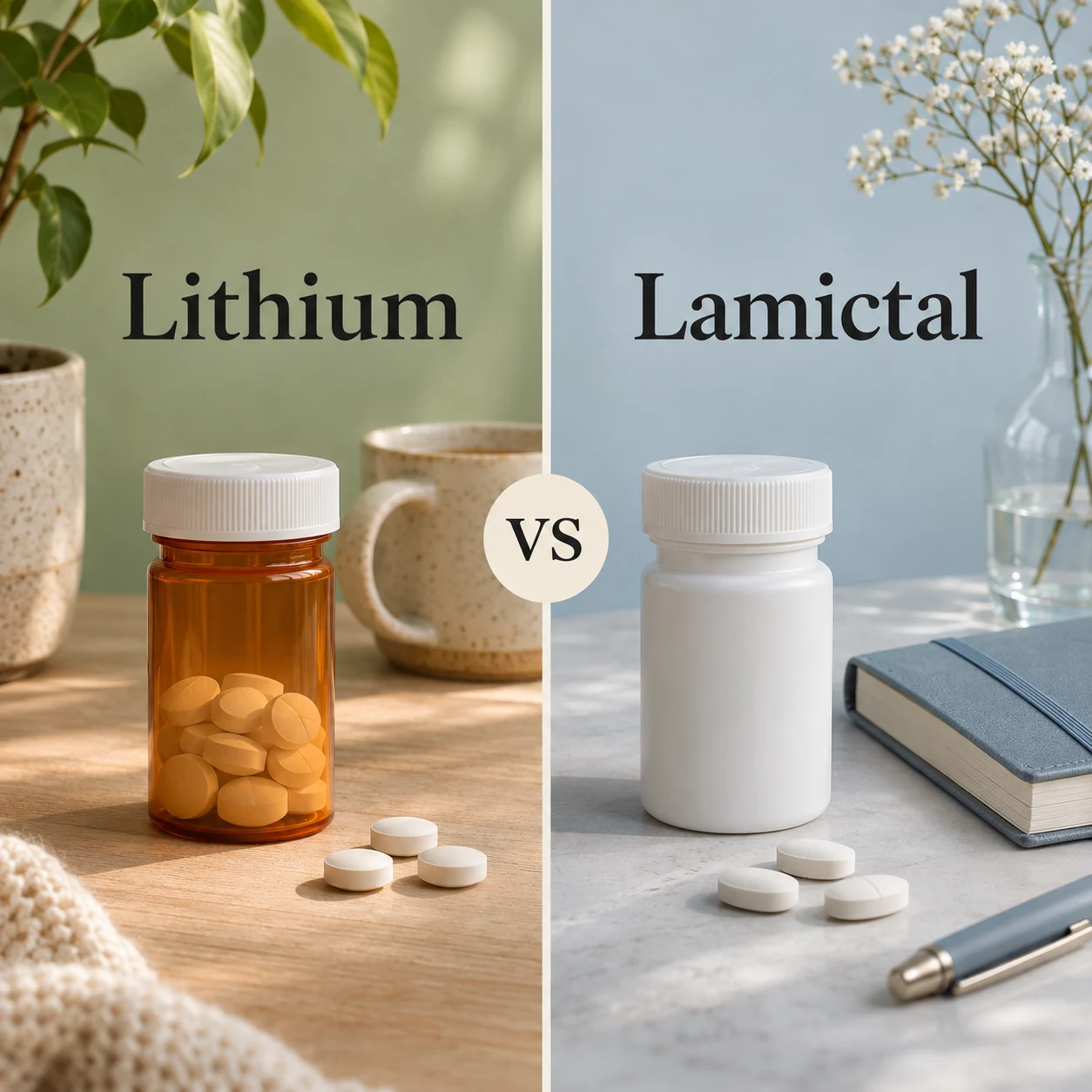
People researching lithium vs Lamictal usually want a winner, and the evidence does not crown one. Lithium and Lamictal (lamotrigine) are both used to prevent mood episodes in bipolar disorder, and they differ in ways that matter: which pole of the illness each protects against best, how much monitoring each requires, and what risks each carries. Those differences, not a ranking, are what actually decide which one a psychiatrist reaches for. This comparison walks through how each medication works, what the research shows, their side effects and safety considerations, and the questions that shape the choice, including pregnancy planning and whether the two can be combined.

How Each Medication Works and What It Is Approved For

Lithium is the oldest mood stabilizer in psychiatry and still one of its most effective tools. It is used to treat acute manic episodes and as maintenance treatment, meaning ongoing medication that lowers the risk of future episodes.

Lamotrigine, sold as Lamictal, came to psychiatry from epilepsy treatment. It is an anticonvulsant, and its FDA approval in bipolar disorder covers maintenance treatment of bipolar I disorder, to delay the time to new mood episodes. It is not approved for treating acute mania, which means a person in the middle of a manic episode needs something else. In practice, lamotrigine's role is prevention, and clinicians most often think of it in connection with the depressive side of the illness.

Lithium vs Lamictal: Side-by-Side

Factor Lithium Lamictal (lamotrigine)
Role in treatment Acute mania and maintenance Maintenance only (bipolar I)
Strongest against Manic and hypomanic episodes Depressive episodes
Dosing Dose guided by blood levels Slow, gradual dose increase over weeks
Monitoring Regular blood levels, kidney and thyroid checks No routine blood level monitoring
Common side effects Tremor, thirst, more urination, weight gain, thyroid effects Headache, dizziness, nausea; generally weight-neutral
Key safety warning Narrow gap between a helpful and a toxic level FDA boxed warning for serious skin rash
Pregnancy Needs individualized planning Needs individualized planning

What the Research Shows

The cleanest head-to-head data comes from an 18-month placebo-controlled trial in people with bipolar I disorder who had recently been depressed, with 463 patients randomized to lamotrigine, lithium, or placebo (Calabrese et al., Journal of Clinical Psychiatry, 2003). Lamotrigine beat placebo at delaying depressive episodes: at one year, 57% of people on lamotrigine had needed no intervention for depression, compared with 45% on placebo. Lithium beat placebo at delaying manic and hypomanic episodes, with 86% intervention-free for mania at one year versus 72% on placebo.

A 2021 Cochrane review pooling 11 trials and 2,314 participants filled in the comparison between the two drugs (summarized in American Family Physician, 2022). Lamotrigine and lithium had similar rates of depressive recurrence. Lamotrigine was less effective than lithium at reducing manic recurrence at one year. And fewer people on lamotrigine reported side effects than people on lithium over 6 to 12 months, a practical signal about tolerability.

You will often see this compressed into a slogan: Lamictal for depression, lithium for mania. The slogan is directionally useful and too simple. Lamotrigine's depressive-prevention results were similar to lithium's in the Cochrane data, and the absolute differences in the Calabrese trial were modest. Episode history, side effects, and monitoring preferences do more work in the real decision than the slogan suggests.

Monitoring and Safety

Lithium's prescribing information builds monitoring into the treatment: regular serum level checks, because the gap between a helpful and a harmful level is narrow, plus periodic kidney and thyroid testing, since the label identifies both as organs lithium can affect. For many people this becomes an unremarkable part of the routine, a few blood draws a year once stable. It is a real commitment, and a manageable one.

Lamotrigine does not require routine blood level monitoring, which is one of its practical appeals. Its defining safety issue is different: an FDA boxed warning for serious skin rashes, including Stevens-Johnson syndrome. Per the label, serious rash is rare, nearly all cases appear in the first 2 to 8 weeks of treatment, and the slow dose escalation the label requires exists to reduce that risk. This is why lamotrigine cannot be started quickly, and why any new rash during those early weeks should be reported to the prescriber right away. Neither safety profile is a reason for alarm. Both are reasons the medication belongs under a psychiatrist's supervision.

Side Effects Compared

The side effects most commonly reported with lithium in its labeling and the clinical literature are tremor, increased thirst and urination, weight gain, and thyroid effects, usually an underactive thyroid that is itself treatable. Lamotrigine is generally described as weight-neutral in the literature, with headache, dizziness, and nausea its commonly reported side effects, along with the rash risk described above. For someone whose previous medication caused significant weight gain, that difference alone can shape the conversation. For someone whose illness leans heavily manic, lithium's strength against that pole can outweigh its side-effect burden.

Suicide Risk and Lithium: What Is and Is Not Established

Lithium is frequently described as the mood stabilizer that prevents suicide, and the research record deserves more precision than that. A 2013 meta-analysis in The BMJ (Cipriani et al.) reported fewer suicides among people taking lithium than among controls. A 2022 reanalysis in Epidemiology and Psychiatric Sciences (Nabi et al.) reached a different conclusion: restricted to randomized trials, the evidence is inconclusive, because suicide is rare and a handful of events drive the estimates. Researchers are actively debating which analysis handles the data better. Lithium may protect against suicide, but the randomized evidence can't yet confirm it, so the question remains open.

Pregnancy and Planning Ahead

Lithium and lamotrigine carry different considerations in pregnancy, and this is a planning conversation rather than a verdict. For anyone who could become pregnant, the time to discuss medication is before conception, with a psychiatrist who can weigh episode history against the specific risks and benefits of each option, sometimes alongside an obstetrician. Untreated bipolar disorder in pregnancy carries its own serious risks, so the goal of that conversation is a plan that protects both the pregnancy and the person's stability, not a reflexive stop.

Can Lithium and Lamictal Be Used Together?

Yes, and the combination is common in clinical practice. The usual logic pairs lithium's protection against manic episodes with lamotrigine's role on the depressive side. Whether that combination fits any individual person is a psychiatrist's call, made from their episode pattern, their response history, and how they tolerate each medication.

Talking to a Psychiatrist About the Right Fit

The lithium vs lamotrigine decision runs through a short list of personal questions. Which pole of the illness has dominated your history, mania or depression? How do you feel about regular blood tests? Which side-effect profile is more livable for you? Are pregnancy plans on the horizon? A psychiatrist who knows your full history turns those answers into a plan, and adjusts it as your life and your illness change. Medication changes should never be self-directed, including stopping a drug that seems to have done its job.

Bipolar disorder treatment at Amae Health pairs that medication expertise with therapy and whole-person support in one coordinated care model, built for people whose illness has been hard to stabilize. If you are weighing these medications, or your current one is not working, talk with an Amae psychiatrist about what fits your history. Our guide to effective bipolar disorder treatment covers the bigger picture beyond medication.

Frequently Asked Questions

Is lithium or Lamictal better for bipolar depression?

Neither is simply better. Lamotrigine is often used to prevent depressive episodes, and in the 2021 Cochrane review its depressive-recurrence results were similar to lithium's. The right choice depends on a person's episode pattern, side-effect tolerance, and history, judged by their psychiatrist.

Is Lamictal effective for mania?

It is not approved for treating acute mania, and in the Cochrane review it was less effective than lithium at preventing manic recurrence at one year. People whose illness runs manic usually need a different or additional medication.

Do I need blood tests on Lamictal?

Routine blood level monitoring is not typically required for lamotrigine, unlike lithium. A clinician still tracks response and side effects, especially during the first weeks.

Why does Lamictal have to be started so slowly?

Slow dose escalation lowers the risk of serious skin rash, the subject of the medication's FDA boxed warning. Nearly all serious rashes occur in the first 2 to 8 weeks, so any rash in that window should be reported promptly.

Does lithium cause weight gain?

For some people, yes. Weight gain is a recognized lithium side effect, alongside tremor, thirst, and thyroid changes, while lamotrigine is generally considered weight-neutral. Individual experience varies widely.

Can you take lithium and Lamictal together?

Yes, the combination is common in clinical practice, often pairing lithium's anti-manic protection with lamotrigine's depressive-side coverage. It is a decision for you and your psychiatrist, never a self-directed change.

What if I am having thoughts of suicide?

The 988 Suicide and Crisis Lifeline offers free, confidential support by call or text, 24/7. If you are in immediate danger, call 911 or go to the nearest emergency room.

Citations

  1. Calabrese JR, Bowden CL, Sachs G, et al. "A placebo-controlled 18-month trial of lamotrigine and lithium maintenance treatment in recently depressed patients with bipolar I disorder." Journal of Clinical Psychiatry, 2003;64(9):1013-1024. psychiatrist.com. Tier 1 (peer-reviewed RCT).
  2. Hashimoto Y, et al. Cochrane review (2021) on lamotrigine for bipolar maintenance, summarized in American Family Physician, 2022. aafp.org. Tier 1 (Cochrane systematic review).
  3. Cipriani A, Hawton K, Stockton S, Geddes JR. "Lithium in the prevention of suicide in mood disorders: updated systematic review and meta-analysis." BMJ, 2013;346:f3646. Tier 1 (peer-reviewed meta-analysis).
  4. Nabi Z, Stansfeld J, Plöderl M, Wood L, Moncrieff J. "Effects of lithium on suicide and suicidal behaviour: a systematic review and meta-analysis of randomised trials." Epidemiology and Psychiatric Sciences, 2022;31:e65. Tier 1 (peer-reviewed meta-analysis).
  5. 988 Suicide and Crisis Lifeline. 988lifeline.org. Tier 2 (FAQ only).

Reccomended for you

# min read

How to Choose the Right TMS Therapy Clinic in the Bay Area

By

Sonia Garcia

|

November 5, 2026

By the time most people start comparing TMS clinics, they've already been through a lot: two or three antidepressants, maybe more, often a stretch of therapy, and the slow realization that something still isn't working. Then the search results come back with a dozen Bay Area clinics, from San Francisco to San Jose, that all seem to say the same thing.

They aren't the same. Choosing the right TMS therapy clinic in the Bay Area comes down to a handful of checks: how carefully the clinic screens you, which protocol it uses, whether your insurance will pay, whether you can actually get there five days a week, and who looks after you once the last session ends. Below is each check, the questions to put to any clinic on a first call, and a plain account of what we do and don't offer at our Los Altos and San Mateo clinics.

How to choose a TMS clinic: 7 things to check

  1. Confirm that a psychiatrist reviews your full history before treatment is scheduled.
  2. Ask which TMS protocol the clinic uses and what it is FDA-cleared to treat.
  3. Check that the clinic is in-network with your plan and files the prior authorization for you.
  4. Test the commute at the hour you'd really travel, because a course means dozens of visits.
  5. Find out who runs each session and how often your symptoms are measured.
  6. Ask how TMS will fit with your current medication, therapy, and prescriber.
  7. Ask what the plan is if symptoms come back after the course ends.

The rest of this guide takes those one at a time.

The three kinds of TMS providers in the Bay Area

The Bay Area has more TMS options than most regions, and they sort into three broad groups. Knowing which group a clinic belongs to tells you a lot before you ever call.

Provider type What it tends to offer What to check
Academic medical centers (for example, Stanford Medicine's Interventional Psychiatry Clinic and UCSF's TMS and Neuromodulation Program) Research-based protocols, experience with complex cases, access to clinical trials Referral requirements, wait times, and whether your plan covers care there
Integrated health plans such as Kaiser Permanente TMS through the plan's own network, if the plan offers it How the plan refers members for TMS and which facility you'd be sent to
Community clinics, either TMS-only or integrated psychiatric practices Faster access, more locations, a range of scheduling Who your psychiatrist is during treatment, and what care continues after TMS ends

TMS-only clinics deliver the treatment and usually rely on your existing psychiatrist for everything else. Integrated practices put TMS inside a broader treatment plan with the same team managing medication, therapy, and follow-up. Neither model is wrong. They just put the work of coordination in different places, and on someone different. We offer both: standalone TMS if you already have a psychiatrist and therapist you want to keep, or TMS as part of full care with our team.

Make sure you're a candidate before you compare clinics

A clinic is only "right" if TMS is a clinically reasonable option for you in the first place. That question gets settled at a screening visit, and a good clinic won't skip it.

What insurers usually look for

Prior authorization is required by most major insurers, and the criteria tend to line up with what clinicians check anyway: a confirmed diagnosis of major depressive disorder (MDD), trials of several antidepressants from different classes without enough improvement, a trial of psychotherapy, and no medical reason to avoid TMS. Plans differ on the details, such as how many medication trials they want documented. At our clinics, getting to a first treatment takes three steps: a psychiatric evaluation, prior authorization, and a mapping visit. We handle the authorization, and its timing depends mostly on your insurer. Ask any clinic how long each step usually takes, since the total wait also depends on gathering past treatment records and booking the mapping visit.

What can rule TMS out

Most of the screening questions are about metal and electrical activity near the head. Metal in or near the head (surgical clips, fragments, some implants) and implanted devices such as cardiac pacemakers or medication pumps can rule TMS out. So can a history of seizures, stroke, brain injury, or neurosurgery, and the team will ask about epilepsy in the family too. Pregnancy calls for an individual assessment with both the psychiatric and obstetric teams. Regular dental fillings are fine.

If a clinic offers to book your first session before anyone has gone through these questions with you, treat that as a reason to keep looking.

Device and protocol: what the labels actually mean

Clinic websites throw around terms like rTMS, theta burst, deep TMS, and SAINT. They describe real differences in how treatment is delivered, and they change both your schedule and what the evidence says.

Standard rTMS, theta burst, and deep TMS

Repetitive TMS (rTMS) is the original form, first cleared by the FDA for depression in 2008. The National Institute of Mental Health describes a standard course as daily sessions five days a week for four to six weeks, and lists side effects that are usually mild: scalp discomfort, tingling of the face or jaw muscles during treatment, and brief headaches or lightheadedness.

Intermittent theta burst stimulation (iTBS) is a newer pattern of pulses that takes about 3 minutes per session instead of 37.5 for a standard 10 Hz session. In a randomized trial at three Canadian university hospitals (Blumberger et al., The Lancet, 2018), iTBS was non-inferior to standard rTMS for treatment-resistant depression. Shorter sessions, similar results. Deep TMS uses a different coil design to reach larger and deeper brain areas.

Ask any clinic which of these it offers and why it would pick one for you. A clear answer is a good sign.

About SAINT and "accelerated" TMS

The Bay Area has a particular connection to accelerated TMS. Stanford neuromodulation therapy (SNT, previously called SAINT) was developed at Stanford: it packs a full course into five days, with several sessions a day, and uses functional MRI to pick each patient's target. In a sham-controlled trial (Cole et al., American Journal of Psychiatry, 2022), the 29 participants analyzed at the interim stage saw a 52.5% average drop in symptoms with active treatment, against 11.1% with sham, four weeks after treatment. The study was small, and the protocol needs imaging and specialized equipment.

That matters when you shop. "Accelerated" on a clinic website can mean many things, from the imaging-guided Stanford protocol to simply more sessions per day. Ask whether the clinic uses MRI-guided targeting and exactly which protocol it delivers. For transparency: we don't offer accelerated TMS. Our Bay Area clinics use the standard daily course.

Run the commute test

This is the check people skip, and it's often the one that decides whether they finish. At our Los Altos and San Mateo clinics, a standard course runs about 36 sessions over six to nine weeks, with appointments Monday through Friday. After the first mapping visit, a typical session takes about 10 minutes, only 3 to 5 of which are the stimulation itself. The visit is short. The trip there is what you're really signing up for, roughly 36 times.

A clinic that looks close on a map can still be a 50-minute drive at the hour you'd need to go. Before you commit, do the drive once at your real appointment time, from wherever you'll actually be that day: home, the office, or school drop-off. Ask the clinic which time slots are open, how much flexibility there is if your week changes, and what happens if you miss a session. At our clinics, TMS sessions typically run between 10 a.m. and 3 p.m., so a midday break from work is usually the easiest fit. If you have to miss a day, call the team and the session is added at the end of the course rather than lost.

One thing works in your favor here. TMS needs no anesthesia or sedation, so you can drive home and head right back to work.

Who runs your sessions, and who talks to your psychiatrist

In most clinics, a trained TMS technician runs the day-to-day sessions, while a psychiatric prescriber sets the treatment plan and reviews how you're responding. Ask who will be in the room, which prescriber is responsible for your plan, and how often your symptoms will be rated on a standard scale. Without regular measurement, nobody can tell whether the course is working until it's over.

Here's how it works with us. Your psychiatric prescriber is there in person for the first mapping visit, where they find the right coil position and strength for you and set your treatment parameters. After that, a trained TMS technician from our care coordination team runs your daily sessions under that prescriber's supervision. You'll keep meeting with your prescriber throughout the course, and we track your symptoms with standard questionnaires such as the PHQ-9 for depression, from the first session to the last, so you both can see whether treatment is working.

Then there's everything else in your care. Most people keep taking their medication and seeing their therapist during TMS, so someone has to coordinate. At a TMS-only clinic, that someone is usually you and your outside prescriber. With us, you can choose. If you already have a psychiatrist or therapist, you can keep them and come to us for TMS alone: the evaluation, mapping, treatment, and psychiatric monitoring during the course. If you want more support, TMS can sit inside a coordinated plan with psychiatrists, therapists, primary care clinicians, health coaches, and peer support specialists on the same team.

Ask what happens after the last session

Results from TMS can last, but not always without help. In a 12-month follow-up of 257 patients from 42 clinical practices (Dunner et al., Journal of Clinical Psychiatry, 2014), 62.5% of those who had responded still met response criteria a year later, while staying on antidepressants with access to more TMS if needed. About 36% of the group had TMS reintroduced at some point during the year.

So ask each clinic what happens if symptoms start to return. Who notices? Who adjusts your medication? Can you come back for more sessions, and how fast? A clinic that only thinks in six-to-nine-week blocks may leave those questions with you.

While you're asking about results, notice how the clinic talks about them. "Response" usually means symptoms dropped by about half, and "remission" means they've largely gone. In one real-world study across 42 practices (Carpenter et al., Depression and Anxiety, 2012), 58% of patients met response criteria, and 37% reached remission, based on clinician ratings. A clinic that walks you through numbers like these, without promising where you'll land, is giving you a realistic picture.

Questions to ask on your first call

Keep this list open when you call:

  • Who reviews my psychiatric and medical history, and which prescriber oversees my treatment?
  • Which protocol and device do you use, and what is it FDA-cleared for?
  • Are you in-network with my plan, and who files the prior authorization?
  • What appointment times are open, and what is your missed-session policy?
  • How do you measure progress, and what happens if I'm not improving halfway through?
  • How will you coordinate with my current prescriber and therapist?
  • What is the plan if my symptoms return after the course?

Be wary of any clinic that guarantees results, skips the screening questions, or suggests changing your medication without involving the psychiatrist who prescribes it.

TMS at our Los Altos and San Mateo clinics

At two Bay Area clinics, we offer TMS for adults with major depressive disorder that hasn't responded to medication: our Los Altos clinic on South San Antonio Road and our San Mateo clinic on O'Farrell Street. We don't have a clinic in San Francisco itself, so San Mateo is usually the closer option from the city and the northern Peninsula, and Los Altos from the South Bay.

Both clinics are in-network with Aetna, Anthem Blue Cross Blue Shield, Blue Shield of California, Optum, and Evernorth/Cigna. Sliding-scale pricing is available based on financial need. We don't currently accept Medi-Cal or the Health Plan of San Mateo. Same-day appointments are available for a first visit.

You can come to us for TMS alone and keep your current psychiatrist and therapist, or combine it with the integrated psychiatric care we provide for depression, bipolar disorder, and other complex conditions. If you're working out how to choose the right TMS therapy clinic in the Bay Area, start with a screening conversation: request an evaluation and our team will go through your history, your insurance, and whether TMS makes sense for you, or whether another approach fits better.

Frequently asked questions

What disqualifies you for TMS?

The main exclusions are metal in or near the head (other than dental fillings), implanted devices such as pacemakers or medication pumps, and a history of seizures. A history of stroke, brain injury, or neurosurgery can also rule it out. Pregnancy needs an individual assessment. For insurance purposes, you'll also usually need documented trials of several antidepressants and psychotherapy first.

Does insurance cover TMS therapy in California?

Many commercial plans cover TMS for major depressive disorder that hasn't improved with medication, almost always with prior authorization. Criteria vary by plan, so the clinic should run a benefits check before you start. Our Bay Area clinics are not contracted with Medi-Cal for TMS.

How much does TMS cost without insurance?

It depends on the clinic and the protocol, and a full course involves dozens of sessions, so ask for the total course price, not just the per-session rate. At our clinics, cash pay and sliding-scale pricing are available, and our team can walk you through the cost before you commit.

What are the downsides to TMS?

The biggest one is time: daily weekday visits for six to nine weeks at our clinics. Side effects are usually mild, mostly scalp discomfort and headaches that usually ease after the first week or so. Seizure is the most serious risk, and it's very rare. And TMS doesn't work for everyone, which is why measuring progress during the course matters.

Is there a TMS clinic in San Francisco?

Several providers offer TMS in San Francisco, including UCSF. Amae doesn't have a San Francisco clinic. Our nearest locations are San Mateo, a drive down the Peninsula, and Los Altos.

# min read

The Difference Between Learning Disabilities and ADHD

By

Sonia Garcia

|

April 18, 2025

Picture a classroom where two students are struggling with their reading assignment. Michael reads slowly, mixing up letters despite his best efforts to focus. Meanwhile, Olivia reads fluently but can't sit long enough to finish a page. Michael has a learning disability called dyslexia, while Olivia has ADHD. Though both students face challenges, their underlying difficulties are quite different. Understanding these differences is crucial for parents, teachers, and healthcare providers. This guide explores how these conditions differ and, most importantly, how to support each unique situation.

What Are Learning Disabilities (LD) and ADHD?

Defining Learning Disabilities (LD)

A learning disability affects how the brain processes information. Think of it as a unique wiring system in the brain. People with learning disabilities often have average or above-average intelligence. Their challenges lie in specific areas of learning.

Common types of learning disorders include:

  • Dyslexia: Words seem to jump around on the page. Reading becomes challenging even when other academic areas remain strong. Students might reverse letters or struggle with phonetic sounds. Simple reading tasks can require significant mental effort.
  • Dyscalculia: Math feels like solving a puzzle in another language. Basic calculations become complex challenges. Students might struggle to understand number sequences or mathematical patterns. Time-telling and money management often present unique difficulties.
  • Dysgraphia: Writing becomes a physical challenge. Letters refuse to form correctly on paper. Students experience hand fatigue during writing tasks. Spacing between words and letter formation requires extra concentration.
  • Auditory Processing Disorder: Spoken information gets mixed up between hearing and understanding. Following verbal instructions becomes particularly challenging. Background noise can severely impact comprehension of spoken words.
  • Visual Processing Disorder: The eyes work perfectly, but the brain mixes visual information. It affects reading speed and understanding of written material. Visual organization and spatial awareness present significant challenges.

Understanding ADHD

ADHD creates unique processing challenges in the brain. It affects how people manage daily tasks and activities. The brain struggles with focus and impulse control throughout various situations. It impacts school, work, and social interactions.

Executive functions work differently in people with ADHD. Simple tasks might feel overwhelming. Many everyday activities require extra mental effort. It makes daily routines more challenging than they appear.

Three distinct types of learning disorders present different challenges:

  • The Inattentive Type: Focus drifts easily during tasks, like a radio station that keeps losing signal. Details often get overlooked, even in familiar activities. Starting and finishing projects requires extra effort, making simple assignments feel like complex puzzles. Getting through daily tasks becomes a constant challenge.
  • The Hyperactive-Impulsive Type: Staying still feels like holding back a strong wind. Actions happen before thoughts are complete, similar to pressing 'send' before finishing an email. Speaking out of turn occurs frequently, making conversations challenging. Energy levels stay consistently high throughout the day.
  • The Combined Type: This type mixes attention difficulties with hyperactive behaviors. Tasks remain incomplete while energy levels stay high. Daily activities require extra support and understanding. Managing both symptoms creates unique challenges in all situations.

Everyone experiences symptoms differently depending on their environment and daily schedule. Some find mornings most challenging. Others struggle more during quiet afternoon activities. Understanding these patterns helps create better support strategies.

Key Differences Between Learning Disabilities and ADHD

Focus on Specific vs. Global Skills

Learning disabilities target specific academic skills. Meanwhile, ADHD affects overall attention and behavior management. This fundamental difference shapes how each condition impacts daily life. The impact varies significantly:

Area of Impact Learning Disabilities (LD) ADHD
Academic Skills Struggles with specific subjects while excelling in others Performance varies across all subjects based on interest and focus
Reading Ability May have specific reading difficulties (dyslexia) Can read well but loses focus during reading tasks
Math Skills Might struggle specifically with calculations (dyscalculia) Can understand math but makes careless errors due to inattention
Writing Tasks May have trouble forming letters or expressing ideas in writing Writing is rushed, disorganized, or left incomplete
Attention Span Generally able to focus but struggles with specific tasks Difficulty maintaining attention across all activities
Organization Usually capable of keeping materials and spaces organized Consistently struggles with organization in all areas
Task Completion Completes tasks but may take longer in specific areas Starts many tasks but has trouble finishing them
Social Skills Social abilities typically unaffected by the disability May struggle with turn-taking and reading social cues
Memory Specific memory challenges related to disability area General difficulties with working memory and recall
Following Instructions Can follow directions but may need help in specific areas Trouble remembering and following multi-step instructions
Test Performance Consistent difficulties in specific subject areas Variable performance depending on attention level
Project Planning Generally able to plan and execute projects Struggles with project planning and time management

Impact on Executive Functions

Executive functions play a crucial role in daily activities. These brain-based skills affect how people manage tasks and behaviors.

People with learning disabilities usually maintain strong executive function skills. They can:

  • Plan activities effectively
  • Organize materials systematically
  • Manage time appropriately
  • Control impulses successfully
  • Complete tasks once started
  • Switch between activities smoothly

Those with ADHD often struggle with executive function skills. They experience challenges with:

  • Creating and following plans
  • Keeping materials organized
  • Managing time effectively
  • Controlling immediate reactions
  • Completing started tasks
  • Transitioning between activities

How Are They Diagnosed?

Diagnostic Criteria for LD

Learning disability diagnosis requires comprehensive evaluation. The process includes multiple steps and assessments. Key components of LD diagnosis:

  • Standardized achievement testing
  • Cognitive ability assessment
  • Educational history review
  • Classroom performance observation
  • Work sample analysis
  • Specific skill evaluation
  • Parent and teacher input

ADHD Diagnosis

ADHD diagnosis follows a different path. It focuses on behavioral patterns across various settings. Essential elements of ADHD diagnosis:

  • Behavioral observation
  • Parent and teacher ratings
  • Medical examination results
  • Developmental history review
  • Multiple setting evaluations
  • Executive function assessment
  • Symptom duration analysis

Challenges in Diagnosis

Several factors can complicate accurate diagnosis:

  • Overlapping symptoms between conditions
  • Varying presentations in different environments
  • Age-related symptom changes
  • Environmental influence on behavior
  • Cultural considerations in assessment
  • Access to qualified professionals

Treatment and Support for LD and ADHD

Managing Learning Disabilities

Effective support for learning disabilities requires targeted intervention strategies. Key support elements include:

  • Specialized instruction methods
  • Assistive technology tools
  • Educational accommodations
  • Remedial skill building
  • Progress monitoring systems
  • Parent-teacher collaboration

Strategies for ADHD

ADHD management requires a comprehensive approach. Different strategies address various aspects of the condition. Essential management components:

  • Behavioral modification techniques
  • Environmental adaptations
  • Organizational systems
  • Time management tools
  • Activity scheduling
  • Routine establishment

Support for Co-occurring Conditions

Many individuals experience both conditions simultaneously. It requires carefully coordinated support approaches. Combined support strategies include:

  • Integrated treatment planning
  • Multi-specialist coordination
  • Regular progress assessment
  • Flexible intervention methods
  • Family education programs
  • School-home communication systems

Why Understanding the Difference Matters

Tailoring Interventions

Understanding differences between conditions leads to more effective support. Proper identification helps create targeted assistance plans. Important considerations include:

  • Specific skill development needs
  • Individual learning preferences
  • Environmental modification requirements
  • Support service selection
  • Progress measurement methods
  • Accommodation appropriateness

Supporting Children and Families

Proper understanding enables better support from all involved parties. This knowledge helps create effective support networks. Support network components include:

  • Parent education resources
  • Teacher training programs
  • Healthcare provider coordination
  • Therapeutic service access
  • Community support systems

Conclusion: Empowering Success Through Understanding

Understanding the differences between learning disabilities and ADHD enables better support. This knowledge helps create effective intervention strategies. Success becomes possible through appropriate understanding and targeted assistance.

Key takeaway points include:

  • Distinct nature of each condition
  • Importance of accurate diagnosis
  • Value of targeted interventions
  • Need for ongoing support
  • Significance of proper understanding
  • Potential for successful outcomes

Individuals with these conditions can achieve significant success with proper support and understanding. Recognition of differences leads to more effective assistance strategies. This understanding helps create pathways to achievement and growth.

Personalized Support at Amae Health

At Amae Health, we recognize the unique challenges individuals face when living with learning disabilities or ADHD. Our team of compassionate clinicians and mental health experts is dedicated to providing personalized, evidence-based care that addresses each person’s specific needs. Whether you're seeking clarity through diagnosis or ongoing support for cognitive, emotional, or behavioral health, Amae Health offers a safe and supportive environment where healing and growth can begin.

‍

# min read

What is the Best Treatment for Schizophrenia?

By

Sonia Garcia

|

October 28, 2026

When someone you love is diagnosed with schizophrenia, the first questions usually come fast. What actually works? Is there a cure? Will they be on medication forever? The answer is more hopeful than many families expect, and more complicated than a single "best" option.

The best treatment for schizophrenia isn't one medication or one therapy. It's a combination: antipsychotic medication to reduce psychotic symptoms, psychosocial treatments to rebuild daily life, support for the family, and, for people early in the illness, a coordinated team that brings all of it together. Treatment works best when it starts early and continues over time.

Can schizophrenia be cured?

There's no cure for schizophrenia in the sense of a treatment that makes it disappear permanently. But recovery is possible, and more common than many people realize. According to the WHO, at least one in three people with schizophrenia will be able to fully recover.

The goal of treatment, as the NIMH describes it, is to help people manage their symptoms, improve day-to-day functioning, and reach personal goals such as finishing school, working, and having fulfilling relationships.

People often search for "how to cure schizophrenia permanently." Be wary of any program, supplement, or provider that promises a permanent cure. The approaches below are the ones with evidence behind them.

Antipsychotic medication

Antipsychotics are the foundation of treatment for most people with schizophrenia. According to the NIMH, they can make psychotic symptoms such as hallucinations and delusions less intense and less frequent. Most are taken daily as a pill or liquid. Some come as an injection given once or twice a month.

Is there a "best" medication for schizophrenia?

No single antipsychotic is best for everyone. People respond differently, and the NIMH notes that some people need to try several medications before finding the one that works best for them.

The bigger differences between antipsychotics are often in side effects. The NIMH lists weight gain, dry mouth, restlessness, and drowsiness as common early side effects. A 2020 network meta-analysis in The Lancet Psychiatry of 100 trials and 25,952 patients compared 18 antipsychotics and found large differences in their effects on weight, cholesterol, and blood sugar. Clozapine and olanzapine were among those with the largest metabolic changes. That's one reason medication choice is individual, and why physical health monitoring matters during treatment.

The NIMH also advises against stopping an antipsychotic without talking to a health care provider first, so that changes can be made safely.

Clozapine for treatment-resistant schizophrenia

When symptoms don't improve with usual antipsychotics, the NIMH notes that clozapine may be prescribed. People taking clozapine need regular blood tests to check for a potentially dangerous side effect that occurs in 1% to 2% of patients.

Long-acting injectable antipsychotics

Long-acting injectables (LAIs) are given every few weeks or months rather than taken daily. A 2021 meta-analysis in The Lancet Psychiatry of 137 studies with nearly 400,000 patients found that LAIs were associated with a lower risk of hospitalization or relapse than oral antipsychotics across randomized trials, cohort studies, and before-and-after studies. The difference was modest in randomized trials and larger in real-world data.

Psychosocial treatments

Medication reduces psychotic symptoms. It doesn't, on its own, rebuild a life. According to the NIMH, people who take part in regular psychosocial treatment are less likely to have symptoms come back or to be hospitalized. Examples include:

  • Cognitive behavioral therapy (CBT): helps people work with distressing beliefs and voices and build coping strategies
  • Behavioral skills training: builds social and daily living skills
  • Supported employment: helps people find and keep jobs
  • Cognitive remediation: targets attention, memory, and problem-solving, which the NIMH notes are among the best predictors of day-to-day functioning

Family education and support

Schizophrenia affects the whole family. The NIMH notes that educational programs help family and friends understand symptoms and treatment options, manage their own distress, and support their loved one more effectively.

Treatment for co-occurring substance use

Many people with schizophrenia also use drugs or alcohol. The NIMH emphasizes that treating both together matters, because substance use can interfere with treatment for schizophrenia.

Coordinated specialty care for early psychosis

For people early in the illness, coordinated specialty care (CSC) is the model with the strongest support. It's a team approach for first-episode psychosis that combines psychotherapy, medication, case management, employment and education services, and family education and support, with the person involved in every treatment decision. According to the NIMH, compared with typical care, CSC is more effective in reducing symptoms, improving quality of life, and increasing involvement in work or school.

For people who are likely to face repeated hospitalizations or homelessness, assertive community treatment brings a team of providers to the person in the community.

Why early treatment matters

Timing changes outcomes. The NIMH notes that people with psychosis often have symptoms for more than a year before getting treatment, and that early treatment often means better recovery. If you're seeing early warning signs, such as withdrawal, suspiciousness, or a drop in functioning, an evaluation shouldn't wait. Our article on psychosis vs. schizophrenia covers those signs in more detail.

How we treat schizophrenia at Amae Health

Schizophrenia, schizoaffective disorder, and first-episode psychosis are among the conditions our clinics specialize in. Our care teams bring psychiatrists, therapists, primary care physicians, dietitians, peer mentors, and care coordinators under one roof, working from one treatment plan. That means medication, therapy, physical health, and practical support are handled together. For people who need more than weekly care, we offer an Intensive Outpatient Program (IOP) and a Partial Hospitalization Program (PHP). For a broader overview, see schizophrenia treatment options.

Frequently asked questions

Can schizophrenia be cured?

There's no permanent cure, but recovery is possible. The WHO reports that at least one in three people with schizophrenia will be able to fully recover, and treatment aims to help people manage symptoms and reach their personal goals.

What is the first-line treatment for schizophrenia?

Antipsychotic medication is the foundation, usually combined with psychosocial treatments such as CBT, skills training, and family education. For first-episode psychosis, coordinated specialty care brings these together in one team.

What is the best medication for schizophrenia?

There isn't one best medication for everyone. Antipsychotics differ mainly in side effects, and people often try more than one before finding the right fit. Clozapine is used when other antipsychotics haven't worked, and long-acting injectables offer an alternative to a daily pill.

Will someone with schizophrenia need medication forever?

Schizophrenia usually requires ongoing treatment, and the right plan depends on the person's history and response. Decisions about changing or stopping medication should always be made with a health care provider, never alone.

Can schizophrenia be treated without medication?

Psychosocial treatments are essential, but for most people they work alongside medication rather than replacing it. The trade-offs are different for every person and belong in a conversation with their care team.

Key takeaways

  • The best treatment for schizophrenia combines antipsychotic medication, psychosocial treatments, and family support.
  • No single antipsychotic is best for everyone. Side effects differ widely, and clozapine helps when others don't.
  • Long-acting injectables are associated with fewer relapses and hospitalizations than daily pills.
  • Coordinated specialty care is the standard for first-episode psychosis, and early treatment leads to better recovery.
  • There's no cure, but at least one in three people with schizophrenia fully recover.

If you or someone you love is living with schizophrenia or showing early signs of psychosis, request an intake appointment. Our team will explain how an evaluation works and what to expect from the first visit.