## min read

Long-Acting Injectable vs Oral Antipsychotics: Pros and Cons

|

November 28, 2026

Summarize with AI

Long-Acting Injectable vs Oral Antipsychotics: Pros and Cons

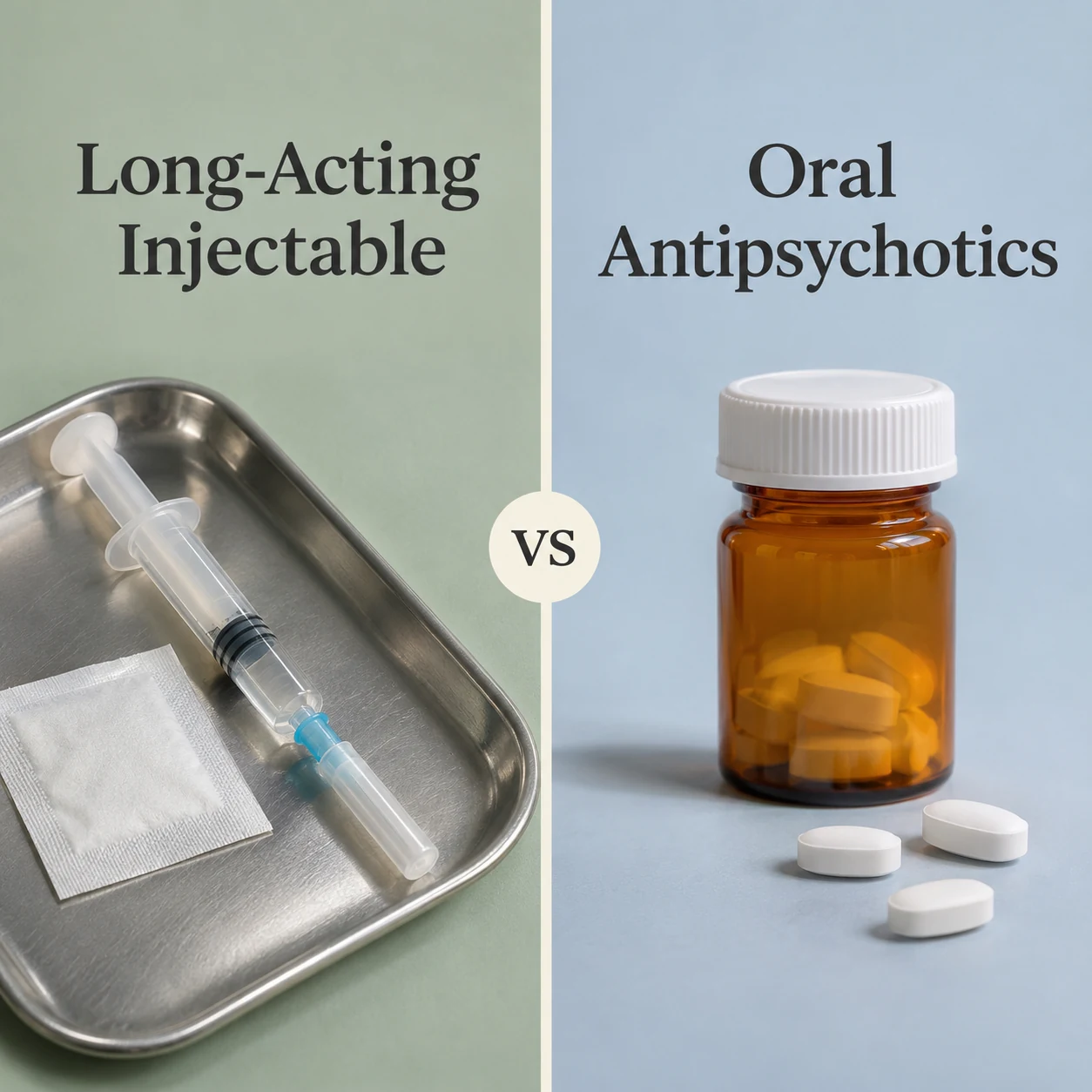
The long-acting injectable vs oral antipsychotics question is not really about two different medicines. In most cases it is the same active medication in two delivery formats, so the real comparison is about dosing frequency, adherence, and how steadily the drug stays in the body, and neither format is universally better. A daily pill offers control and flexibility. An injection every few weeks removes the daily decision entirely. Which trade matters more depends on the person, which is exactly how psychiatrists approach the choice.

How Oral Antipsychotics Work

Oral antipsychotics are the familiar starting point: a pill taken daily, on the patient's own schedule, in private. Most people begin treatment this way, for sensible reasons: starting oral lets the psychiatrist find the right medication and dose quickly, confirm the person tolerates it, and change course in days rather than weeks when something needs adjusting. For many people it works without drama for years.

The format's weakness is the daily decision it requires. Across studies, roughly 40 to 60 percent of people with schizophrenia do not take oral antipsychotics consistently as prescribed, with the exact figure depending on how adherence is measured, and partial adherence (taking some doses but not all) appears to be at least as common as stopping outright. That is an adherence statistic, not a judgment: remembering a daily medication through symptoms, side effects, and ordinary life is genuinely hard. The pharmacology adds its own wrinkle, since blood levels of a daily pill rise and fall between doses even with perfect consistency, and missed days push those swings wider.

How Long-Acting Injectables Work

A long-acting injectable (LAI) is the same category of medication formulated to release gradually; several widely used antipsychotics, including common second-generation ones, come in both pill and injectable forms. A clinician administers the injection on a schedule that ranges from about every two weeks to every six months, depending on the specific medication, and the drug maintains steadier levels in the body than daily pills, which fluctuate between doses. Treatment becomes an appointment rather than a daily task.

Pros of Long-Acting Injectables

The largest real-world evidence base comes from a meta-analysis of 42 cohort studies with more than 100,000 participants (Kishimoto et al., Schizophrenia Bulletin, 2018). In it, LAIs were associated with a 15 percent lower hospitalization rate than oral antipsychotics (rate ratio 0.85) and 22 percent lower all-cause discontinuation (risk ratio 0.78), meaning people stayed on treatment longer.

The practical pros patients and clinicians report sit alongside those numbers:

  • No daily medication decision, and no ability to drift off treatment unnoticed
  • Steadier medication levels between doses
  • The care team knows immediately when a dose is missed, because a missed dose is a missed appointment someone can follow up on
  • Freedom from carrying, storing, or remembering pills

Cons of Long-Acting Injectables

  • Injection-site discomfort, usually brief, sometimes sore for a day or two
  • In-person clinic visits on a fixed schedule, which is a real logistical commitment
  • Less ability to adjust or stop quickly, since the medication releases over weeks; if a side effect emerges, it cannot be cleared from the body by skipping tomorrow's dose
  • The stigma some people associate with injections, and the loss of privacy that clinic visits can involve

Pros of Oral Antipsychotics

  • Doses can be adjusted or medications switched quickly, which matters most early in treatment while the right medication and dose are still being found
  • No injections and no injection-site reactions
  • Taken privately at home, with no scheduled visit required for each dose
  • The familiar format most people already know how to live with

Cons of Oral Antipsychotics

The format asks for a reliable daily routine, and research consistently links inconsistent adherence to relapse and hospitalization in schizophrenia. The gap between how a medication performs in a tightly monitored trial and how it performs in real life is largely an adherence gap, and daily oral dosing is where that gap lives.

What the Research Actually Shows

The honest reading of the evidence has three layers, and the cited meta-analysis itself supplies all three.

Real-world cohort data favors LAIs on adherence-related outcomes: the hospitalization rate and treatment persistence results above. In the same analysis, the proportion of patients hospitalized at least once and the total days in hospital did not differ significantly between formats, so the advantage shows up in how often hospitalizations happen per year of treatment rather than in every measure, a distinction the headlines about LAIs usually flatten.

Randomized controlled trials, by contrast, have found more mixed results. The likely explanation: people enrolled in RCTs are closely monitored and unusually adherent regardless of format, which shrinks exactly the gap LAIs exist to close.

And the cohort data carries a confound its own authors flag: patients prescribed LAIs tended to have more severe or chronic illness at baseline, since clinicians reach for injectables in harder situations. That bias works against LAIs in the data, and the authors state it plainly rather than smoothing it over. Read together, the evidence supports a specific conclusion: LAIs most clearly help with adherence-driven outcomes, not with the medication's core effect, which is the same drug either way.

Who Might Benefit Most From Each

As general patterns rather than rules: a psychiatrist may raise the LAI option for someone with a history of inconsistent adherence, multiple relapses tied to stopped medication, or a strong preference for not managing daily pills. Someone stable on an oral medication, with a routine that works and no relapse pattern, may have no clinical reason to switch. There are also hybrid paths, such as starting oral to establish tolerability and moving to the injectable form of the same medication once the fit is proven.

Preference belongs in this calculation as a clinical factor, not a courtesy. A format the person resents tends to become a format the person abandons, which defeats the entire purpose, so the choice works best as a genuinely shared decision between patient and psychiatrist.

Talking to a Psychiatrist About the Right Fit

Format is one of the most practical, personal decisions in psychiatric care, and it turns on adherence history, lifestyle, preference, and how early or settled your treatment is. Useful questions for that conversation: has stopping medication ever preceded a relapse, how reliably does the daily routine actually happen, and which would feel like less of a burden a year from now. It is also a reversible decision in both directions, which takes the pressure off getting it perfect the first time. At Amae Health, medication decisions like this one happen inside an integrated care model where the psychiatrist managing your prescription works alongside the rest of your care team, including our psychosis care program and the approaches covered in our guide to schizophrenia treatment. Talk with an Amae psychiatrist about medication options and what your history says about the right format.

Frequently Asked Questions

Are long-acting injectables more effective than oral antipsychotics?

In real-world cohort studies, LAIs were associated with a 15 percent lower hospitalization rate and 22 percent lower treatment discontinuation, while randomized trials, where participants are closely monitored, show more mixed results. The evidence points to LAIs helping most clearly with adherence-related outcomes rather than changing the medication's core effect, which is the same drug in either form.

How often do you need a long-acting injectable?

It depends on the specific medication: intervals range from about every two weeks to every six months. The psychiatrist sets the schedule for the particular formulation prescribed, and keeping those appointments on time is what keeps medication levels steady.

Can you switch between oral and injectable antipsychotics?

Yes, in both directions. It is a common clinical transition managed by a psychiatrist, often with an overlap period so medication levels stay steady during the switch, and trying one format never locks you into it permanently.

Are the side effects different between LAI and oral antipsychotics?

The core side-effect profile is generally similar because it is usually the same active drug. LAIs add the possibility of injection-site reactions; oral forms carry no injection-related effects but fluctuate more between doses.

Do long-acting injectable antipsychotics hurt?

Some injection-site discomfort is common and typically brief, similar to other intramuscular injections. The clinician giving the injection can explain what to expect for the specific medication and injection site used, and soreness that lingers is worth reporting.

Is a long-acting injectable available at Amae Health?

Medication format is part of the treatment planning conversation with an Amae psychiatrist, who can walk through whether an injectable fits your situation and how to arrange it. Reach out to our team to discuss the options your plan should include.

Citations

  1. Kishimoto T, et al. "Effectiveness of Long-Acting Injectable vs Oral Antipsychotics in Patients With Schizophrenia: A Meta-analysis of Prospective and Retrospective Cohort Studies." Schizophrenia Bulletin, 2018;44(3):603-619. academic.oup.com. Tier 1 (peer-reviewed meta-analysis).
  2. National Institute of Mental Health, "Schizophrenia." nimh.nih.gov. Tier 2 (U.S. government).

‍

Reccomended for you

# min read

Complex PTSD Recovery Stages: A Comprehensive Guide to Healing

By

Sonia Garcia

|

July 3, 2025

Complex post-traumatic stress disorder (CPTSD) is a unique form of traumatic stress disorder. It develops as a result of prolonged exposure to traumatic events, especially in situations where escape or avoidance is not possible. Unlike classic PTSD, complex PTSD is characterized not only by a reaction to a single traumatic event. Profound changes in emotional regulation, self-perception, and relationships with others also characterize it.

Structured recovery stages play a key role in healing from this problem. They provide a solid foundation for gradual and steady progress. This allows people to move at their own pace, respecting their path to recovery. It is important to realize that healing is possible. Remember, many people successfully overcome the effects of trauma and return to a full and fulfilling life.

What are the symptoms of complex PTSD?

Complex PTSD manifests itself through many interrelated symptoms. Each of them can significantly affect a person's daily life. When the problem is pronounced, not all symptoms necessarily manifest. But some symptoms include:

  • Flashbacks formation and intrusive memories. They can occur suddenly and can be extremely realistic. A person may not only visually relive the traumatic events but may also experience physical sensations, smells, and sounds associated with the trauma. These memories often invade the mind without warning, disrupting daily activities.
  • Avoidance of reminders of the trauma. This problem with CPTSD manifests itself in a desire to avoid places, people, or situations that may trigger painful memories. It can lead to a significant narrowing of living space and social isolation.
  • Difficulty regulating emotions. These conditions manifest themselves in sudden mood swings, outbursts of anger, or deep sadness. The person may have difficulty identifying their feelings or feel emotionally numb.
  • Chronic feelings of guilt, shame, or worthlessness. These symptoms often become part of the self-image. People may constantly criticize themselves, feeling "spoiled" or unworthy of happiness and love.
  • Dissociation and feeling disconnected from reality. These problems can manifest as a feeling of unreality about what is happening, disconnected from one's own body or emotions. Some describe it as a feeling of "autopilot" or watching your life from the outside.
  • Difficulty trusting and maintaining relationships. In complex PTSD, these symptoms are often associated with a deep distrust of people and fear of betrayal. It can manifest in difficulty establishing intimacy, maintaining friendships, or creating romantic connections.

The Three Key Stages of Complex PTSD Recovery

Healing from CPTSD is a structured process that requires a sequential approach. The recovery stages allow for a gradual progression toward recovery, taking into account the individual characteristics of each person. Although the path is not always linear, each stage sets the stage for the next step toward healing.

Establishing Safety and Stabilization

The first and fundamental recovery stages begin with creating a safe physical and emotional environment. This is the cornerstone of the healing process, without which no further progress is possible.

Creating physical safety includes:

  • Providing safe housing
  • Establishing a stable daily routine
  • Meeting basic needs for food, sleep, and physical activity
  • Ensuring financial stability

Developing emotional safety involves:

  • Mastering stress management techniques (deep breathing, meditation)
  • Practicing grounding exercises
  • Working with a professional therapist
  • Creating a support system of trusted people

At Amae Health, specialists help develop an individualized stabilization plan tailored to each person's unique needs and circumstances. Regular sessions with a therapist create a safe space to explore emotions and develop coping skills.

Processing Traumatic Memories

Once a sufficient level of stability has been achieved, the second stage of overcoming PTSD begins - working with traumatic memories. This stage requires special care and professional support.

Methods of trauma-focused therapy:

  • EMDR (Eye Movement Desensitization and Reprocessing):
    • Helps to process traumatic memories
    • Reduces the emotional intensity of the memories
    • Promotes integration of traumatic experiences
  • Cognitive Behavioral Therapy (CBT):
    • Helps identify and change unhealthy thinking patterns
    • Develops anxiety management skills
    • Teaches more adaptive ways of responding
  • Somatic Therapy:
    • Works with the bodily manifestations of trauma
    • Helps to reconnect with the body
    • Develops the ability to feel safe on a physical level

It is important to realize that processing traumatic memories is not simply retelling traumatic events. It is a controlled process designed to integrate the experience without re-traumatizing it. Grieving and mourning losses are a natural part of this process.

Reconnecting with Daily Life

The third recovery stage focuses on reintegration into everyday life and building a new future. This is when a person re-establish social ties and finds new meaning in life.

Key aspects of reintegration:

  • Rebuilding relationships:
    • The gradual building of trust
    • Developing communication skills
    • Establishing healthy boundaries
  • Developing interests and hobbies:
    • Exploring new activities
    • Returning to previous hobbies
    • Developing creative self-expression
  • Setting and achieving goals:
    • Starting with small, achievable goals
    • Gradually expanding horizons
    • Celebrating each success

It's important to remember that progress is rarely linear. Temporary setbacks are a normal part of the recovery process, not a sign of failure.

Therapeutic Approaches in CPTSD Recovery

Psychotherapy Modalities

Amae Health utilizes a variety of therapeutic approaches tailored to each client's individual needs:

  • Dialectical Behavioral Therapy (DBT):
    • Develops emotional regulation skills
    • Teaches acceptance and change
    • Helps you cope with crises
  • Intra-Family Systems Therapy (IFS):
    • Works with different parts of the personality
    • Helps restore inner harmony
    • Promotes self-understanding and acceptance
  • Somatic Therapy:
    • Restores connection with the body
    • Helps to recognize and regulate bodily sensations
    • Develops resource states

Medication Management

Medication therapy can be a useful adjunct to psychotherapy, although it is not in itself a treatment for CPTSD.

The main groups of medications are:

  • Antidepressants (SSRIs, SNRIs) - help manage symptoms of depression and anxiety
  • Mood stabilizers - maintain emotional stability
  • Sleep medications - help with sleep disorders

It is important to remember that any medication should only be taken under the supervision of a qualified professional. While medications may alleviate certain symptoms, lasting improvement in CPTSD often comes through trauma-focused therapy. Intensive trauma-based treatments have been shown to significantly reduce CPTSD symptoms, with over 85% of patients in one study no longer meeting diagnostic criteria after just eight days of structured therapy.

Holistic & Self-Help Strategies for CPTSD Recovery

Lifestyle Adjustments for Long-Term Healing

Physical Well-being:

  • Regular exercise helps reduce stress and improve mood
  • A healthy diet supports energy balance
  • Quality sleep helps restore the nervous system

Emotional Well-being:

  • Practicing mindfulness helps you stay in the present moment
  • Meditation reduces anxiety and improves concentration
  • Breathing exercises help regulate the emotional state

Building a Personal Support Network

Importance of social support:

  • Support groups provide an opportunity to socialize with people with similar experiences from complex PTSD
  • Online forums can be a source of information and support
  • Healthy boundaries protect against re-traumatization

Building supportive relationships:

  • Gradual development of trust
  • Open communication about your needs
  • Respect for personal boundaries

Your Recovery Journey: What Comes Next?

Recovery from CPTSD is a journey that takes time, patience and support. Every step forward, even the smallest, is a meaningful accomplishment. It is important to remember that you are not alone on this journey.

‍The leadership team at Amae Health brings together deep clinical expertise, personal commitment, and a mission to guide you through every step of recovery. Our professionals take a comprehensive approach, combining a variety of therapies and support methods customized to your individual needs.

Recovery is possible. Every day, people overcome the effects of trauma and return to a full life. Your ability to seek help is already a manifestation of your inner strength and commitment to healing.

Remember what is important in the recovery process:

  • Move at your own pace
  • Celebrate every accomplishment, even small ones
  • Be patient and kind to yourself
  • Don't hesitate to ask for help when you need it

Recovery stages from CPTSD may seem difficult, but each step brings you closer to healing. With the right support and tools, you can build a new, more fulfilling life after trauma.

‍

# min read

What is the Typical Duration of a Mental Health Rehab Program?

By

Sonia Garcia

|

April 10, 2025

Have you ever wondered what influences our psychological well-being? Many would point to stress as a key factor, often driving people to turn to substances that harm their mental health. While seeking treatment for mental health issues can be challenging, it’s an essential step toward recovery. When exploring treatment options, it’s important to understand the typical duration of mental health rehabilitation programs.

Mental health treatment can take time, and the duration varies depending on several factors. It's important to consider the elements that influence the length of psychiatric rehab. By understanding these factors, you or your loved ones can make informed decisions about treatment and feel empowered to avoid delaying the recovery process.

Factors Influencing the Duration of Mental Health Rehabilitation

Several key factors play a role in determining how long mental health rehab treatment may last. Let's explore these factors to better understand what to expect.

Type and Severity of Mental Health Condition

The nature and intensity of one’s mental health condition significantly impact the duration of treatment. Some common conditions treated in rehabilitation programs for mental health issues include:

  • Depression
  • Anxiety disorders
  • Bipolar disorder
  • Schizophrenia
  • Post-traumatic stress disorder (PTSD)
  • Eating disorders
  • Substance use disorders co-occurring with mental health issues

More severe or complex conditions often require longer treatment periods. For instance, a person with mild depression might benefit from a shorter program. However, someone dealing with severe schizophrenia may need extended care to achieve stability and develop coping skills to promote long term recovery.

The presence of multiple diagnoses, known as co-occurring disorders, can also extend the treatment duration. Addressing interrelated conditions requires a more comprehensive and time-intensive approach to ensure effective, long-lasting recovery.

Individualized Treatment Plans

Every person's mental health journey is unique. Mental rehab programs recognize this and offer tailored treatment plans. These plans consider factors such as:

  • Personal history and experiences
  • Support system and family dynamics
  • Physical health and any co-occurring medical conditions
  • Previous treatment attempts and outcomes
  • Personal goals and aspirations

Such an individualized approach means that treatment duration can vary even amongst people with similar diagnoses. Some individuals may progress quickly, while others might need more time to achieve their recovery goals.

Inpatient vs. Outpatient Care Options

The choice between inpatient and outpatient care significantly impacts the duration of psychiatric rehab. Let's examine these options:

Inpatient Care:

  • Provides 24/7 supervision and support
  • Offers a structured environment away from daily stressors
  • Typically, lasts from a few weeks to several months
  • Best for severe conditions or when a safe, controlled setting is necessary

Outpatient Care:

  • Allows individuals to live at home while attending treatment sessions
  • Can range from a few hours a week to daily intensive programming
  • May last several months to a year or more

The choice between these options depends on the individual's needs, condition severity, and life circumstances. Some people may transition from inpatient to outpatient care as they progress through recovery.

Typical Duration of Different Types of Mental Health Rehab Programs

Understanding the various program types can help set realistic mental health rehab duration expectations. Let's explore some common program structures and their typical timeframes.

Short-Term Programs

Short-term rehab for mental illness programs typically last from 30 to 90 days. These programs are intensive, focused, and designed to address acute mental health crises or provide a foundation for recovery. Key features of short-term programs include:

  • Rapid stabilization of symptoms
  • Introduction to coping skills and therapeutic techniques
  • Development of a continuing care plan
  • Focus on immediate crisis resolution and safety planning

Short-term programs can be effective for individuals with milder conditions or those experiencing an acute episode. They often serve as a starting point for longer-term recovery efforts.

Long-Term Residential Programs

Long-term residential mental health rehab programs typically last six months to a year or more. These programs provide comprehensive care for individuals with severe or chronic mental health conditions. Benefits of long-term programs include:

  • Extended time to address deep-rooted issues
  • Opportunity to practice new skills in a supportive environment
  • Gradual reintegration into daily life and responsibilities
  • Intensive therapy and skill-building sessions

Long-term programs are often recommended for individuals with complex needs, a history of treatment resistance, or those requiring significant lifestyle changes to support recovery.

Intensive Outpatient Programs (IOP)

Intensive Outpatient Programs offer a middle ground between inpatient care and traditional outpatient therapy. IOPs typically run for 8-12 weeks but can extend longer if needed. Key aspects of IOPs include:

  • Multiple therapy sessions per week (usually 3-5)
  • Combination of individual and group therapy
  • Skill-building workshops and educational programming
  • Flexibility to maintain work or school commitments

IOPs are suitable for individuals who need more support than weekly therapy but don't require 24/7 supervision. They can be an excellent step-down option after inpatient care or an alternative to residential treatment.

Importance of Ongoing Support After Rehab

Recovery from mental health challenges is an ongoing process. A formal psychiatric rehab program is often just the beginning of a lifelong journey toward well-being. Continued support plays a crucial role in maintaining progress, preventing relapse, and achieving long term recovery.

Aftercare and Relapse Prevention

Aftercare is a vital component of long-term recovery. It helps individuals transition from a more structured treatment environment back to daily life. Discharge plans may include:

  • Regular check-ins with mental health professionals
  • Participation in support groups or 12-step programs
  • Continued medication management
  • Stress reduction techniques and lifestyle modifications
  • Crisis planning and identifying early warning signs of relapse

Relapse prevention strategies are tailored to each individual's needs and risk factors. These plans help people recognize and manage potential triggers, reducing the likelihood of setbacks.

Continuous Therapy and Counseling

Ongoing therapy is often recommended after completing an intensive mental illness rehab program. This continued support helps individuals:

  • Reinforce skills learned during rehab
  • Address new challenges as they arise
  • Maintain motivation for recovery
  • Adjust treatment approaches as needs change over time

The frequency of ongoing therapy can vary. Some individuals might benefit from weekly sessions, while others may need less frequent check-ins. The key is finding a balance that provides adequate support for long-term recovery without creating dependency.

How to Choose the Right Rehab Program

Selecting the appropriate rehab for mental illness is crucial for successful recovery. Consider the following factors when making your decision:

  • Program specialization and expertise in treating your specific condition
  • Treatment approaches and therapies offered
  • Staff qualifications and patient-to-staff ratio
  • Facility amenities and environment
  • Location and proximity to your support system
  • Insurance coverage and financial considerations
  • Discharge planning and support

Take time to research and ask questions. Many facilities offer tours or informational sessions to help you make an informed choice.

Mental Health Rehab in Los Angeles

Los Angeles offers a wide array of mental health treatment options. The city's diverse population and progressive healthcare landscape have led to the development of innovative and comprehensive mental rehab programs. Benefits of seeking Los Angeles-based treatment include:

  • Access to cutting-edge therapeutic approaches
  • Diverse treatment settings, from urban clinics to serene suburban facilities
  • Opportunities for holistic and alternative therapies
  • Rich cultural resources that can support recovery
  • An extensive network of mental health professionals and support groups

When considering psychiatric rehab in Los Angeles, research facilities thoroughly and consider how the urban environment might impact your recovery journey.

Amae Health Mental Health Rehab

Amae Health Clinic is the premier choice for severe mental health treatment in Los Angeles. Our comprehensive approach to mental health rehab combines evidence-based therapies with compassionate, whole-person care. Key features of Amae Health's programming include:

  • Personalized treatment plans tailored to individual needs
  • A multidisciplinary team of experienced mental health professionals
  • Integration of traditional and innovative therapeutic techniques
  • Focus on both symptom reduction and overall well-being
  • A comfortable and nurturing treatment environment
  • Robust discharge planning and support

At Amae Health, we understand that recovery looks different for everyone. Our flexible programs adapt to your progress, ensuring you receive the right level of care throughout recovery. Whether you require short-term crisis intervention or long-term support, our team is committed to guiding you toward lasting mental health and wellness.

Conclusion

The duration of mental rehab treatment programs vary widely, influenced by factors such as condition severity, individual needs, and treatment approach. While some may find relief via short-term programs, others benefit from longer-term care. The key is to focus on progress rather than a fixed timeline.

If you or a loved one are struggling with mental health challenges, reach out to professionals like those at Amae Health Clinic. With the proper support and commitment, recovery is possible, regardless of how long the journey may take.

‍

# min read

Spravato vs Ketamine Infusions: Key Differences

By

Sonia Garcia

|

October 16, 2026

Comparing Spravato vs ketamine infusion treatment means comparing two versions of the same idea: using ketamine's fast action on the brain's glutamate system to treat depression that standard antidepressants haven't relieved. The best comparison so far, a 2025 meta-analysis by Mayo Clinic researchers, found no statistically significant difference in how often the two lead to response or remission. What separates them is everything around the drug: FDA status, how it's given, how quickly it tends to work, what it costs, and who pays.

‍

So far, neither has been shown to be the better drug.

What Is Spravato (Esketamine)?

Esketamine vs ketamine comes down to chemistry. Standard ketamine is an equal mix of two mirror-image forms of the same molecule. Esketamine is one of those forms on its own, and Spravato is esketamine delivered as a nasal spray.

‍

The FDA first approved Spravato in 2019 for treatment-resistant depression, taken together with an oral antidepressant, as the Mayo Clinic review notes. A second approval, again paired with an oral antidepressant, covers depressive symptoms in adults with major depressive disorder who have acute suicidal thoughts or behavior. And the most recent change came in January 2025, when the FDA added standalone use for treatment-resistant depression, as the current prescribing information shows.

‍

Every dose happens in a certified healthcare setting under the Spravato REMS, an FDA-required safety program. Each device delivers 28 mg, and a session uses two or three devices (56 or 84 mg), with a five-minute wait after each one. You're then monitored for at least two hours, and you can't drive again until the next day, once you've had a restful night's sleep. The label sets the early schedule: twice a week for weeks one through four, once a week for weeks five through eight, then weekly or every two weeks, adjusted to the least frequent dosing that maintains the response.

What Is Ketamine Infusion Therapy?

A ketamine infusion uses standard ketamine, both mirror-image forms together, delivered through an IV line. Ketamine has been FDA-approved as an anesthetic since 1970, but for depression, IV ketamine "remains an off-label treatment," in the Mayo Clinic review's words. Off-label prescribing is legal and common in medicine. It also means there is no FDA-approved depression regimen, so dosing schedules and safety protocols are set by each clinic.

‍

The most studied dose is 0.5 mg per kilogram of body weight, infused over about 40 minutes with continuous heart and blood pressure monitoring. A first course typically runs two to three infusions a week for about three to six treatments, followed by maintenance sessions on a schedule that varies from clinic to clinic.

Spravato vs Ketamine Infusion: Side-by-Side Comparison

Feature Spravato (esketamine) IV ketamine infusion
What it contains Esketamine, one mirror-image form of ketamine Ketamine, both mirror-image forms
FDA status for depression Approved for treatment-resistant depression (2019 with an oral antidepressant; monotherapy added January 2025) and for major depressive disorder with acute suicidal thoughts Off-label; FDA-approved as an anesthetic
How it's given Nasal spray you use yourself, under supervision IV line placed by clinic staff
Typical dose 56 or 84 mg per session About 0.5 mg per kg of body weight
Time in the clinic Two or three devices, five minutes apart, then at least two hours of monitoring About 40 minutes of infusion, plus recovery time
Safety rules Federal REMS program; certified settings only Set by each clinic
Adjusting mid-session A dose can't be reduced once it's sprayed The infusion can be slowed or stopped
Early schedule Twice weekly for four weeks, then weekly Two to three times weekly, about three to six treatments
Insurance More consistently covered when criteria are met Often self-pay

Efficacy: What the Research Shows

The most complete head-to-head evidence is the 2025 Mayo Clinic meta-analysis in Therapeutic Advances in Psychopharmacology. The authors identified eight studies with 978 patients in total. Only one was a randomized trial, and it compared IV ketamine with an IV form of esketamine rather than the nasal spray, so the pooled comparison rests on observational studies of IV ketamine versus nasal esketamine.

‍

In those studies, the odds of response were 1.26 times higher with IV ketamine and the odds of remission 1.31 times higher, but neither difference was statistically significant. The authors concluded that the evidence suggests no significant difference in short-term efficacy, with a slight numerical trend favoring IV ketamine.

‍

Speed may be where the two differ. In one Mayo Clinic observational study included in the review, people reached remission after a median of two IV ketamine treatments, compared with seven nasal esketamine treatments. That's a real gap in lived experience. But it comes from observational data, where the people who choose or can access each treatment may differ in ways a study can't fully account for.

‍

So is Spravato better than ketamine infusions? On current evidence, neither has been shown to be. A randomized trial built to settle the question, called EQUIVALENCE, plans to assign 400 people to one treatment or the other for eight sessions over four weeks. Its protocol was published in 2026, and results are not yet available.

FDA Approval and Insurance Coverage

FDA approval changes who pays. Because Spravato has approved indications, insurers can write coverage criteria around it, and they typically require prior authorization and documentation of earlier antidepressant trials. Ketamine infusions for depression are off-label, so coverage is inconsistent, and many people pay out of pocket.

‍

The Spravato vs ketamine cost comparison has a twist. Economic modeling cited in the Mayo Clinic review found nasal esketamine unlikely to be cost-effective compared with IV ketamine from a health-system perspective. Yet an individual patient's out-of-pocket cost for Spravato may be lower, thanks to insurance coverage or manufacturer assistance. Published price estimates vary too widely by dose, frequency, and coverage to quote a single figure, so ask each provider and your insurer for the numbers that apply to you.

Side Effects and Safety Considerations

Because both drugs act on the same receptor, their side effects overlap. In Spravato's clinical trials, 48% to 61% of people developed sedation, and 61% to 84% experienced dissociative or perceptual changes, such as distortions of time or space, according to the prescribing information. Dizziness, nausea, vertigo, anxiety, and a temporary rise in blood pressure are also common, which is why blood pressure is rechecked about 40 minutes after dosing. IV ketamine produces the same family of effects, concentrated during and shortly after the infusion.

‍

Direct safety comparisons are limited. In one retrospective analysis included in the Mayo Clinic review, a rise in blood pressure during treatment occurred in 45% of IV ketamine patients versus 9.2% of nasal esketamine patients, and dissociative effects were also more frequent with IV ketamine, though they were described as transient. That is one retrospective study. It doesn't establish either drug as safer overall.

‍

Both drugs carry a potential for misuse, which shapes who is a candidate, and each has its own exclusions. Spravato, for example, isn't used in people with aneurysmal blood vessel disease, an arteriovenous malformation, or a history of bleeding in the brain.

What Influences the Choice Between Them

There isn't a universal right answer. A psychiatrist weighing the two usually considers:

‍

  • Coverage and cost. Whether insurance will cover Spravato in your situation, and whether infusions are affordable out of pocket.
  • How quickly relief is needed. Early data suggest infusions may reach remission in fewer sessions, which matters more when symptoms are severe.
  • Medical history. Blood pressure, vascular conditions, and any history of substance misuse.
  • Route. Some people would rather avoid an IV line. Others prefer an infusion that can be slowed or stopped.
  • Logistics. Spravato means at least two hours in the clinic and no driving until the next day, twice a week at first. Infusions take about 40 minutes, plus recovery time that varies by clinic.
  • Continuity. Whether you're already established with a psychiatrist or clinic that offers one of them.

‍

The choice belongs in a conversation with a psychiatrist who knows your treatment history, not in a ranking of favorites.

Making the Decision With a Psychiatrist

Spravato and ketamine infusions are tools for treatment-resistant depression, not a complete plan. They work alongside medication, therapy, and ongoing psychiatric care, and they sit among other options, including TMS therapy for depression that hasn't responded to medication. When depression brings thoughts of suicide, care for suicidal thoughts comes first.

‍

We don't offer Spravato at Amae. Our psychiatrists treat depression that hasn't responded to medication through our integrated care model, with therapy, medication management, and TMS, which we provide in Los Altos, San Mateo, and Los Angeles. Whether the question is Spravato vs ketamine infusion or something else entirely, talk through your options with an Amae psychiatrist, including ones we don't provide ourselves. For anyone in crisis right now, 988 is a call or text away.

Frequently Asked Questions

Is Spravato more effective than ketamine infusions?

Not on current evidence. A 2025 meta-analysis found no statistically significant difference in response or remission between IV ketamine and nasal esketamine, only a slight numerical trend favoring IV ketamine. Most of that evidence is observational, and a large randomized head-to-head trial is still underway.

Which works faster, Spravato or ketamine infusions?

IV ketamine may reach remission in fewer sessions. In one observational study, the median was two IV infusions versus seven nasal esketamine treatments. Because that finding comes from observational data rather than a randomized trial, treat it as preliminary.

Is Spravato safer than ketamine infusions?

Neither has been established as safer overall. The two share a similar side-effect profile because they act on the same receptor. One retrospective comparison found more blood pressure spikes and dissociation with IV ketamine, but a single study can't settle the question, and individual risk depends on your medical history.

Why is Spravato covered by insurance but ketamine infusions often aren't?

Spravato has FDA approval for treatment-resistant depression, which gives insurers defined criteria for covering it, usually with prior authorization. IV ketamine for depression is off-label, so coverage is inconsistent and infusions are often self-pay.

Can I switch between Spravato and ketamine infusions?

That's a clinical decision to make with a psychiatrist, based on how you've responded, the side effects you've had, your goals, and your coverage. It isn't something to change on your own.

How many sessions does each treatment typically require?

Spravato starts at twice a week for four weeks, then weekly, then weekly or every two weeks based on response. Ketamine infusions often begin with three to six sessions given two to three times a week, followed by maintenance on a schedule that varies by clinic.

‍

Citations

  1. Elmosalamy A, Tarikogullari I, Patarroyo-Rodriguez L, et al. Intravenous ketamine versus esketamine for depression: a systematic review and meta-analysis. Therapeutic Advances in Psychopharmacology. 2025. https://pmc.ncbi.nlm.nih.gov/articles/PMC12615959/
  2. U.S. Food and Drug Administration. SPRAVATO (esketamine) nasal spray prescribing information, revised January 2025. https://www.accessdata.fda.gov/drugsatfda_docs/label/2025/211243s016lbl.pdf
  3. Wilkinson ST, Prashad S, Dalthorp R, et al. Non-inferiority, comparative effectiveness study of intravenous ketamine v. intranasal esketamine for treatment-resistant depression: the EQUIVALENCE trial protocol. Contemporary Clinical Trials. 2026;164:108273. https://pubmed.ncbi.nlm.nih.gov/41780747/
  4. 988 Suicide and Crisis Lifeline. https://988lifeline.org

‍