## min read

A Gentle Guide on How to Ask for Help When Depressed

|

January 14, 2026

Summarize with AI

A Gentle Guide on How to Ask for Help When Depressed

If you or someone you know is in immediate danger or having thoughts of self-harm, call 911 or go to the nearest emergency room. You can also call or text the Suicide & Crisis Lifeline at 988 for free, confidential support 24/7.

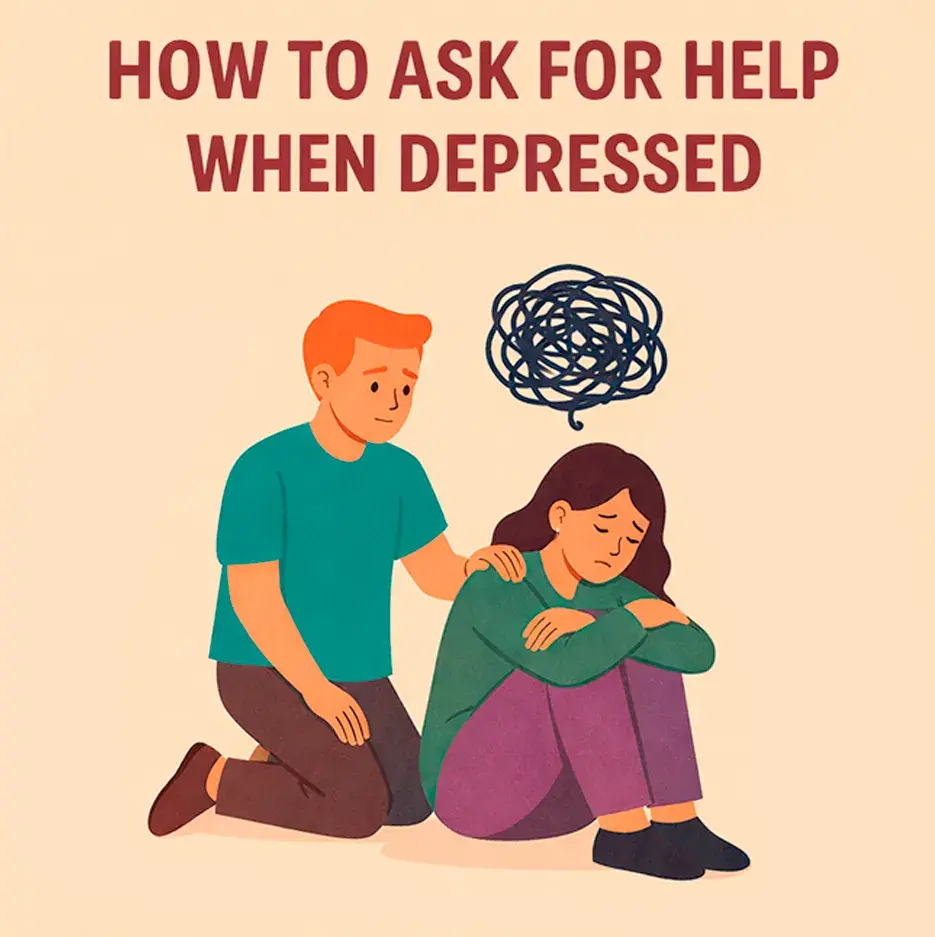
Depression often leaves people feeling trapped in silence - unsure of how to speak up, afraid of being judged, or convinced no one will understand. The weight of hopelessness can make even simple conversations feel impossible. Yet learning how to ask for help when depressed is one of the most powerful steps toward healing.

Many silently carry this struggle, even though help is available and effective. You are not alone in this experience. This guide offers clear, compassionate, and practical strategies to make reaching out less intimidating. By the end, you’ll know how to recognize the signs, start safe conversations, and find reliable support for recovery.

If you’re wondering how to ask for help when depressed, start by choosing one trusted person, sharing what you’re experiencing in simple terms, and asking for specific support. Professional help from therapists or mental health clinics can provide guidance and structure when symptoms feel overwhelming.

Understanding Depression and Mental Health

Depression is more than just "feeling sad". It is a recognized mental health disorder that affects how people think, feel, and function in daily life. According to the World Health Organization, about 5.7% of adults worldwide live with depression - that’s roughly 332 million people, with women (6.9%) more often affected than men (4.6%). Depression often develops after major life stressors such as loss, trauma, or chronic illness, but it can also appear without a clear cause. 

It can lead to isolation, strained relationships, and, in severe cases, suicidal thoughts. Suicide is one of the leading causes of death among people aged 15–29, highlighting the seriousness of this condition. Understanding how to ask for help when depressed begins with recognizing that depression is not weakness - it’s an illness that deserves proper care and support.

Recognizing the Signs of Depression

Depression is not always easy to spot, especially when people hide their struggles. Still, there are common warning signs that should never be ignored:

  • Persistent sadness or emptiness
  • Loss of interest in hobbies, work, or relationships
  • Fatigue or low energy despite rest
  • Significant changes in appetite or sleep patterns
  • Feelings of guilt, worthlessness, or hopelessness
  • Trouble focusing, remembering, or making decisions
  • Thoughts of death or suicide

Some individuals also experience a silent panic attack alongside depression, where overwhelming anxiety occurs without obvious outward signs, making their struggle harder to detect. When all of these symptoms last longer than two weeks and begin to interfere with everyday life, they signal more than a passing mood. They point toward a depressive disorder that requires attention and help with depression from a qualified professional. Recognizing these red flags is the first step toward seeking meaningful support and beginning recovery.

Sadness Versus Depression

It’s common to confuse sadness with depression, but the two are very different. Sadness is a normal reaction to life’s challenges, while depression is a long-lasting mental health disorder that disrupts well-being.

Aspect Sadness Depression
Duration Short-term, fades with time Lasts weeks, months, or longer
Trigger Usually tied to specific events May occur without clear cause
Impact Discomfort but manageable Disrupts work, relationships, health
Treatment Often resolves naturally Requires professional treatment

Examples of depression’s impact:

  • Thoughts: constant self-criticism, hopeless outlook
  • Behavior: withdrawal from loved ones, neglect of responsibilities
  • Functioning: impaired focus, loss of productivity

Practical Ways to Ask for Help With Depression

Start With a Quick Self-Check

The first step in seeking support is ensuring safety. If someone is experiencing suicidal thoughts or feels at immediate risk, the priority is to call emergency services or a crisis hotline right away. If the danger is not urgent, a self-check can help clarify whether it’s time to reach out.

Consider these questions:

  • Have symptoms lasted more than two weeks?
  • Is daily functioning (work, sleep, relationships) disrupted?
  • Are feelings of hopelessness growing stronger?

Answering “yes” signals it’s time to seek help with depression. If your situation is not an emergency, you can contact Amae Health to discuss scheduling an evaluation or outpatient care. Our Admissions Coordinators can often arrange same-day or next-day appointments, depending on your situation. For emergencies, we always encourage calling 911 or going to the nearest emergency department.

Reframing Help-Seeking as Empowerment

Many people hesitate to ask for support because of stigma or cultural beliefs that equate independence with strength. In reality, speaking up is a powerful act of self-care. Seeking help shows courage and awareness, not weakness.

Common barriers to reaching out:

  • "I should handle this on my own"
  • "Others have it worse"
  • "People will judge me"

The truth: early treatment improves recovery outcomes, and reaching out allows you to regain control over your life faster. Asking for help is empowerment in action.

Prepare a Short Note for Clarity

When emotions feel overwhelming, it can be difficult to express needs clearly. Writing a short note before speaking to someone can help organize thoughts. Keep it simple - just a few points are enough:

Focus Area Example Note Line
What’s happening “I’ve been feeling exhausted and sad for weeks”
Daily impact “It’s affecting my sleep and work”
Type of help “I’d like to talk to a therapist”

This simple tool reduces anxiety during conversations and ensures the core message doesn’t get lost. It’s a practical step toward how to ask for help when depressed in a clear and confident way.

Choose Someone You Trust

The first step is finding a safe person to reach out to. This could be a close friend, family member, mentor, or, if no one feels reliable, a professional or helpline. Trust matters more than proximity. It’s also wise to have more than one option: if the first person can’t offer enough support, move to another. Creating a small “support map” of two or three trusted contacts increases the chance you’ll receive timely help with depression when you need it.

Pick the Comfortable Way to Communicate

Speaking face-to-face can feel intimidating, especially when emotions are heavy. Thankfully, there are many ways to start the conversation:

  • A quick text message: "I’ve been struggling - can we talk?"
  • A short email explaining how you feel.
  • A direct message in a safe chat app.

Choose a method that feels least overwhelming. Timing also matters - reach out during quieter hours or when you know the other person can give their full attention.

Share What You’re Experiencing

You don’t need a perfect script. A simple sentence or two is enough to open the door. Focus on describing symptoms in plain language, without overexplaining.

Examples you might use:

  • "I’ve been exhausted and can’t seem to get good sleep".
  • "I’ve lost interest in things I normally enjoy".
  • "I feel low most of the time, and it’s getting harder to cope".

Honesty helps the listener understand, and short statements reduce the pressure to explain everything at once.

Make a Specific Ask

Support is more effective when requests are clear. Instead of saying "I’m not doing well", explain exactly what you need.

Examples of clear asks:

  • "Could you just listen without giving advice right now?"
  • "Can you help me research therapists nearby?"
  • "Would you check in with me midweek?"
  • "Can you come with me to my first appointment?"

This clarity reduces misunderstanding and makes help with depression feel more accessible.

Take the Next Step Toward Care

Once you’ve shared how you’re feeling, act quickly. Waiting weeks can make it harder. Aim to schedule an appointment with a therapist, doctor, or support group within 1–2 days. To stay accountable, tell someone you trust about your plan. Even a short message like "I booked an appointment for Friday" reinforces the step. Quick action not only builds momentum but also reduces the weight of uncertainty, showing that recovery is a process you’re already starting.

Build a Support Routine

Recovery isn’t a one-time conversation - it thrives on consistency. Set up a rhythm that keeps you connected and supported:

  • Arrange regular check-ins (weekly calls or texts with a trusted person).
  • Keep emergency contacts easy to access.
  • Share a calendar or note with therapy dates and progress.

Building these habits creates a safety net. Over time, it makes asking for help when depressed less daunting, because support becomes part of daily life.

Close the Loop With Gratitude

Support networks grow stronger when they’re nurtured. After receiving help, send a short thank-you note or message to let others know their effort mattered.

Example follow-ups:

  • "Thanks for listening yesterday - it helped more than you know".
  • "I booked the appointment we talked about".
  • "Your check-in message made my day easier".

Expressing gratitude not only shows appreciation but also deepens trust. It reassures your supporters that their role is meaningful and encourages them to keep standing by you.

Where Can I Find Treatment Options?

Therapy and Counseling

Therapy is often the most effective first step in recovery. It helps patients reframe harmful thoughts, process emotions, and develop healthy coping skills.

Common therapies include:

  • CBT (Cognitive Behavioral Therapy): challenges negative thinking.
  • DBT (Dialectical Behavior Therapy): improves emotion regulation.
  • Interpersonal Therapy: focuses on relationships and communication.

Beyond techniques, therapy provides a supportive environment to talk openly. For many, it’s the first safe place to practice how to ask for help when depressed, guided by a trained professional. This consistent support helps reduce symptoms and build resilience.

Medication Management

Sometimes, medication is an important part of treatment. Antidepressants such as SSRIs and SNRIs work by balancing brain chemistry and easing symptoms like fatigue, low mood, or poor concentration.

Medication Type Common Use Important Note
SSRIs Often first choice; fewer side effects Must be prescribed & monitored by a doctor
SNRIs Helpful for depression + anxiety Requires ongoing check-ins
Other options May be used if SSRIs/SNRIs are not effective Always under professional care

Medication is not a cure on its own. It works best alongside therapy, lifestyle changes, and continued help with depression from trusted clinicians.

Group and Peer Support 

Depression can make life feel isolating, but connecting with others can shift everything. Group and peer support settings create a space where people share experiences, feel understood, and receive encouragement.

Ways to connect include:

  • Group therapy sessions at clinics.
  • Peer-led support circles in the community.
  • Online groups moderated by professionals.

The power of hearing "you’re not alone” cannot be overstated. These communities provide accountability and warmth that one-on-one therapy sometimes lacks. For many, joining a group is the first small step to gain strength from others on the same journey.

Lifestyle and Self-Care Strategies

Lifestyle habits cannot replace treatment, but they make recovery stronger and more sustainable. Simple daily actions can stabilize mood, boost energy, and reduce relapse risk.

Supportive practices include:

  • Exercise: even a 20-minute walk lifts mood.
  • Nutrition: balanced meals with whole foods support brain health.
  • Mindfulness: breathing or meditation lowers stress.
  • Sleep: aim for a consistent bedtime and 7–9 hours.
  • Connection: regular time with supportive friends or family.

These steps provide essential structure and complement therapy or medication, reinforcing the value of seeking help with depression as part of a holistic plan. Alongside healthy routines, learning strategies for overcoming self-hate can play a vital role in rebuilding confidence during recovery.

Finding Hope With Amae Health

Healing begins with one decision: reaching out. At Amae Health, we know how overwhelming depression can feel - and we are here to help. Our team provides personalized, compassionate care that includes therapy, group sessions, family support, and medication management when needed. Each treatment plan is tailored to strengthen resilience and restore balance.

You don’t have to face this struggle alone. Taking the first step shows courage, not weakness. Contact Amae Health today to start your path toward healing, stability, and hope. We’ll walk beside you every step of the way.

Medical Disclaimer

This blog post is provided by Amae Health for educational and informational purposes only. The content is not intended to be a substitute for professional medical advice, diagnosis, or treatment.

Always seek the advice of your physician or other qualified health provider with any questions you may have regarding a medical condition, treatment options, or before making any changes to your medication regimen.

Reliance on any information provided in this article is solely at your own risk. If you believe you are experiencing a medical emergency, call 911 (or your local emergency services) immediately.

Reccomended for you

# min read

Positive and Negative Effects of Social Media on Mental Health

By

Sonia Garcia

|

November 6, 2025

Social media can enhance connection, increase self-esteem, and improve a sense of belonging. But it can also lead to emotional fatigue, self-comparison, and loneliness. These are just a few of the positive and negative effects of social media - and how we experience them often depends on how we use these platforms.

This article explores the negative and positive effects of social media - and how mindful use can help protect mental health. Whether you scroll for comfort or out of habit, understanding the impact is a first step toward creating a more balanced digital life.

How Social Media Affects Our Mental Health

Social media is designed to capture attention - and keep it. Each scroll, like, or comment activates emotional and cognitive processes that shape how we feel, think, and view ourselves. While some users find inspiration or connection, others experience fatigue or overstimulation.

A 2024 Pew Research Center report found that nearly half of U.S. teens are online almost constantly, with 90% using YouTube and around 60% on TikTok and Instagram. This near-constant connectivity can intensify the emotional impact of social media, affecting mood, self-esteem, and stress levels.

The outcome depends not only on how much we use these tools, but how and why. At Amae Health, clinicians note that curated content, algorithmic feeds, and alerts often reinforce habits that quietly increase stress and emotional fatigue.

Inside (Emotional State) Outside (What Others See)
Constant inner tension Smile, calm voice
Obsessive thoughts and worry Organized and punctual
Fear of failure Ambitious and driven
Chronic fatigue Energetic and active
Feeling like everything is at risk In control and confident
Emotional burnout Productive and successful

How we interact with social media matters - while some people benefit from the positive effects of social media, others may experience emotional strain when usage becomes excessive.

Negative Effects of Social Media

Comparison and Low Self-Esteem

Social media often presents the highlight reel of others’ lives - filtered, polished, and carefully selected. This can trigger a subtle cycle:

Trigger → Thought → Feeling

Photo of success → "I’m falling behind" → Insecurity

Fitness transformation → "I don’t look like that" → Shame

Luxury lifestyle → "I’ll never afford this" → Hopelessness

The curated nature of platforms sets unrealistic standards. Over time, these quiet comparisons can chip away at self-worth, especially in younger users still developing their identity.

Anxiety, Stress, and Depression

The constant flow of updates, alerts, and opinions can overwhelm the mind. Research often links heavy social media use with increased emotional fatigue, particularly among adolescents. Signs of overload can include:

  • Trouble focusing after long scrolling sessions
  • Increased irritability or sadness after browsing
  • Physical symptoms like muscle tension or rapid heartbeat
  • Fatigue from endless exposure to distressing news

These are some of the most common negative effects of social media, especially when platforms are used without intention or boundaries. They often build gradually, masking their impact until they start affecting mood, relationships, and daily function.

Cyberbullying and Harassment

Toxic interactions online can leave deep emotional wounds. Unlike traditional bullying, cyberbullying can happen anytime - and often goes unnoticed by adults. In a 2023 study published in BMC Psychiatry, over 40% of adolescents reported experiencing cyberbullying, with more than 20% considering self-harm as a result.

Victims often feel trapped, fearing that speaking up might limit their internet access. The persistence and reach of online harassment make recovery more complex - especially for younger users.

Sleep Disruption and Overstimulation

Nighttime scrolling may seem harmless. But it interferes with sleep in multiple ways:

  • Focus: The brain stays alert long after screen use
  • Memory: Disrupted sleep impairs cognitive processing
  • Mood: Poor rest can increase anxiety and reduce emotional resilience

Among the negative effects of social media, sleep interference is often overlooked - yet it plays a key role in emotional regulation and resilience. Notifications, blue light, and emotionally triggering content can delay sleep and lower its quality. Over time, this cycle contributes to brain fog, mood swings, and physical fatigue during the day.

Social Isolation and Loneliness

While social media creates the illusion of connection, it can quietly reduce meaningful offline interaction. As time spent online increases, time spent with others in person tends to decline. The result is a paradox: feeling more connected digitally while growing lonelier in daily life.

This shift affects how we form relationships, experience presence, and feel supported. For some, it replaces real-world bonding with surface-level interactions that lack emotional depth.

Positive Effects of Social Media

Connection and Community

Social media builds bridges - not just across time zones, but across life experiences.

  • Close to home: A parent overseas shares bedtime stories through video calls. A friend group stays connected through group chats and shared memories.
  • Beyond borders: People with rare conditions, grieving losses, or exploring identity find communities where they feel seen.

These platforms offer belonging, especially when real-world connection feels out of reach.

Access to Mental Health Resources

Another often-cited positive effect of social media is how it allows users to feel seen through shared experiences - especially when it comes to mental health. Digital spaces can offer timely, accessible mental health tools. Some of the most helpful include:

  • Teletherapy platforms that bring care to your home
  • Crisis text lines available 24/7 for urgent support
  • YouTube channels with breathing exercises and guided meditations
  • Instagram pages that normalize mental health struggles and coping tools

For many, these resources are a first step toward healing - or a bridge between therapy sessions from professional mental health clinics like Amae Health.

Education and Awareness

Social media gives people access to ideas and perspectives they may never encounter otherwise. Posts about mental health, neurodiversity, disability, and identity expand awareness beyond textbooks. By following advocates and educators, users can stay informed about social issues and health topics in real time.

  • For example, one user shared they learned about their anxiety diagnosis after seeing a relatable infographic on Instagram.

Creative Expression and Inspiration

One of the most meaningful positive effects of social media is its ability to turn creativity into connection. Social media can turn quiet creativity into shared experience. It gives people space to explore and be seen.

  • Art & Photography: A teen posts drawings anonymously and receives supportive comments.
  • Writing & Storytelling: A blog becomes a safe place to unpack emotions and share poetry.
  • Music & Humor: Short videos bring laughter and lightness into heavy days.

For many, this creative space offers not just expression - but healing.

Peer Support and Shared Experiences

Digital empathy may be one of the most overlooked yet powerful positive effects of social media. When we read someone else’s story, it can feel like looking into a mirror - and seeing ourselves more clearly. These platforms let us share challenges and celebrate progress together. They remind us we’re not the only ones navigating uncertainty.

You might find this connection through:

  • Reddit threads about anxiety or ADHD
  • Instagram stories on body image journeys
  • YouTube vlogs about grief, recovery, or life changes

For many, these interactions feel more personal than expected - and sometimes, just as powerful as in-person support.

Why Is It Hard to Reduce Social Media Use?

As addiction expert Dr. Anna Lembke explains in The Guardian, phones function like “modern hypodermic needles” - delivering small dopamine hits with every swipe, like, or scroll. Even brief moments of boredom now trigger the urge to check a screen. But why is it so hard to stop?

What Keeps Us Hooked How It Works
Dopamine loops Anticipation of pleasure triggers craving and repetition
Endless content No natural “stop point” — next post loads automatically
Fear of missing out (FOMO) Feels risky to disconnect from trends or conversations
Design for attention Notifications, infinite scroll, algorithmic engagement

Many of these features are what drive both the positive effects of social media - like connection - and the negative ones, such as dependency or distraction.

Tips for Healthy Social Media Habits

Using social media more mindfully doesn’t require quitting - just small, consistent changes. These strategies can help restore balance:

What you might try to do:

  • Set daily screen limits with built-in phone tools
  • Follow uplifting, educational, or inspiring content
  • Schedule screen-free times - especially before bed
  • Try a 1-day or weekend digital reset

What you should really avoid:

  • Auto-scrolling without intention
  • Following accounts that trigger comparison or stress
  • Checking apps first thing in the morning
  • Keeping notifications on for every app

Your habits shape your experience. When used intentionally, the positive effects of social media can take the lead, while the rest fades quietly into the background.

When Social Media Impacts Your Well-Being, Support Matters

Social media isn’t all bad or all good. For many, it’s a lifeline - for others, a source of quiet stress. The key is recognizing when it starts to affect how you feel. If you're noticing fatigue, anxiety, or self-doubt tied to your digital habits, it might be time to pause and reassess.

If the weight of online life feels too heavy, Amae Health is here to help. Our compassionate clinicians offer support that respects your experience and helps you reconnect with what matters most.

Reach out to schedule a consultation - healing starts with one conversation.

# min read

Most Effective Treatment for Bipolar Disorder

By

Sonia Garcia

|

February 11, 2025

Bipolar disorder is a complex mental health condition that affects millions of people worldwide. The cardinal symptom of this condition is mania and can cause extreme mood swings and varying energy levels, making it challenging for those affected to lead normal lives. Understanding bipolar disorder, its causes, and effective treatments is crucial to managing the condition and helping individuals achieve stability.

In this blog, we will explore the most effective treatments for bipolar disorder, discuss the causes of this mental illness, and address common questions about medication and first-line treatments. By the end of this article, you will be empowered with the knowledge necessary to make informed decisions about the management of bipolar disorder.

What is Bipolar Disorder?

Bipolar disorder, formerly known as manic depression, is a mental health condition characterized by extreme mood swings between emotional highs (mania or hypomania) and lows (depression). These mood swings can affect an individual’s energy levels, activity, sleep patterns, and overall ability to function in daily life.

There are three main types of bipolar disorder:

  1. Bipolar Type I Disorder: Characterized by at least one manic episode, which may be preceded or followed by depressive episodes. This tends to be the more severe form of bipolar disorder.
  2. Bipolar Type II Disorder: Involves at least one major depressive episode and at least one hypomanic episode, but not a full-blown manic episode. Type II bipolar disorder is generally less severe than Type I bipolar disorder.
  3. Cyclothymic Disorder: A milder form of bipolar disorder, consisting of multiple periods of hypomanic symptoms and depressive symptoms that do not meet the criteria for a major depressive episode.

What Causes Bipolar Disorder?

Although the exact cause of bipolar disorder is still unknown, researchers believe that a combination of genetic, environmental, and neurological factors contribute to the development of the condition. Some common factors that may increase the risk of bipolar disorder include:

  1. Family history: Having a close relative with bipolar disorder increases the likelihood of developing the condition.
  2. Brain structure and function: Imaging studies have shown differences in the brains of people with bipolar disorder compared to those without the condition, suggesting a neurological component.
  3. Substance use: Drug or alcohol abuse can trigger or worsen bipolar symptoms in some individuals.
  4. Trauma or stress: Significant life events, such as the death of a loved one, can trigger the onset of bipolar disorder in some people.

Can Bipolar Disorder Be Treated Without Medication?

While medication is often a crucial component of bipolar disorder treatment, it is not the only option. Comprehensive treatment plans for bipolar disorder often include psychotherapy, lifestyle modifications, and support from friends and family. Some non-medication treatments that may be effective in managing bipolar disorder include:

  1. Cognitive-behavioral therapy (CBT): This form of psychotherapy helps individuals identify and change negative thought patterns and behaviors that contribute to bipolar symptoms.
  2. Family-focused therapy: Involves working with the individual’s family to improve communication, coping strategies, and support networks.
  3. Interpersonal and social rhythm therapy (IPSRT): Focuses on stabilizing daily routines, including sleep and social interactions, to manage mood swings.
  4. Psychoeducation: Educating individuals and their families about bipolar disorder can help improve understanding, treatment adherence, and overall outcomes.

What is the First-Line Treatment for Bipolar Disorder?

The first-line treatment for bipolar disorder typically involves medication to stabilize mood swings and prevent relapse. Medications commonly prescribed for bipolar disorder include:

  1. Mood stabilizers: These medications, such as lithium and valproate, help control mood swings by balancing brain chemistry.
  2. Antipsychotics: Atypical antipsychotics, such as olanzapine and quetiapine, can help manage mania, hypomania, and depression in bipolar disorder.
  3. Antidepressants: Used in conjunction with mood stabilizers or antipsychotics, antidepressants can help manage depressive episodes. However, they must be carefully prescribed, as they can sometimes trigger manic episodes in people with bipolar disorder.
  4. Benzodiazepines: These medications can provide short-term relief from anxiety and sleep disturbances associated with bipolar disorder, but should be used with caution due to the potential for dependence.

What is the Most Common Medication Used to Treat Bipolar Disorder?

Lithium is one of the most common and well-established medications used to treat bipolar disorder. It is a mood stabilizer that can help manage both manic and depressive episodes.

Lithium has been shown to reduce the severity and frequency of mood swings, prevent relapse, and decrease the risk of suicide in individuals with bipolar disorder. However, it is essential to monitor lithium levels closely, as the therapeutic window is narrow, and side effects can occur if levels become too high, particularly to the kidneys and thyroid.

Conclusion

Bipolar disorder is a complex mental health condition that requires a multifaceted treatment approach. While medication is often the first line of treatment, psychotherapy, lifestyle modifications, and support from friends and family also play crucial roles in managing the disorder. Understanding the condition, its causes, and effective treatments will empower individuals with bipolar disorder and their loved ones to make informed decisions about their care.

Transform Your Life with Amae Health’s Bipolar Disorder Treatment and Support

If you or someone you know is struggling with bipolar disorder, don’t hesitate to seek help. Amae Health Clinic is dedicated to providing comprehensive mental health care, including the latest treatment options and resources for bipolar disorder.

Our team of experts is here to support you on your journey to better mental health. Visit Amae Health Mental Illness Outpatient Clinic today to schedule an appointment and take the first step towards stability and well-being. Together, we can help you overcome the challenges of bipolar disorder and unlock your full potential.

# min read

What is a Silent Panic Attack

By

Sonia Garcia

|

February 19, 2025

Introduction to Silent Panic Attacks

Have you ever felt intense anxiety without the typical signs of a panic attack? You might have experienced a silent panic attack. These hidden struggles can be just as debilitating as their more visible counterparts.

Silent panic attacks are a lesser-known but equally challenging aspect of anxiety disorders. They can leave individuals feeling isolated and misunderstood, as their internal turmoil isn't readily apparent to others.

Understanding these attacks is crucial for those experiencing them and their loved ones. It's the first step towards effective management and treatment.

What Are Silent Panic Attacks?

A silent panic attack is an intense episode of anxiety without obvious external signs. Unlike typical panic attacks, these don't involve visible physical reactions like hyperventilation or shaking.

People experiencing a quiet panic attack might appear calm on the outside. However, internally, they're battling overwhelming emotions and sensations.

These attacks are a lesser-known aspect of panic disorder. They can be just as distressing as regular panic attacks but often go unnoticed by others.

The hidden nature of silent panic attacks can make them particularly challenging to identify and treat. Many people might not even realize they're experiencing a panic attack, attributing their symptoms to other causes.

It's important to note that silent panic attacks are as real and valid as their more visible counterparts. They deserve the same level of attention and care in treatment.

Signs and Symptoms

While silent panic attacks lack obvious external signs, they do have internal physical symptoms. These can include:

  • Rapid heartbeat or heart palpitations
  • Chest tightness or discomfort
  • Sweating
  • Dizziness or lightheadedness
  • Nausea
  • Feeling of unreality or detachment
  • Numbness or tingling sensations
  • Feeling of choking
  • Fear of losing control or going crazy
  • Fear of dying

Unlike regular panic attacks, those experiencing a quiet panic attack might not show visible distress. They often maintain a calm exterior while battling intense internal turmoil.

This disconnect between internal experience and external appearance can be confusing and isolating. It may lead to guilt or shame, as individuals might feel "overreacting" to their internal experiences.

It's crucial to remember that the severity of a panic attack isn't determined by its visibility. Silent attacks can be just as intense and distressing as more obvious ones.

Causes and Risk Factors

The exact cause of silent panic attacks isn't fully understood. However, several factors may contribute:

  • Genetics: A family history of anxiety disorders can increase your risk.
  • Brain chemistry: Imbalances in neurotransmitters may play a role.
  • Stress: High stress levels can trigger panic attacks, including silent ones.
  • Trauma: Past traumatic experiences can lead to the development of panic disorder.
  • Personality traits: Perfectionism or a tendency to suppress emotions may contribute.
  • Medical conditions: Certain health issues can mimic or trigger panic symptoms.
  • Substance use: Caffeine, alcohol, or drug use can exacerbate anxiety.

Certain personality traits, like perfectionism or a tendency to worry excessively, may also increase the risk. Understanding these factors can help manage and prevent attacks.

It's important to note that having risk factors doesn't guarantee you'll experience silent panic attacks. Conversely, you can have attacks without apparent risk factors.

Impact on Daily Life

Silent panic attacks can significantly affect a person's quality of life. Despite their hidden nature, they can be just as disruptive as visible panic attacks. People experiencing these attacks may:

  • Avoid situations they fear might trigger an attack
  • Struggle with work or social interactions
  • Experience relationship difficulties due to unexplained behavior
  • Develop depression or other mental health issues
  • Have difficulty concentrating or making decisions
  • Experience a decrease in self-confidence
  • Develop unhealthy coping mechanisms, like substance use

A 28-year-old graphic designer, Lisa, shares: "My quiet panic attacks made me dread client meetings. I'd devise excuses to avoid them, which affected my career."

The impact can extend beyond the individual. Family members and friends may struggle to understand or provide support, especially if they're unaware of the person's internal struggle.

Mark, a 35-year-old teacher, explains: "My wife couldn't understand why I sometimes became distant or irritable. It strained our relationship until I explained about the silent attacks."

The hidden nature of these attacks can also lead to misunderstandings in professional settings. Employees might be perceived as unmotivated or disinterested when they're battling internal anxiety.

Treatment Options

Therapy, Medication, and Lifestyle Adjustments

Effective treatment for silent panic attacks often involves a combination of approaches:

  • Cognitive Behavioral Therapy (CBT): This helps identify and change thought patterns contributing to panic attacks. CBT can be particularly effective for silent attacks by addressing the internal dialogue that often goes unnoticed.
  • Medication: Antidepressants or anti-anxiety medications can help manage symptoms of panic disorder. SSRIs (Selective Serotonin Reuptake Inhibitors) are often prescribed for long-term management.
  • Mindfulness and relaxation techniques: These can help reduce overall anxiety and manage physical symptoms. Practices like meditation and deep breathing can be especially helpful for silent attacks.
  • Lifestyle changes: Regular exercise, healthy sleep habits, and stress management can make a significant difference. Even small changes, like reducing caffeine intake, can positively impact.
  • Exposure therapy: Gradually facing feared situations can help reduce anxiety over time. It is done under professional guidance to ensure safety and effectiveness.
  • Acceptance and Commitment Therapy (ACT): This approach focuses on accepting anxiety symptoms rather than fighting them, which can be particularly helpful for silent attacks.

Amae Health offers integrated care for those struggling with silent panic attacks. Our approach combines psychiatric expertise with comprehensive support across various aspects of health.

Dr. Scott Fears, a psychiatrist at Amae Health, explains: "We tailor our treatment plans to each individual's needs. It might include therapy, medication, and lifestyle coaching."

The integrated approach at Amae Health recognizes that silent panic attacks don't exist in isolation. They often interact with other aspects of a person's health and life circumstances.

Coping Strategies and Prevention

Practical Tips for Managing and Preventing Silent Panic Attacks

While professional help is crucial, there are strategies you can use to manage quiet panic attacks:

  • Practice deep breathing: This can help calm your body's stress response. Try the 4-7-8 technique: inhale for 4 seconds, hold for 7, exhale for 8.
  • Use grounding techniques: Focus on your senses to stay present during an attack. The 5-4-3-2-1 method involves naming 5 things you see, 4 you feel, 3 you hear, 2 you smell, and 1 you taste.
  • Challenge negative thoughts: Question the reality of your fears when you feel panic rising. Ask yourself, "What's the evidence for and against this thought?"
  • Gradually face feared situations: With professional guidance, slowly expose yourself to anxiety-inducing scenarios. It can help build confidence and reduce fear over time.
  • Maintaining a healthy lifestyle: Regular exercise, a balanced diet, and good sleep can reduce anxiety. Even a 10-minute walk can help alleviate anxiety symptoms.
  • Keep a journal: Track your attacks to identify patterns and triggers. Note the time, place, and what you did when the attack occurred.
  • Practice self-compassion: Be kind to yourself. Remember that experiencing panic attacks doesn't define you or make you weak.
  • Educate your loved ones: Help them understand what you're experiencing. It can improve support and reduce misunderstandings.

Amae Health emphasizes the importance of a holistic approach to managing panic attacks. Our programs often include elements of physical health and social support alongside traditional psychiatric care.

Conclusion

Silent panic attacks can be a challenging and often misunderstood aspect of panic disorder. While they may not be visible to others, their impact on the individual can be profound.

Remember, if you're experiencing these attacks, you're not alone. With proper diagnosis and treatment, it's possible to manage symptoms and improve your quality of life.

It's important to be patient with yourself throughout the treatment process. Recovery isn't always linear, and setbacks can happen. Each step forward, no matter how small, is progress.

Amae Health and other mental health providers offer comprehensive care for those struggling with silent panic attacks. Their integrated approach addresses both the visible and invisible aspects of anxiety disorders.

Don't hesitate to seek help if you think you might be experiencing silent panic attacks. With the right support and tools, you can learn to manage your symptoms and lead a fulfilling life. Remember, seeking help is a sign of strength, not weakness. You deserve to live a life free from the constraints of silent panic attacks.

By raising awareness about silent panic attacks, we can create a more understanding and supportive environment for those who experience them. Everyone's journey is unique, but no one has to face it alone.