
Bipolar disorder changes the weather inside a life. Mood swings disrupt work, sleep, relationships, and the sense that next month will look anything like this one. The emotional exhaustion of cycling through episodes and the strain those episodes put on close relationships are part of why so many patients describe bipolar disorder as harder to live with than almost any other condition they know. Medication is usually the foundation of treatment. But medication alone is rarely enough. Bipolar disorder supportive therapy is one of several psychotherapy approaches that sit alongside medication to turn stability into an actual life.
This guide explains what supportive therapy is, how it fits alongside other therapies, and what kind of help may improve day-to-day stability.
What Is Supportive Therapy For Bipolar Disorder?
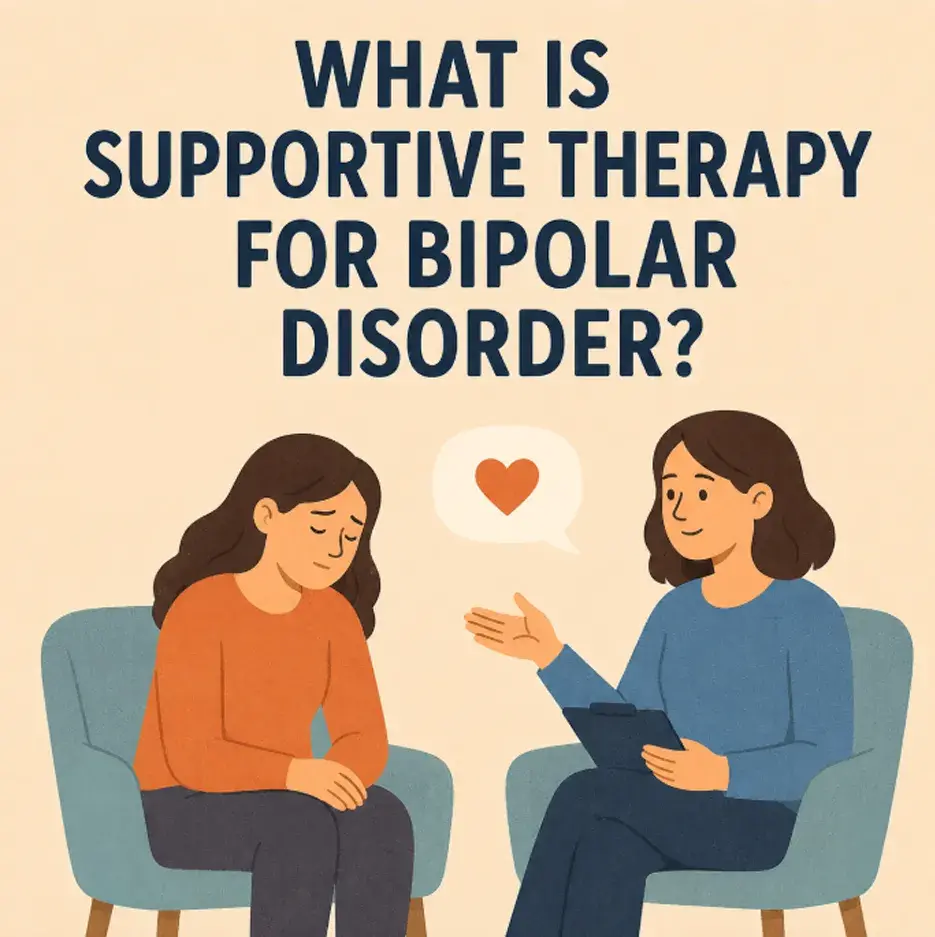
Supportive therapy is a psychotherapy approach built around emotional support, trust, validation, and practical coping. It does not focus on deep analysis of the unconscious, and it is not a structured skills protocol. It is the kind of therapy where a clinician listens carefully, helps you make sense of what you are feeling and going through, reinforces what is working, and helps you solve the next problem in front of you.
Supportive therapy is almost always part of a broader treatment plan for bipolar disorder, not a replacement for psychiatric care. Most people combine it with medication management, and many eventually layer in more structured approaches like CBT or family-focused therapy.
What Techniques Are Used in Bipolar Disorder Supportive Therapy
The practical tools a supportive therapist uses include:
- Emotional validation that acknowledges the real weight of what the person is experiencing
- Active listening that slows down and surfaces what is actually going on, not just the surface complaint
- Psychoeducation about the illness cycle, warning signs, and what to expect
- Problem-solving on concrete day-to-day stressors, from a difficult conversation to a medication side effect
- Strengthening insight about mood patterns and personal triggers
- Reinforcing engagement in the full treatment plan, including appointments and medication
How Supportive Therapy Helps People With Bipolar Disorder
Emotional Support During Mood Instability
Mood episodes are disorienting. A depressive stretch can last weeks, a hypomanic period can feel like the most productive month of your life until it crashes, and a mixed episode can fold both into the same week. Supportive therapy gives a person somewhere to bring that weight, week after week, with someone who understands what bipolar disorder looks like from the inside. That consistency alone steadies many patients through the worst stretches.
Building Coping Skills And Daily Stability
The practical work of staying well with bipolar disorder is mostly about routines. Supportive therapy helps people build and protect them:
- Consistent sleep and wake times, because sleep disruption is a common trigger
- Strategies for stress management when life gets loud
- Conflict management skills for relationships under strain
- Recognizing early warning signs of an episode so they can be interrupted
Supporting Medication Adherence And Ongoing Care
Medication is the foundation of bipolar treatment. But it can also be hard to stay on. Side effects, the feeling of missing hypomanic energy, the belief that symptoms will not return, and plain forgetfulness all contribute to the high discontinuation rates that research keeps finding. Supportive therapy gives people a place to talk honestly about their fears and frustrations with medication, think through side effects with a trusted clinician, and stay engaged when the usual instinct would be to drop out.
Supportive Therapy vs. Other Therapy Approaches
Supportive therapy is one of several psychotherapy approaches with evidence for bipolar disorder. A quick comparison:
A large systematic review of 39 randomized trials of adjunctive psychotherapy for bipolar disorder found that family-focused, cognitive behavioral, and psychoeducational therapies reduced episode recurrence compared with usual treatment (Miklowitz et al., JAMA Psychiatry, 2021).
When Other Therapies May Be Added
Supportive therapy is often the right starting point, especially after a new diagnosis or during stabilization. Over time, many patients add a more structured approach:
- CBT for persistent depressive symptoms or to build relapse-prevention skills
- DBT for patients with heavy emotional reactivity or co-occurring BPD features
- IPSRT for people whose episodes are tied to disrupted sleep and routines
- Family-focused therapy when relationship dynamics are shaping the illness course
The choice depends on symptoms, goals, and what the person actually needs at that stage. A skilled clinician will adjust the approach as the picture changes.
What To Expect In Bipolar Disorder Supportive Therapy
Sessions are usually 45 to 50 minutes and are typically weekly at the start. The work is conversational rather than homework-driven. A session might open with what happened that week, look at mood patterns since the last visit, surface any new stressors, and end with a small plan for the week ahead.
The clinician will pay attention to warning signs: sleep changes, energy shifts, spending or relationship patterns, and medication side effects. Over time, a person in supportive therapy often becomes much better at tracking their own mood, which makes the intervals between episodes longer and the episodes themselves shorter.
Who May Benefit Most
Supportive therapy tends to help most for:
- People newly diagnosed who need to make sense of what bipolar disorder is and what the next year can look like
- People adjusting to treatment who are figuring out medication, routines, and how to communicate about the illness
- People navigating the emotional fallout of a recent episode, including shame, regret, or strain with family
- People in long-term stabilization who want a steady clinician presence without intensive protocols
It is less of a match for patients who need heavy skills training for severe emotion dysregulation or those in active crisis, where higher levels of care are indicated.
When To Seek Professional Help For Bipolar Disorder
A few questions to ask yourself:
- Are mood episodes interfering with work, school, or close relationships?
- Has your sleep pattern changed significantly for more than a week?
- Are you making impulsive decisions that later feel hard to explain?
- Is someone close to you saying your behavior feels out of character?
- Are you having thoughts of self-harm or suicide?
If the answer to any of these is yes, it is worth calling a clinician. For immediate safety concerns, call 988 for the Suicide and Crisis Lifeline.
Bipolar Disorder Care At Amae Health
At Amae Health, we support individuals battling bipolar disorder. Our approach is integrated: psychiatrists, therapists, primary care providers, dietitians, health coaches, peer mentors, and clinical care coordinators all work from one shared treatment plan. That structure matters for bipolar disorder, because the condition touches sleep, physical health, medication, and relationships at the same time, and fragmented care usually misses something.
If bipolar symptoms are disrupting daily life for you or someone you love, we can help with evaluation, treatment planning, and ongoing support. Learn more about our bipolar disorder care, read our guide to the most effective treatments for bipolar disorder, or call 1-888-860-2825 to start the conversation.
Citations
- Miklowitz et al., "Adjunctive Psychotherapy for Bipolar Disorder: A Systematic Review and Component Network Meta-analysis," JAMA Psychiatry, 2021. Tier 1 (peer-reviewed).