## min read

TMS for Anxiety: Does TMS Help With Anxiety?

|

March 11, 2026

Summarize with AI

TMS for Anxiety: Does TMS Help With Anxiety?

The short answer: for many people, yes. The fuller answer depends on your diagnosis, your history with other treatments, and how your brain responds. That nuance matters because if you are reading this, you have already tried the straightforward answers.

Maybe you have been through two or three medications that helped a little, but not enough. Maybe therapy gave you tools, but you still wake up with a tight chest and a mind already spinning. Maybe you feel permanently stuck in fight-or-flight. And trying yet another treatment feels less like hope and more like another chance to be disappointed.

This article is not here to make promises. It is here to give you a clear picture of what TMS therapy for anxiety involves - what the evidence supports, what is still emerging, and whether this might be the right next step for you.

What Is TMS Therapy for Anxiety?

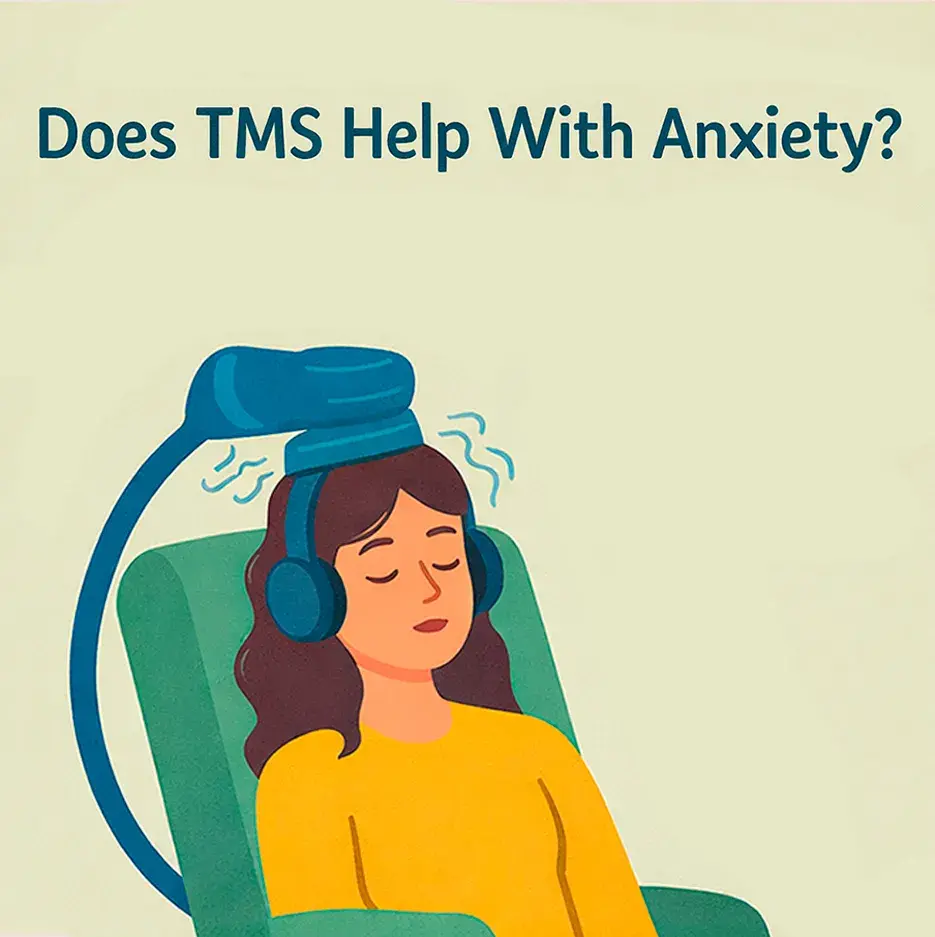
Transcranial magnetic stimulation, or TMS, is a non-invasive brain stimulation technique. A device placed near your scalp delivers focused magnetic pulses that stimulate specific brain regions - no surgery, no anesthesia, no medication entering your bloodstream. You sit in a chair, fully awake, while a coil delivers brief pulses that feel like tapping on your scalp. Afterward, you drive yourself home.

Here is what TMS for anxiety looks like in practice:

  • Non-invasive - no needles, no implants, no sedation required
  • Outpatient - done in a clinic, no hospitalization
  • Session length - typically 20 to 40 minutes
  • Course length - 4 to 6 weeks, five sessions per week (20-30 sessions total)
  • Common sensations - rhythmic tapping on the scalp, clicking sound, mild scalp pressure

Most people tolerate it well from the first session, and any scalp discomfort typically lessens within the first week.

Why People Consider TMS for Anxiety

TMS therapy for anxiety tends to enter the picture when standard treatments have not worked well enough, or when a person wants an option that does not involve more systemic medication. Common reasons people seek TMS:

  • Multiple medications tried with limited or inconsistent results
  • Side effects (weight changes, emotional blunting, sexual dysfunction) that were hard to sustain
  • Partial response to therapy - better, but still significantly impaired
  • Anxiety co-occurring with depression, complicating treatment response
  • Preference for a non-medication approach for personal or medical reasons

How Does TMS Help With Anxiety?

Anxiety disorders are associated with an imbalance between brain regions - an overactive amygdala (the brain's alarm system) and reduced activity in the prefrontal cortex, which handles top-down regulation. Think of it as the alarm going off constantly while the manager who silences it is underperforming.

TMS for anxiety targets these circuits directly. By stimulating the dorsolateral prefrontal cortex (DLPFC), it encourages that regulatory region to become more active - helping the brain reduce fear responses and improve emotional balance. It is not adding a chemical; it is nudging specific neural circuits toward healthier patterns.

What Symptoms Can TMS Improve?

TMS works through neuroplasticity - the brain's capacity to rewire itself through repeated stimulation. This is gradual. Most people notice meaningful changes in weeks 3 through 6, not week one. Symptoms people commonly report improving:

  • Persistent rumination and racing thoughts
  • Sleep difficulties - both falling and staying asleep
  • Emotional overwhelm from stressors that feel disproportionately intense
  • Physical tension - jaw clenching, muscle tightness, shallow breathing
  • Hypervigilance - the persistent sense of being "on" even in safe situations

Individual responses vary, which is why clinical evaluation and ongoing monitoring matter.

Does TMS Help With Anxiety? What the Research Says

TMS is FDA-cleared for major depressive disorder and obsessive-compulsive disorder. It is not yet FDA-approved for generalized anxiety disorder or panic disorder as standalone diagnoses - making its use for primary anxiety off-label, which is legal and common across many areas of medicine.

The evidence picture is more nuanced than a simple approval status suggests:

  • Anxious depression - anxiety co-occurring with depression - has strong supporting evidence, with improvements in both symptom clusters well-documented.
  • Research on TMS for generalized anxiety, PTSD, and social anxiety is growing, with studies showing meaningful symptom reductions.
  • Clinicians regularly observe anxiety improvements in patients treated for depression, confirming real overlap in underlying brain circuits.

The clearest summary: Does TMS help with anxiety? Evidence is strongest when anxiety co-occurs with depression, and increasingly promising - though still emerging - for anxiety disorders on their own.

TMS vs. Medication: How to Choose

Neither TMS nor medication is the right answer for everyone. They work differently, and the better choice depends on your individual history and clinical situation.

TMS Medication
How it works Targeted brain stimulation Systemic (affects whole body)
Side effects Minimal systemic effects Varies: may include GI, weight, sexual effects
Onset Gradual over weeks Days to weeks
Format Session-based, clinic visits Daily oral medication
Best suited for Treatment-resistant, med-intolerant, co-occurring depression First-line treatment, acute management

Some people use TMS instead of medication. Others add it to an existing regimen to deepen a partial response. The right answer comes from a clinical evaluation - and the team at Amae Health conducts that evaluation before any TMS course begins.

Who Is a Good Candidate for TMS Therapy for Anxiety?

TMS therapy for anxiety tends to be most appropriate for people who:- Have tried at least one medication without adequate relief

  • Experience anxiety that co-occurs with depression
  • Cannot tolerate medication side effects, or have medical reasons to avoid certain drugs
  • Want a non-systemic option alongside existing therapy
  • Are stable enough for outpatient treatment and can commit to 4-6 weeks of sessions

Who Should Avoid TMS?

TMS is not appropriate for everyone. It is generally not recommended for people with:

  • A history of seizures or epilepsy
  • Metal implants near the head or skull (cochlear implants, certain aneurysm clips)
  • Active mania or a mixed mood episode
  • An acute psychiatric crisis requires a higher level of care

If any of these apply to you - or if you are unsure - a clinical consultation will give you a clear answer. Do not self-screen out; let a qualified clinician assess your situation. You can also read about how anxiety-related conditions present and are evaluated on the Amae Health blog.

What to Expect During TMS Treatment

Treatment Schedule and Session Length

A standard TMS for anxiety course runs five days per week for four to six weeks - 20 to 30 sessions total, each lasting 20 to 40 minutes. Some accelerated protocols compress treatment into fewer weeks; your provider will recommend the right approach.

What It Feels Like

You will feel a rhythmic tapping on your scalp and hear a clicking sound from the device. Some people experience mild scalp tenderness or a light headache in the first sessions - this typically fades within the first week. You stay fully alert and leave without any restrictions.

Side Effects and Safety

TMS has a well-established safety profile. Common minor side effects:

  • Mild headache during or after sessions
  • Scalp tenderness at the coil site
  • Mild fatigue, particularly early in treatment

Serious adverse events are rare and monitored by clinical staff. Unlike ECT, TMS does not affect memory or cognition. Most people drive themselves to every session.

TMS Therapy for Anxiety at Amae Health

If you have made it this far, you are weighing a real decision. Whether TMS therapy for anxiety is right for you depends on your full history, current symptoms, and goals.

At Amae Health, TMS is integrated into a broader psychiatric care plan, coordinated with therapy, medication management (if applicable), and ongoing clinical oversight. Clinicians conduct a thorough evaluation before recommending TMS, monitor progress throughout, and adjust the plan as needed. If TMS is not the right fit, you will know that clearly, along with a better picture of what is.

Getting started is simple:

  1. Schedule a consultation - call 1-888-860-2825 or use the Amae Health contact page to arrange your initial psychiatric evaluation.
  2. Complete your clinical evaluation - a clinician reviews your treatment history, current symptoms, and contraindications to determine whether TMS therapy for anxiety is appropriate.
  3. Begin your individualized plan - if TMS is recommended, your schedule is set, and your care team stays involved throughout.

You do not have to keep cycling through treatments without a real clinical partner. Reach out to Amae Health in LA and take the next step toward a less anxious life.

Reccomended for you

# min read

Most Effective Treatment for Bipolar Disorder

By

Sonia Garcia

|

February 11, 2025

Bipolar disorder is a complex mental health condition that affects millions of people worldwide. The cardinal symptom of this condition is mania and can cause extreme mood swings and varying energy levels, making it challenging for those affected to lead normal lives. Understanding bipolar disorder, its causes, and effective treatments is crucial to managing the condition and helping individuals achieve stability.

In this blog, we will explore the most effective treatments for bipolar disorder, discuss the causes of this mental illness, and address common questions about medication and first-line treatments. By the end of this article, you will be empowered with the knowledge necessary to make informed decisions about the management of bipolar disorder.

What is Bipolar Disorder?

Bipolar disorder, formerly known as manic depression, is a mental health condition characterized by extreme mood swings between emotional highs (mania or hypomania) and lows (depression). These mood swings can affect an individual’s energy levels, activity, sleep patterns, and overall ability to function in daily life.

There are three main types of bipolar disorder:

  1. Bipolar Type I Disorder: Characterized by at least one manic episode, which may be preceded or followed by depressive episodes. This tends to be the more severe form of bipolar disorder.
  2. Bipolar Type II Disorder: Involves at least one major depressive episode and at least one hypomanic episode, but not a full-blown manic episode. Type II bipolar disorder is generally less severe than Type I bipolar disorder.
  3. Cyclothymic Disorder: A milder form of bipolar disorder, consisting of multiple periods of hypomanic symptoms and depressive symptoms that do not meet the criteria for a major depressive episode.

What Causes Bipolar Disorder?

Although the exact cause of bipolar disorder is still unknown, researchers believe that a combination of genetic, environmental, and neurological factors contribute to the development of the condition. Some common factors that may increase the risk of bipolar disorder include:

  1. Family history: Having a close relative with bipolar disorder increases the likelihood of developing the condition.
  2. Brain structure and function: Imaging studies have shown differences in the brains of people with bipolar disorder compared to those without the condition, suggesting a neurological component.
  3. Substance use: Drug or alcohol abuse can trigger or worsen bipolar symptoms in some individuals.
  4. Trauma or stress: Significant life events, such as the death of a loved one, can trigger the onset of bipolar disorder in some people.

Can Bipolar Disorder Be Treated Without Medication?

While medication is often a crucial component of bipolar disorder treatment, it is not the only option. Comprehensive treatment plans for bipolar disorder often include psychotherapy, lifestyle modifications, and support from friends and family. Some non-medication treatments that may be effective in managing bipolar disorder include:

  1. Cognitive-behavioral therapy (CBT): This form of psychotherapy helps individuals identify and change negative thought patterns and behaviors that contribute to bipolar symptoms.
  2. Family-focused therapy: Involves working with the individual’s family to improve communication, coping strategies, and support networks.
  3. Interpersonal and social rhythm therapy (IPSRT): Focuses on stabilizing daily routines, including sleep and social interactions, to manage mood swings.
  4. Psychoeducation: Educating individuals and their families about bipolar disorder can help improve understanding, treatment adherence, and overall outcomes.

What is the First-Line Treatment for Bipolar Disorder?

The first-line treatment for bipolar disorder typically involves medication to stabilize mood swings and prevent relapse. Medications commonly prescribed for bipolar disorder include:

  1. Mood stabilizers: These medications, such as lithium and valproate, help control mood swings by balancing brain chemistry.
  2. Antipsychotics: Atypical antipsychotics, such as olanzapine and quetiapine, can help manage mania, hypomania, and depression in bipolar disorder.
  3. Antidepressants: Used in conjunction with mood stabilizers or antipsychotics, antidepressants can help manage depressive episodes. However, they must be carefully prescribed, as they can sometimes trigger manic episodes in people with bipolar disorder.
  4. Benzodiazepines: These medications can provide short-term relief from anxiety and sleep disturbances associated with bipolar disorder, but should be used with caution due to the potential for dependence.

What is the Most Common Medication Used to Treat Bipolar Disorder?

Lithium is one of the most common and well-established medications used to treat bipolar disorder. It is a mood stabilizer that can help manage both manic and depressive episodes.

Lithium has been shown to reduce the severity and frequency of mood swings, prevent relapse, and decrease the risk of suicide in individuals with bipolar disorder. However, it is essential to monitor lithium levels closely, as the therapeutic window is narrow, and side effects can occur if levels become too high, particularly to the kidneys and thyroid.

Conclusion

Bipolar disorder is a complex mental health condition that requires a multifaceted treatment approach. While medication is often the first line of treatment, psychotherapy, lifestyle modifications, and support from friends and family also play crucial roles in managing the disorder. Understanding the condition, its causes, and effective treatments will empower individuals with bipolar disorder and their loved ones to make informed decisions about their care.

Transform Your Life with Amae Health’s Bipolar Disorder Treatment and Support

If you or someone you know is struggling with bipolar disorder, don’t hesitate to seek help. Amae Health Clinic is dedicated to providing comprehensive mental health care, including the latest treatment options and resources for bipolar disorder.

Our team of experts is here to support you on your journey to better mental health. Visit Amae Health Mental Illness Outpatient Clinic today to schedule an appointment and take the first step towards stability and well-being. Together, we can help you overcome the challenges of bipolar disorder and unlock your full potential.

# min read

What Is Adjustment Disorder with Disturbance of Conduct?

By

Sonia Garcia

|

June 3, 2025

When life throws challenges our way, we all react differently. Some of us might feel sad or worried, while others may show their stress through changes in behavior. Adjustment disorder is a condition that happens when someone has trouble coping with a stressful life event. When this struggle shows up mainly as problematic behaviors rather than just feelings, doctors call it adjustment disorder with disturbance of conduct.

This article will help you understand this condition, how to recognize it, and what help is available. Amae Health has been working with patients nationwide for many years, and we know better than anyone how to convey information in simple, understandable language.

Understanding Adjustment Disorder

Adjustment disorder is a mental health condition that develops when someone has difficulty coping with a stressful event or life change. These difficulties start within three months of the stressful event and don't last longer than six months after the stress has ended.

How strongly it affects your life makes this condition different from everyday stress. The emotional or behavioral symptoms are more severe than expected and can seriously impact your daily activities, work, relationships, or school performance.

There are several types of adjustment disorders, depending on the main symptoms:

  • With a depressed mood (mainly feeling sad)
  • With anxiety (mainly feeling nervous)
  • With mixed anxiety and depression (both feelings together)
  • With disturbance of conduct (mainly behavioral problems)
  • With mixed disturbance of emotions and conduct (both feelings and behaviors)

What Does "Disturbance of Conduct" Mean?

When doctors talk about adjustment disorder with disturbance of conduct, they're referring to a specific way that stress shows up in a person's behavior. Unlike other types of adjustment disorder, where feelings like sadness or worry are the main symptoms, this subtype is recognized by changes in how someone acts.

"Conduct" in this context means behavior that affects others or breaks social rules. A disturbance of conduct involves acting out in ways that might violate the rights of others or go against major age-appropriate social norms or rules.

It doesn't mean the person is "bad" or deliberately causing problems. These behaviors are symptoms of difficulty adjusting to stress, just as fever is a symptom of infection, not a sick person's choice.

Common Signs and Symptoms

Key Behavioral Signs

People with adjustment disorder with disturbance of conduct typically show changes in their behavior rather than just in their mood. These changes usually start within three months of a stressful event.

Common behavioral signs include:

  • Acting aggressively toward people, animals, or property
  • Breaking rules at home, school, or work that they used to follow
  • Arguing more frequently with family members, teachers, or supervisors
  • Skipping school or work
  • Ignoring previously respected boundaries
  • Taking risks they wouldn't normally take
  • Stealing or damaging property
  • Having sudden outbursts of anger that seem out of proportion
  • Deliberately annoying others
  • Refusing to comply with reasonable requests

Impact on Daily Life

Adjustment disorder symptoms can significantly affect many areas of a person's life:

  • Relationships: The behavioral changes can strain relationships with family members, friends, romantic partners, and colleagues. Arguments may increase, and others might start avoiding the person because of their unpredictable behavior.
  • School or Work: Performance often suffers as the person may skip classes or shifts, have trouble concentrating, or get into conflicts with teachers, classmates, or coworkers. Grades might drop, or work quality may decline.
  • Legal Consequences: Some behaviors associated with disturbance of conduct might lead to legal problems, especially if they involve breaking laws, damaging property, or aggressive actions.
  • Self-Esteem: As problems mount in different areas of life, the person might feel worse about themselves, creating a cycle where stress leads to problematic behavior, which creates more stress.
  • Physical Health: The ongoing stress and behavioral issues can affect physical health, leading to problems like headaches, stomach troubles, or sleep difficulties.

It's important to remember that these impacts aren't happening because the person chooses to be difficult. They're struggling with a genuine adjustment problem that needs understanding and proper support.

Causes and Triggers

Adjustment disorder with disturbance of conduct doesn't have a single cause. Instead, it develops from a combination of factors:

Stressful Life Events. The most obvious trigger is exposure to a stressful situation or significant life change. It might be:

  • A major loss (death of a loved one, divorce, job loss)
  • A significant transition (moving, changing schools, retirement)
  • A sudden change in health (diagnosis of a serious illness)
  • Family conflicts or domestic problems
  • Financial hardships
  • Workplace stress or academic pressure

Personal Vulnerability. Not everyone who faces these stressors will develop an adjustment disorder. Personal factors that might increase risk include:

  • Previous mental health challenges
  • Childhood experiences of trauma or instability
  • Limited coping skills
  • Lack of strong support systems
  • Certain personality traits

Environmental Factors. The context in which the stress occurs matters too:

  • Cultural factors affecting how stress is perceived and handled
  • Availability of social support
  • Concurrent stressors happen at the same time.
  • Economic resources available to cope with challenges

Diagnosis and Assessment

Getting an accurate diagnosis of adjustment disorder with disturbance of conduct involves a thorough evaluation by a mental health professional, typically a psychiatrist, psychologist, or clinical social worker.

The Assessment Process:

  • Clinical Interview: The professional will talk with you about your symptoms, when they started, recent life events, and how your functioning has changed.
  • Medical History: A review of your physical health and any medications you take helps rule out medical causes for behavioral changes.
  • Psychological Evaluation: You might complete questionnaires or assessments to measure your symptoms and their severity.
  • Collateral Information: With your permission, the clinician might speak with family members, teachers, or others who have observed your behavior changes.
  • Differential Diagnosis: The clinician will consider whether your symptoms better match other conditions.

Treatment and Management

Therapy Options

The good news about adjustment disorder with disturbance of conduct is that it responds well to treatment, especially when started early. Amae Health offers some main treatment approaches:

Cognitive-Behavioral Therapy (CBT): This approach helps identify and change unhelpful thought patterns contributing to behavioral problems. CBT teaches specific skills for:

  • Managing anger appropriately
  • Solving problems more effectively
  • Communicating needs without aggression
  • Recognizing triggers for disruptive behavior

Individual Psychotherapy: Regular sessions with a therapist provide a safe space to process feelings about the stressful event and learn healthier coping strategies.

Family Therapy: Since disturbance of conduct affects relationships, involving family members can be beneficial. Family therapy can:

  • Improve communication patterns
  • Help family members respond effectively to problematic behaviors
  • Address family dynamics that might be maintaining the problem
  • Teach everyone skills to support recovery

Group Therapy: Meeting with others facing similar challenges can reduce feelings of isolation and provide opportunities to practice new social skills.

Medication: While medications aren't usually the first treatment for adjustment disorder, in some cases, they might be prescribed to address specific symptoms like severe anxiety, insomnia, or impulsivity.

Supporting Long-Term Recovery

Beyond formal treatment, several strategies support ongoing recovery:

  • Stress Management: Learning and practicing stress reduction techniques like deep breathing, progressive muscle relaxation, or mindfulness meditation.
  • Lifestyle Adjustments: Regular physical activity, adequate sleep, and a healthy diet can improve mood regulation and reduce stress.
  • Building Support Networks: Strengthening connections with supportive friends and family members provides emotional resources during difficult times.
  • Developing Coping Skills: Working on problem-solving abilities, emotional awareness, and communication skills creates resilience for future challenges.
  • Environmental Changes: When possible, modifying or removing ongoing sources of stress can reduce symptoms.

When to Seek Help

It's essential to reach out for professional help if you notice these signs in yourself or someone you care about:

  • Behavioral changes that persist for several weeks after a stressful event
  • Actions that are causing problems at school, work, or in relationships
  • Aggressive behavior that could harm the person or others
  • Declining performance at school or work
  • Withdrawing from previously enjoyed activities
  • Getting into legal trouble
  • Using alcohol or drugs to cope with stress
  • Expressing hopelessness or having thoughts of self-harm
  • Behavioral problems that don't improve despite your best efforts to help

Early intervention for adjustment disorder with disturbance of conduct can prevent symptoms from worsening and reduce the risk of long-term consequences. Remember that seeking help is a sign of strength, not weakness.

How Amae Health Can Help

At Amae Health, we understand that facing an adjustment disorder can be challenging, but you don't have to go through it alone. Our compassionate team specializes in supporting people through difficult life transitions.

Our approach to treating adjustment disorder with disturbance of conduct is personalized, comprehensive, and evidence-based. We offer:

  • Expert assessment and diagnosis by experienced mental health professionals
  • Individual therapy using proven approaches like Cognitive-Behavioral Therapy
  • Family therapy to strengthen your support system
  • Skills-based groups focused on anger management and stress reduction
  • Coordination with schools or workplaces when helpful
  • A warm, welcoming environment where you'll feel understood and respected

Our goal is to help reduce symptoms and empower you with tools and strategies that will serve you long after treatment ends. We believe in building resilience to help you navigate future challenges more effectively.

Frequently Asked Questions

What is the difference between adjustment disorder with disturbance of conduct and conduct disorder?

A specific stressful event triggers adjustment disorder with disturbance of conduct and typically lasts less than 6 months. Conduct disorder isn't linked to a specific stressor, develops more gradually, and tends to persist much longer with more serious violations of others' rights.

How long does adjustment disorder with disturbance of conduct last?

Adjustment disorder symptoms typically resolve within 6 months after the stressful situation ends. With proper treatment, many people see improvement much sooner.

Can this condition resolve without treatment?

Mild cases of adjustment disorder may improve independently, especially with good social support and after the stressful situation resolves. Professional help can speed recovery and prevent complications.

What are the most effective treatments for this subtype?

Cognitive-behavioral therapy and psychotherapy focusing on coping skills and addressing problematic behaviors are most effective. Family involvement in treatment often improves outcomes, especially for children and teens.

Is medication necessary for managing conduct-related symptoms?

Medication is not usually the first-line treatment, but might be prescribed temporarily in some cases. It's typically only considered for specific symptoms like severe anxiety or sleep problems.

When should someone seek professional help?

Professional help should be sought when behavioral changes after a stressful event interfere with daily functioning or cause relationship problems.

Can adults also experience adjustment disorder with disturbance of conduct?

Yes, adults can experience adjustment disorder with disturbance of conduct. In adults, the symptoms might appear as workplace conflicts, reckless behavior, or legal problems that weren't present before the stressful event.

Is this condition considered a mental illness or behavioral issue?

Adjustment disorder with disturbance of conduct is classified as a temporary mental health condition that affects behavior in response to stress. With proper support, most people return to their usual functioning without long-term mental health concerns.

# min read

Complex PTSD Recovery Stages: A Comprehensive Guide to Healing

By

Sonia Garcia

|

July 3, 2025

Complex post-traumatic stress disorder (CPTSD) is a unique form of traumatic stress disorder. It develops as a result of prolonged exposure to traumatic events, especially in situations where escape or avoidance is not possible. Unlike classic PTSD, complex PTSD is characterized not only by a reaction to a single traumatic event. Profound changes in emotional regulation, self-perception, and relationships with others also characterize it.

Structured recovery stages play a key role in healing from this problem. They provide a solid foundation for gradual and steady progress. This allows people to move at their own pace, respecting their path to recovery. It is important to realize that healing is possible. Remember, many people successfully overcome the effects of trauma and return to a full and fulfilling life.

What are the symptoms of complex PTSD?

Complex PTSD manifests itself through many interrelated symptoms. Each of them can significantly affect a person's daily life. When the problem is pronounced, not all symptoms necessarily manifest. But some symptoms include:

  • Flashbacks formation and intrusive memories. They can occur suddenly and can be extremely realistic. A person may not only visually relive the traumatic events but may also experience physical sensations, smells, and sounds associated with the trauma. These memories often invade the mind without warning, disrupting daily activities.
  • Avoidance of reminders of the trauma. This problem with CPTSD manifests itself in a desire to avoid places, people, or situations that may trigger painful memories. It can lead to a significant narrowing of living space and social isolation.
  • Difficulty regulating emotions. These conditions manifest themselves in sudden mood swings, outbursts of anger, or deep sadness. The person may have difficulty identifying their feelings or feel emotionally numb.
  • Chronic feelings of guilt, shame, or worthlessness. These symptoms often become part of the self-image. People may constantly criticize themselves, feeling "spoiled" or unworthy of happiness and love.
  • Dissociation and feeling disconnected from reality. These problems can manifest as a feeling of unreality about what is happening, disconnected from one's own body or emotions. Some describe it as a feeling of "autopilot" or watching your life from the outside.
  • Difficulty trusting and maintaining relationships. In complex PTSD, these symptoms are often associated with a deep distrust of people and fear of betrayal. It can manifest in difficulty establishing intimacy, maintaining friendships, or creating romantic connections.

The Three Key Stages of Complex PTSD Recovery

Healing from CPTSD is a structured process that requires a sequential approach. The recovery stages allow for a gradual progression toward recovery, taking into account the individual characteristics of each person. Although the path is not always linear, each stage sets the stage for the next step toward healing.

Establishing Safety and Stabilization

The first and fundamental recovery stages begin with creating a safe physical and emotional environment. This is the cornerstone of the healing process, without which no further progress is possible.

Creating physical safety includes:

  • Providing safe housing
  • Establishing a stable daily routine
  • Meeting basic needs for food, sleep, and physical activity
  • Ensuring financial stability

Developing emotional safety involves:

  • Mastering stress management techniques (deep breathing, meditation)
  • Practicing grounding exercises
  • Working with a professional therapist
  • Creating a support system of trusted people

At Amae Health, specialists help develop an individualized stabilization plan tailored to each person's unique needs and circumstances. Regular sessions with a therapist create a safe space to explore emotions and develop coping skills.

Processing Traumatic Memories

Once a sufficient level of stability has been achieved, the second stage of overcoming PTSD begins - working with traumatic memories. This stage requires special care and professional support.

Methods of trauma-focused therapy:

  • EMDR (Eye Movement Desensitization and Reprocessing):
    • Helps to process traumatic memories
    • Reduces the emotional intensity of the memories
    • Promotes integration of traumatic experiences
  • Cognitive Behavioral Therapy (CBT):
    • Helps identify and change unhealthy thinking patterns
    • Develops anxiety management skills
    • Teaches more adaptive ways of responding
  • Somatic Therapy:
    • Works with the bodily manifestations of trauma
    • Helps to reconnect with the body
    • Develops the ability to feel safe on a physical level

It is important to realize that processing traumatic memories is not simply retelling traumatic events. It is a controlled process designed to integrate the experience without re-traumatizing it. Grieving and mourning losses are a natural part of this process.

Reconnecting with Daily Life

The third recovery stage focuses on reintegration into everyday life and building a new future. This is when a person re-establish social ties and finds new meaning in life.

Key aspects of reintegration:

  • Rebuilding relationships:
    • The gradual building of trust
    • Developing communication skills
    • Establishing healthy boundaries
  • Developing interests and hobbies:
    • Exploring new activities
    • Returning to previous hobbies
    • Developing creative self-expression
  • Setting and achieving goals:
    • Starting with small, achievable goals
    • Gradually expanding horizons
    • Celebrating each success

It's important to remember that progress is rarely linear. Temporary setbacks are a normal part of the recovery process, not a sign of failure.

Therapeutic Approaches in CPTSD Recovery

Psychotherapy Modalities

Amae Health utilizes a variety of therapeutic approaches tailored to each client's individual needs:

  • Dialectical Behavioral Therapy (DBT):
    • Develops emotional regulation skills
    • Teaches acceptance and change
    • Helps you cope with crises
  • Intra-Family Systems Therapy (IFS):
    • Works with different parts of the personality
    • Helps restore inner harmony
    • Promotes self-understanding and acceptance
  • Somatic Therapy:
    • Restores connection with the body
    • Helps to recognize and regulate bodily sensations
    • Develops resource states

Medication Management

Medication therapy can be a useful adjunct to psychotherapy, although it is not in itself a treatment for CPTSD.

The main groups of medications are:

  • Antidepressants (SSRIs, SNRIs) - help manage symptoms of depression and anxiety
  • Mood stabilizers - maintain emotional stability
  • Sleep medications - help with sleep disorders

It is important to remember that any medication should only be taken under the supervision of a qualified professional. While medications may alleviate certain symptoms, lasting improvement in CPTSD often comes through trauma-focused therapy. Intensive trauma-based treatments have been shown to significantly reduce CPTSD symptoms, with over 85% of patients in one study no longer meeting diagnostic criteria after just eight days of structured therapy.

Holistic & Self-Help Strategies for CPTSD Recovery

Lifestyle Adjustments for Long-Term Healing

Physical Well-being:

  • Regular exercise helps reduce stress and improve mood
  • A healthy diet supports energy balance
  • Quality sleep helps restore the nervous system

Emotional Well-being:

  • Practicing mindfulness helps you stay in the present moment
  • Meditation reduces anxiety and improves concentration
  • Breathing exercises help regulate the emotional state

Building a Personal Support Network

Importance of social support:

  • Support groups provide an opportunity to socialize with people with similar experiences from complex PTSD
  • Online forums can be a source of information and support
  • Healthy boundaries protect against re-traumatization

Building supportive relationships:

  • Gradual development of trust
  • Open communication about your needs
  • Respect for personal boundaries

Your Recovery Journey: What Comes Next?

Recovery from CPTSD is a journey that takes time, patience and support. Every step forward, even the smallest, is a meaningful accomplishment. It is important to remember that you are not alone on this journey.

The leadership team at Amae Health brings together deep clinical expertise, personal commitment, and a mission to guide you through every step of recovery. Our professionals take a comprehensive approach, combining a variety of therapies and support methods customized to your individual needs.

Recovery is possible. Every day, people overcome the effects of trauma and return to a full life. Your ability to seek help is already a manifestation of your inner strength and commitment to healing.

Remember what is important in the recovery process:

  • Move at your own pace
  • Celebrate every accomplishment, even small ones
  • Be patient and kind to yourself
  • Don't hesitate to ask for help when you need it

Recovery stages from CPTSD may seem difficult, but each step brings you closer to healing. With the right support and tools, you can build a new, more fulfilling life after trauma.