
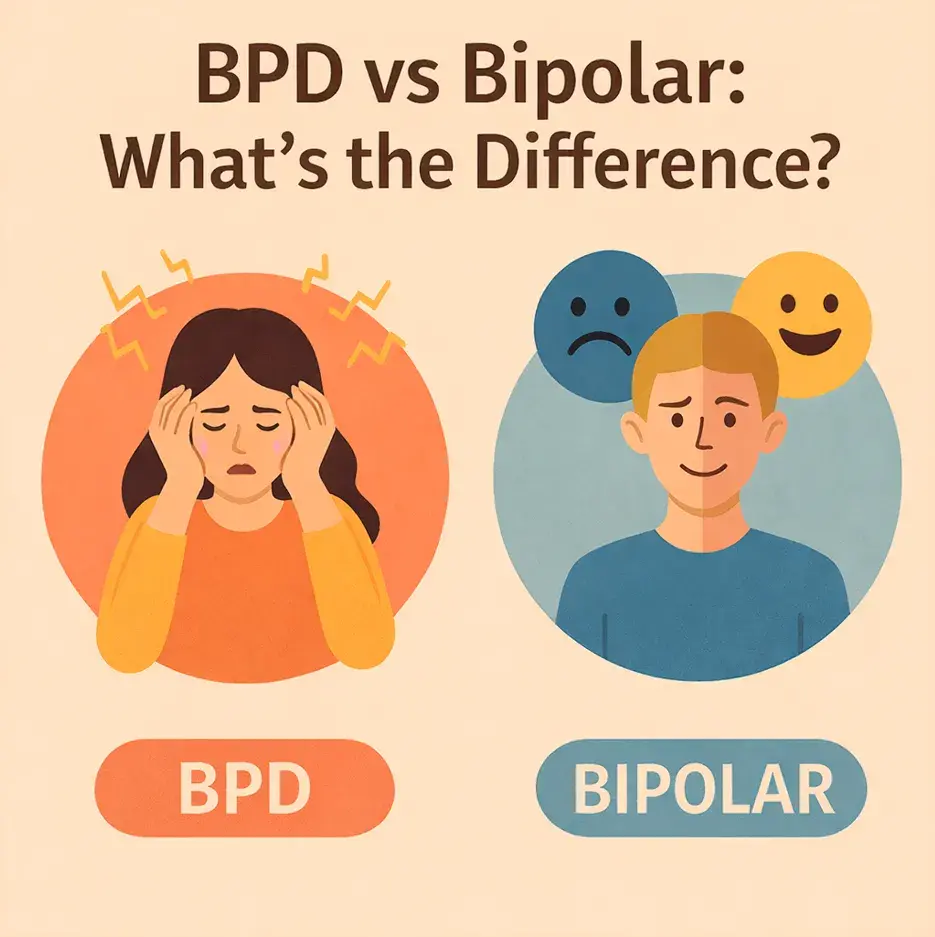
Both conditions are more common than many people assume. Mental Health America estimates a 5.9% lifetime prevalence for borderline personality disorder (BPD) and notes that patients with a BPD diagnosis may represent about 20% of the psychiatric inpatient population. The World Health Organization reports that in 2021, approximately 37 million people worldwide (0.5%) were living with bipolar disorder. These are not rare diagnoses and in real-world clinical settings, both appear frequently, sometimes in overlapping presentations.
That overlap is where confusion begins. The symptoms can look similar on the surface: mood instability, impulsivity, depression, irritability, and relationship strain. Many people find themselves questioning their diagnosis, reading conflicting information online, or starting treatment that doesn’t fully address what’s actually happening.
In this guide, we’ll break down each condition clearly, focusing on differences in timing, episode structure, triggers, and long-term patterns. We will explain how clinicians distinguish bipolar disorder and borderline personality disorder, so you can move toward a more accurate understanding and seek the appropriate care.
What Is Borderline Personality Disorder?
Borderline personality disorder (BPD) is a mental health condition marked by long-standing erratic patterns in emotion regulation, relationships, self-image, and impulse control. It isn’t a character flaw. Many people can function well day to day, yet experience intense inner distress, especially in close relationships. Symptoms tend to persist over time and may affect judgment, communication, and stability when stress rises, and self-doubt often occurs.
Common features include:
- Fear of abandonment or separation sensitivity
- Intense, fast-shifting emotions
- Unstable relationship patterns
- Shifting self-image or goals
- Impulsive reactions under distress
- Chronic emptiness
- Anger that is hard to calm
Key Symptoms and Patterns in BPD
In BPD, shifts in mood are often reactive to interpersonal stress (conflict, distance, or perceived rejection) and can change within minutes to hours. The signal is the pattern over time and the impact on functioning, not a single “bad day.” People may notice that reassurance helps briefly, emotions don’t return to baseline quickly or easily, and impulses rise under distress.
- Emotions: Intense spikes, slow recovery
- Relationships: Closeness–doubt swings
- Sense of self: Unstable identity
- Behaviors: Urgent contact, impulsive choices
What Is Bipolar Disorder?
Bipolar disorder is a mood disorder defined by distinct episodes of depression and mania or hypomania that last days to weeks, sometimes longer. These are not ordinary mood swings. Episodes involve clear shifts in energy, sleep, activity level, and judgment that affect daily functioning. Between episodes, many people return to a more stable baseline.
Understanding how bipolar disorder unfolds over time is essential when comparing BPD vs bipolar disorder, because the timing and structure of mood changes are different.
Common episode features include:
- Elevated or irritable mood during mania/hypomania
- Decreased need for sleep without fatigue
- Increased goal-directed activity or impulsive decisions
- Depressive episodes with low energy and loss of interest
- Impaired judgment during elevated states
Key Symptoms and Patterns in Bipolar Disorder
Bipolar disorder shows up as clearly defined episodes, not moment-to-moment shifts. Mood states persist and noticeably affect functioning at work, school, or in relationships. The intensity and duration are central to diagnosis:
- Mania: Markedly elevated or irritable mood, reduced sleep, risky decisions, significant functional impact
- Hypomania: Similar but less severe, still noticeable change in behavior
- Depression: Sustained low mood, fatigue, slowed thinking, reduced functioning
Borderline Personality Disorder vs Bipolar Disorder: The Key Differences
Episode Duration and Timing
A core difference is how long mood and behavior changes typically last. In bipolar disorder, manic, hypomanic, and depressive episodes usually persist for days to weeks, sometimes longer, and create a sustained shift from a person’s baseline. In BPD, emotional changes can be faster and more reactive, often rising and settling within minutes to hours. Timing alone doesn’t confirm a diagnosis, but it is a useful clinical clue when assessing patterns over time.
Triggers: Reactive vs Episodic
Another distinction is what tends to set symptoms in motion. BPD shifts are often linked to interpersonal stress, like conflict, distance, misunderstanding, or perceived rejection, and the emotional response may feel immediate and intense. Bipolar episodes can emerge without a clear external trigger, even though stress, sleep disruption, and substances may contribute. The goal is not to “blame” triggers, but to understand what reliably precedes symptom changes, which helps guide assessment and treatment planning.
Identity and Relationships
BPD commonly involves an unstable sense of self and intense relationship patterns that can swing between closeness and distrust. People may feel uncertain about who they are, what they want, or how they should be with others, especially under stress. Bipolar disorder can also strain relationships, but often primarily during mood episodes when energy, judgment, and behavior change significantly. This contrast between bipolar disorder and borderline personality disorder is one reason clinicians focus on long-term patterns, not isolated moments.
Symptoms That Overlap
Some symptoms can appear in both conditions, which is why a professional assessment matters. Mood changes, irritability, impulsivity, and symptoms of depression or anxiety can look similar on the surface, especially when someone is under stress. Clinicians focus on the full history, episode patterns, and functional impact over time to clarify what is driving the symptoms. Research has noted that symptomatic overlap between bipolar disorder and borderline personality disorder can contribute to diagnostic confusion when patterns are not carefully assessed.
Overlaps:
- Mood instability
- Irritability
- Impulsive decisions
- Depressive symptoms
- Anxiety symptoms
Diagnostic indicators:
- Sustained episodes with clear baseline shifts
- Rapid reactivity linked to interpersonal stress
- Consistent patterns in self-image and relationships
Can You Have Bipolar Disorder and Borderline Personality Disorder?
Co-occurrence can happen, and it can make the clinical picture more complex - especially when mood episodes and interpersonal reactivity overlap. In these cases, treatment is most effective when it is individualized and based on careful tracking of symptoms over time. The goal is to identify which symptoms reflect episodic mood shifts, which reflect longer-term regulation patterns, and what supports stability in daily life. With a clear formulation, there is a plan: targeted therapy, monitoring, and coordinated care.
How Diagnosis Works: Borderline Personality Disorder vs Bipolar Disorder
Diagnosis is based on a careful clinical history over time, not a single quiz or symptom checklist. Clinicians look at the pattern, duration, and severity of mood changes, what tends to trigger them, and how symptoms affect sleep, judgment, work, and relationships. Providers often track episodes across weeks or months and may use structured interviews to clarify patterns. They also rule out medical conditions, substance use, trauma-related symptoms, and medication effects that can mimic mood instability before confirming a diagnosis.
Treatment Differences: What Actually Helps
Treatment is most effective when it aligns with the underlying condition. In bipolar disorder and borderline personality disorder, the focus of care differs because the mechanisms driving symptoms are different:
- For bipolar disorder, treatment prioritizes mood stabilization and prevention of future episodes. This typically includes medication management, psychotherapy, and structured daily routines that protect sleep and reduce relapse risk. The goal is to minimize episode frequency and intensity while preserving long-term functioning.
- For BPD, treatment usually centers on structured psychotherapy that builds emotional regulation, distress tolerance, and interpersonal effectiveness. Dialectical Behavior Therapy (DBT) is one of the most established approaches. The goal is greater emotional stability, safer coping strategies, and more consistent relationship patterns over time.
Getting Care at Amae Health
At Amae Health, care begins with a structured, evidence-based assessment designed to clarify diagnosis and guide treatment planning. Our team evaluates symptom history, episode patterns, functional impact, and co-occurring conditions before making recommendations. We provide clear diagnostic feedback, individualized treatment plans, and ongoing monitoring to track progress and adjust care when needed.
Depending on your needs, treatment may include our Intensive Outpatient Program (IOP) or Partial Hospitalization Program (PHP), along with psychiatric support and skills-based therapy.
If you’re ready for clarity, stability, and evidence-based treatment, schedule a confidential evaluation or consultation today.